“Brightmont gave my daughter
confidence and helped her love learning
again.”
– Parent of 8th grader
400 E. Main St. Barrington, IL 60010
1-888-521-0887
inquiry@brightmontacademy.com
Traditional classrooms are designed around a shared pace, with one teacher guiding a group of students through the same lesson plan. For neurodivergent students, that structure often fails to deliver what they need to thrive academically, socially, and emotionally.
However, it’s worth noting that
neurodivergent education is
not about “lowering the bar.” True support simply requires a holistic, creative approach, one that meets a student where they are instead of asking them to conform.
The solution is finding a school that encourages academic mastery, eliminates peer judgment, and actively builds executive functioning and confidence. That’s easier said than done, which is why we’ve compiled this list of the best private schools for neurodivergent students.
In this article, we’ll cover:
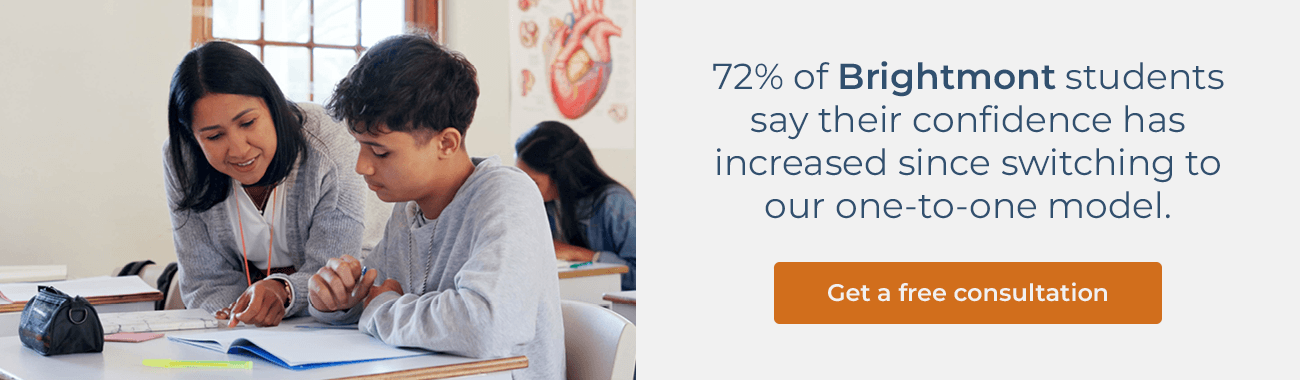
Neurodivergent students—including those with autism, ADHD, OCD, Tourette’s, anxiety, depression, and twice-exceptional profiles—need a learning environment that adapts to their unique cognitive processing and emotional needs.
This means:
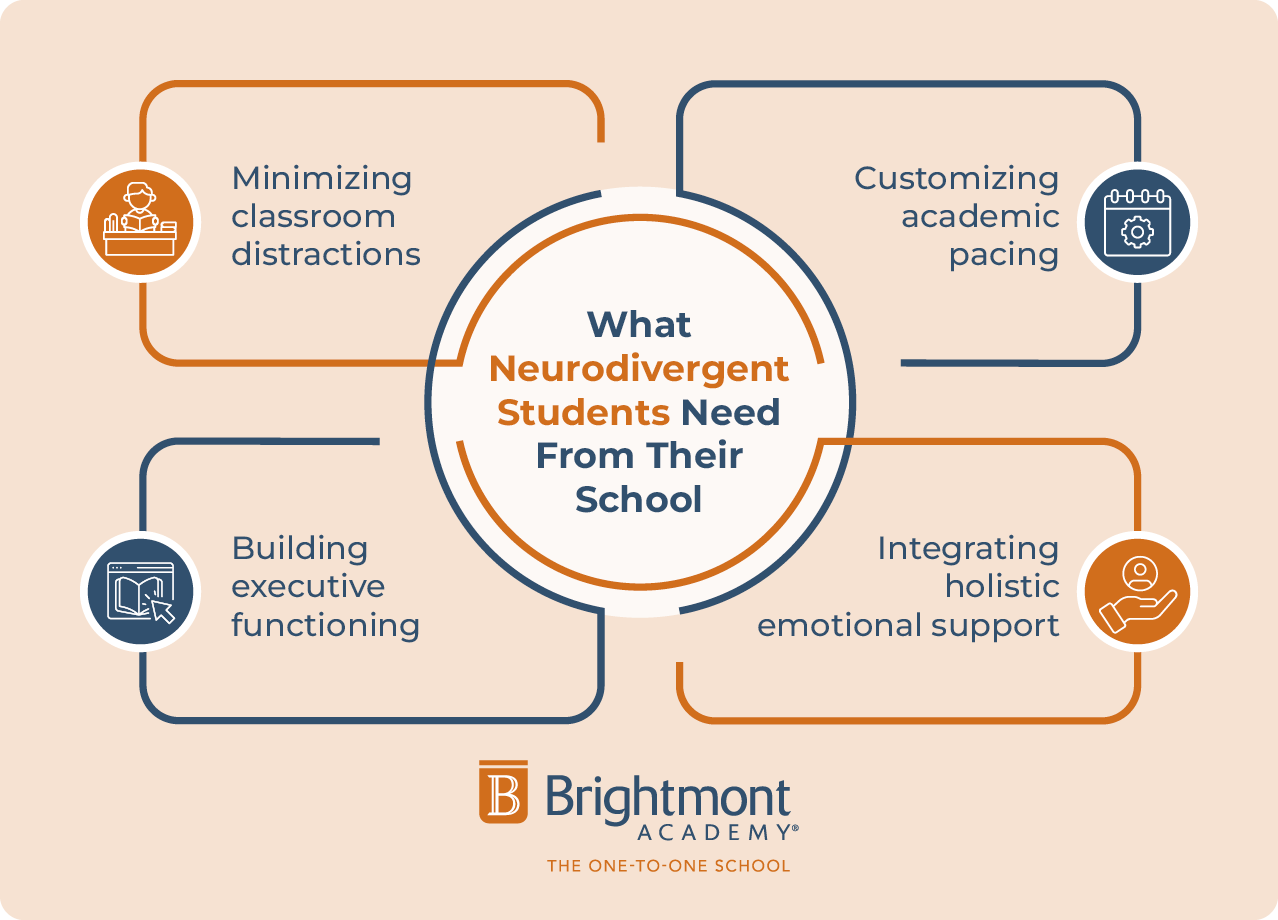
Schools for neurodivergent students recognize their strengths and support their challenges. With the right environment, students can grow academically and develop the skills they need for the future.
Why Private Schools Are the Best Fit for Neurodivergent Students
Many public school teachers are underinformed about the realities of neurodivergence—not for lack of caring, but for lack of training and time. Even the best, most well-intentioned teachers have limited bandwidth in a traditional classroom of 20 or more students.
Private schools can create a more personalized learning experience by offering a low
student-teacher ratio, which increases the individual attention that students receive from their teachers. One-to-one instruction is the ideal model for personalized learning. In this model, a single teacher works with a single student in every class. There's no falling through the cracks, no waiting for a hand to be called on, and no lesson moving forward before a student is ready.
Flexibility is another key benefit that private schools can offer neurodivergent students. They can legally and logistically adapt to unique learning styles without the bureaucracy of public school IEP fights. This means teachers can offer a multi-modal pedagogy that keeps neurodivergent students engaged.
What's more, private schools typically elevate academic expectations so every child feels appropriately challenged and motivated to learn. Support and rigor aren't opposites—the best programs offer both at once.
To choose the best private school for your child, you need to find a learning environment that will celebrate your child's neurodivergence and support their continued growth. The schools listed here offer specialized learning models, such as one-to-one instruction, individualized holistic education plans, and expertly designed environments that cater to complex academic and emotional profiles.
Brightmont Academy is a 1–12 private school for neurodivergent students offering a one-to-one educational model: one teacher, one student, in every single class. Instead of a student adjusting to a fixed classroom pace, the teacher adjusts to the student in real time.
Plenty of students with neurodevelopmental and
learning differences have discovered the difference a personalized learning environment can make:
Brightmont offers full-time, part-time, tutoring, and test prep options, so families can choose the level of support that fits their child's needs.
The Center Academy has campuses across Florida that specialize in supporting students with ADHD, autism, dyslexia, and other learning differences.
When students enroll in Center Academy, teachers and administrators conduct an assessment of the student’s unique strengths and needs to determine the accommodations they’ll need. Center Academy offers small class sizes and a supportive environment designed to help students grow academically and build confidence.
If your family is interested in a boarding school for your child, the Brehm Preparatory School in Illinois might be a good fit.
Brehm implements an Individualized Holistic Education Plan to ensure all academic and social needs are met, and while it doesn't offer the one-to-one attention that Brightmont does, its small class sizes of three to eight students can improve auditory processing, reading fluency, and comprehension.
The Eagle Hill School in Massachusetts adapts instruction for complex learning profiles using a highly flexible nine-term academic year. Independence and structure are balanced through dorm counselors who receive training to become certified life coaches, ensuring students learn critical life skills outside of classroom hours.
The result is a campus culture where academic support and everyday coaching work hand in hand, rather than living in separate parts of a student's day.
For neurodivergent boys, the Woodhall School in Connecticut is worth a look. Woodhall specializes in educating gifted and twice-exceptional students whose intelligence and potential are often paired with challenges related to ADHD, autism, executive functioning, or social communication.
The school includes a unique "Communications" pillar where students learn to self-reflect, express themselves, and take accountability for their academic and social lives. Through regular discussion groups and community forums, students practice articulating their needs and progress.
The Middlebridge School offers comprehensive support for students with ADHD through a highly structured coeducational boarding and day program located in Narragansett, Rhode Island.
Executive functioning coaching is a strong emphasis here, with organizational, self-advocacy, and time-management skills embedded directly into the core curriculum. Students leave with practical routines they can carry into college and beyond, not just strategies that only work within Middlebridge's walls.
New York's Gow School features a world-renowned, college-preparatory approach specifically tailored for students with dyslexia and related reading or spelling challenges.
Its instructional approach is rooted in a proprietary adaptation of the Orton-Gillingham methodology, delivering explicit, sequential instruction in reading, writing, and spelling. Because progress is closely monitored at the individual level, teachers can adjust pacing and intervention strategies in real time.
The Landmark School in Massachusetts utilizes highly specialized, research-backed methodologies specifically for students dealing with dyslexia and expressive language challenges.
Every student receives a daily, personalized tutorial session tailored to their unique language processing and academic needs, taught by instructors trained specifically in language-based learning differences.
The Winston Preparatory School uses ongoing assessment and a "Qualitative and Quantitative" approach to adjust a student's curriculum month by month as their skills evolve.
With campuses across New York, New Jersey, Connecticut, and California, Winston serves students with ADHD, dyslexia, and other learning differences, giving families in several regions access to the same individualized model.
The Forman School in Connecticut is a premier college-preparatory boarding and day school strictly for students with diagnosed learning differences. Specialized reading, writing, and organizational strategies are embedded into every single class, from biology to advanced literature, so support never feels separate from the coursework itself.
The campus also integrates the latest educational technology to ensure students have the tools they need to succeed independently in higher education.
One-to-one models eliminate environmental distractions and allow teachers to customize pacing. Educators adjust lessons in real time based on the student’s focus level, ensuring academic mastery without the sensory overload found in traditional classrooms.
Yes. Specialized private schools eliminate peer pressure and rigid public school expectations. They offer safe, flexible attendance policies and supportive environments that prioritize emotional regulation alongside academics to help students overcome school refusal.
Private schools operate outside public bureaucratic delays. They bypass endless IEP fights to offer immediate, legally unencumbered holistic support, ensuring students receive exactly what they need without waiting for administrative approval.
Absolutely. Specialized one-to-one schools provide controlled, judgment-free social periods. Students engage in specialized clubs, group activities, and integrated community events, fostering meaningful connections without the overwhelming dynamics of crowded hallways.
Choosing the right environment is a critical decision that changes the trajectory of a neurodivergent student's life. Explore the resources below to deepen your understanding of tailored educational models, or contact Brightmont Academy directly to discuss your family's unique academic goals.






“Brightmont gave my daughter
confidence and helped her love learning
again.”
– Parent of 8th grader

92% of Brightmont graduates are
accepted into their first-choice college

(888) 521-0887
To book a tour, talk to a campus director, or get a free consultation, please fill out the form.

©2026 Brightmont Academy®
