“Brightmont gave my daughter
confidence and helped her love learning
again.”
– Parent of 8th grader
400 E. Main St. Barrington, IL 60010
1-888-521-0887
inquiry@brightmontacademy.com
If your child is struggling, disengaged, or slipping through the cracks at school, you've probably started exploring alternatives and quickly run into terms like personalized learning, one-to-one teaching, and individualized instruction. While these terms are often used interchangeably, they don't all mean the same thing.
While many schools claim to offer personalized learning, the truth is that these classrooms still often have large
student-teacher ratios and limited opportunities for one-on-one interaction. In this guide, we'll walk you through what true personalization looks like, how one-to-one schools work, and why so many families are making the switch.
We’ll cover:
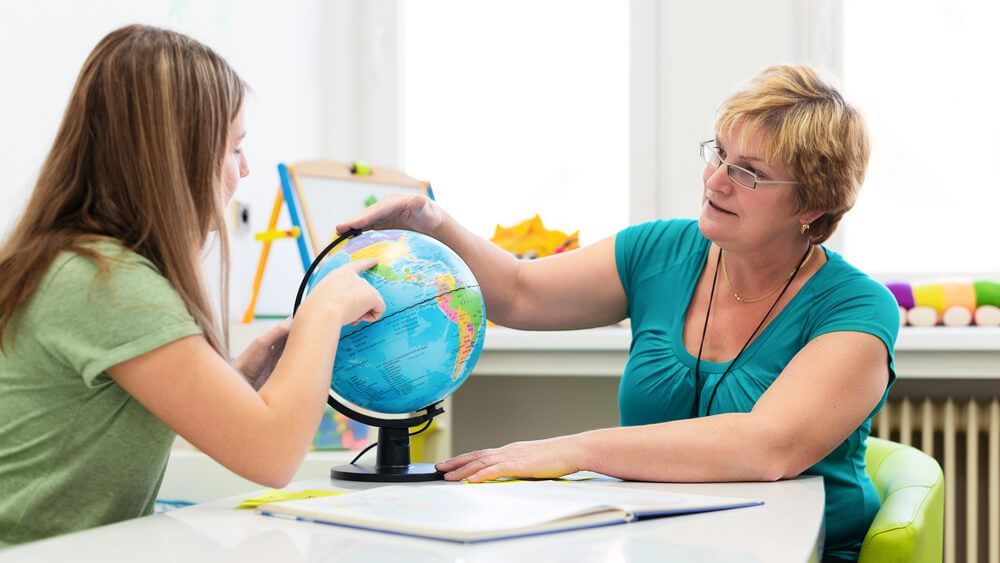
True personalized learning tailors the entire educational experience—from the curriculum, to the instructional method, to the pacing—to each individual student. While there are ways to personalize learning in standard classrooms (i.e., through technology or by enabling students to set their own goals), the only way to ensure complete individualization is to create a one-to-one learning environment where each classroom has only one teacher and one student.
Almost every student thrives in a personalized learning environment, but these classrooms are especially impactful for students who have particular learning needs that a typical school cannot accommodate. This includes:
Did you know that roughly 1 in 5 students in the U.S. has a Specific Learning Disability (SLD) like dyslexia or dysgraphia? When you factor in the students with neurodevelopmental disorders like ADHD, the number of students with learning differences swells even further. Despite the prevalence of these diagnoses, only 8.25% of these students receive the support they need to succeed.
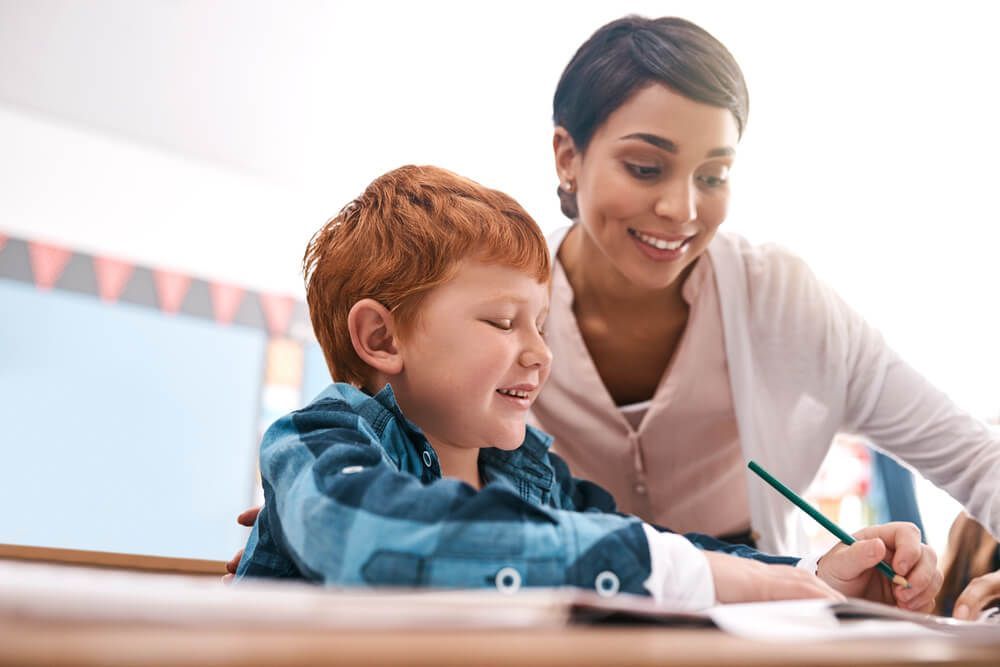
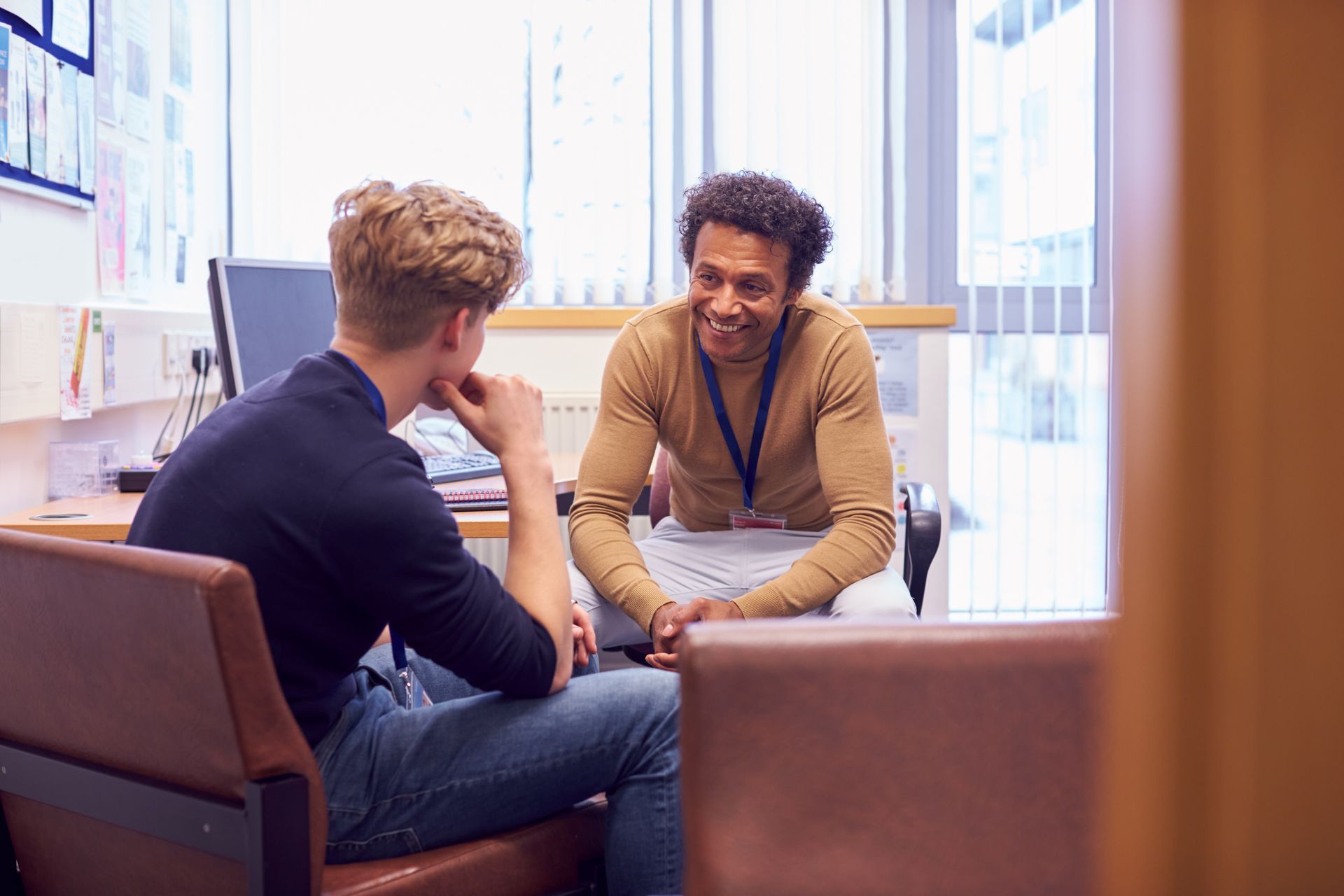
In a personalized learning environment, however, teachers can adjust the pacing and instructional method to increase these students’ mastery of each concept. Furthermore, a one-to-one classroom removes social pressure, empowering students to ask questions without the fear of peer judgment.
Gifted students often feel frustrated in typical classrooms because they don’t feel challenged. This boredom can gradually devolve into total burnout. Twice-exceptional students face the added obstacle of getting teachers to recognize their giftedness. A personalized learning classroom accelerates learning to match gifted students’ abilities and adjusts the curriculum to delve deeper into complex material.
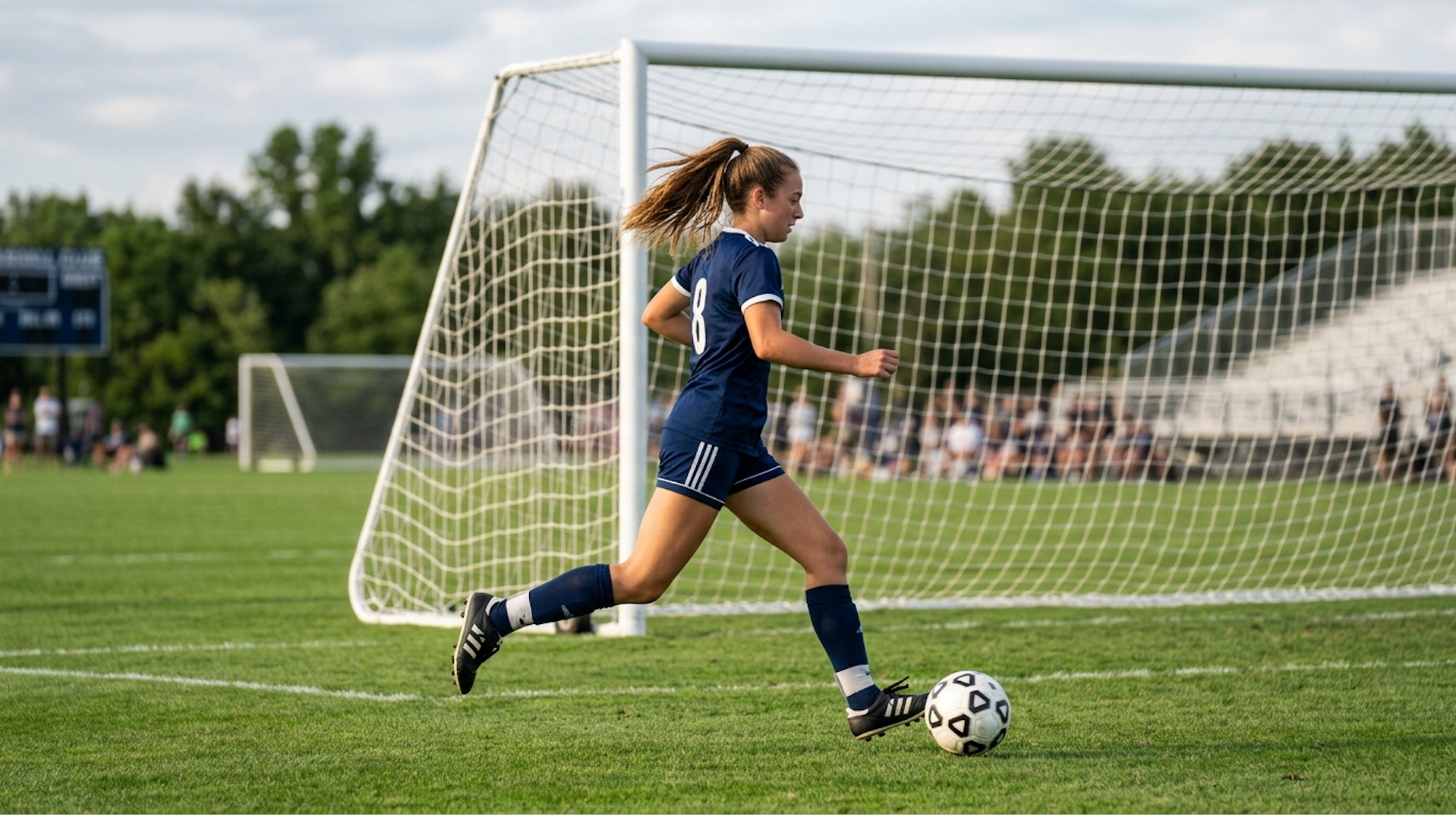
Student athletes and performers are often forced to split their energy between their studies and their extracurricular passions, leading to unnecessary compromises on both fronts. Flexible one-to-one learning allows these students to build their own schedule that supports their education and accommodates their other commitments.
Many students with anxiety, depression, or school refusal find that traditional schools exacerbate their struggles. A personalized learning school offers the flexibility, understanding, and calm environment that these students need to succeed.
While often used interchangeably, individualized learning and personalized learning are subtly different. Individualized learning adjusts the pace of the curriculum to students’ unique needs. Personalized learning goes further by tailoring the instructional style, curriculum, and daily schedule to fit the student's distinct cognitive profile. Personalized learning schools are inherently individualized, but not every individualized school will be completely personalized.
Personalized learning curricula are highly malleable to student needs, so each student's curriculum looks different. A one-to-one school will work with your family to determine your child’s scheduling, academic, and personal needs. Your educational team will use this information to create a lesson plan that sets your child up for success.
For example, if a student struggles with algebraic fractions, the curriculum pauses to build foundational skills until mastery is achieved. If they excel in literature, the reading materials become increasingly complex to keep them engaged.
Absolutely not. Highly gifted students frequently utilize personalized models to accelerate their learning well beyond their grade level. The framework supports rapid advancement just as effectively as it supports remediation.
Many personalized learning programs use a mastery-based approach that ensures pacing is governed entirely by comprehension rather than the calendar. Students will only move on to the next unit once they’ve completely grasped the current material. As a result, students deepen their understanding and improve their academic performance.
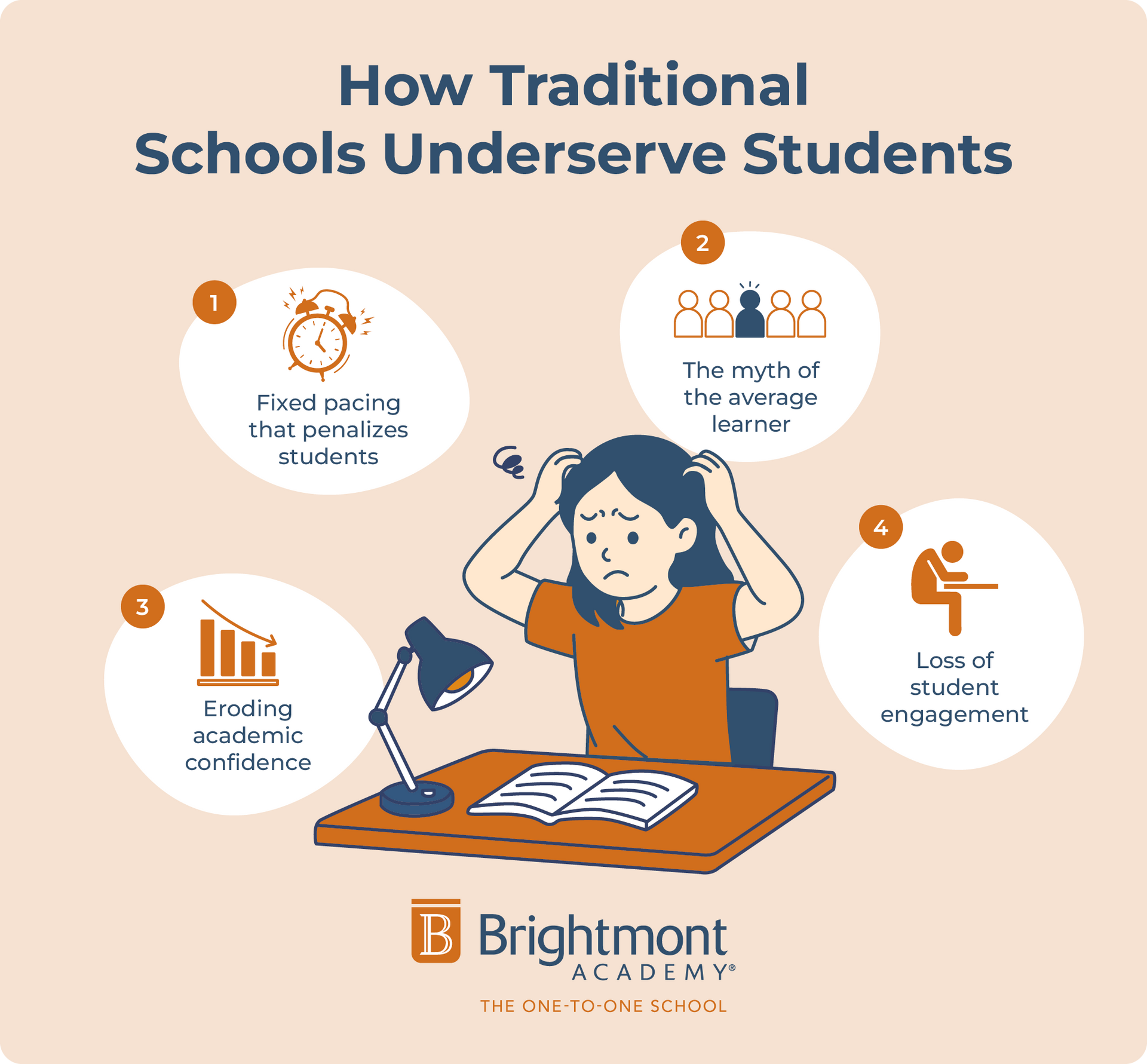
Even the best-intentioned teachers at traditional schools inevitably end up underserving students because they are pulled in too many directions at once. Typical classrooms put students’ academic and personal growth at risk through:
To determine whether traditional schools are underserving your student, take the quiz below:
Having established that traditional classrooms are insufficient for many students, let’s pivot to addressing why personalized learning is the solution. The concept of individualized instruction in the U.S. is not a new trend, but rather a return to the way learning historically took place. Modern personalized learning schools revive this focused attention using structured, evidence-backed frameworks that significantly outperform traditional group instruction.
In the early 1800s, instruction was almost entirely individual. Students might start or stop school at any time, and when they returned, they would pick up exactly where they left off. As populations grew during the industrial revolution, however, the educational system shifted toward a mass-production model, grouping students by age rather than ability and sacrificing individual mastery for the sake of efficiency.
The modern public education system now has an average student-teacher ratio of 15:1, which means there is little time for personalized learning each day. While more efforts are being made to incorporate individual attention into the school day, the number of students poses a significant challenge.
The benefits of personalized learning are backed by vast amounts of research. Findings include:
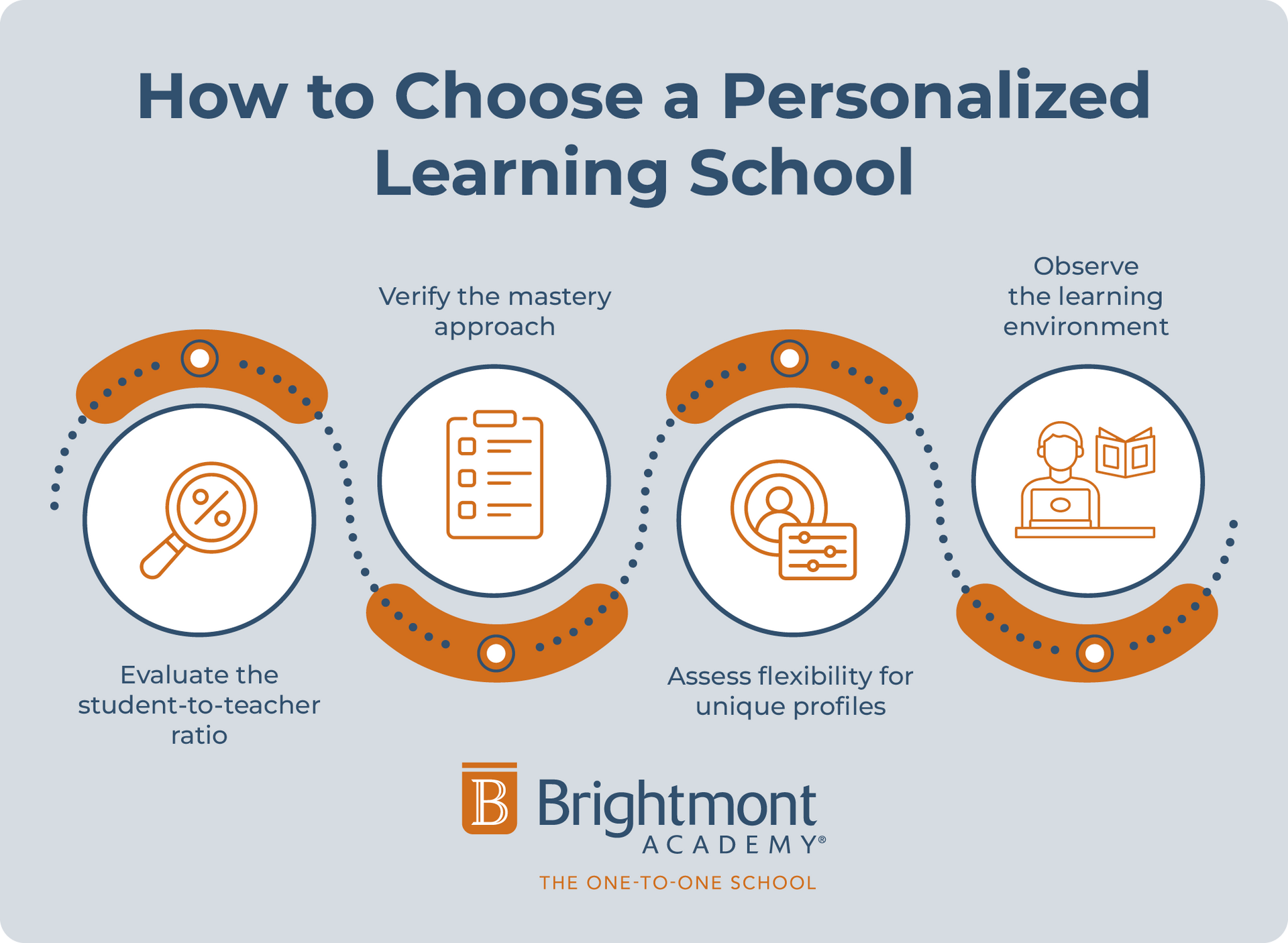
Finding the perfect personalized learning school requires looking past marketing buzzwords to evaluate the structural foundation of the institution. Parents should prioritize schools that offer true one-to-one student-teacher ratios, mastery-based progression, and a curriculum flexible enough to accommodate distinct learning differences and personal goals.
To find the right school for your child:
Brightmont Academy is a leading one-to-one school offering personalized education for grades 1–12 across 25 campuses in 11 states. Its full-time and part-time offerings have helped students with a diverse range of learning needs reach their full academic, social, and emotional potential.
Brightmont will work with your family to design a curriculum and classroom experience that molds to your exact needs. Thanks to the one-on-one environment, students create meaningful mentorship relationships with their teachers that foster a lifelong love of learning; in fact, 96% of Brightmont students say their teachers make learning interesting for them.
To provide a holistic educational experience, Brightmont goes beyond personalized learning to encourage students to connect with peers through dedicated Homework Studio support and various extracurricular clubs and activities.
Want to learn more about Brightmont’s educational model? Check out our video explainer below:
Moving from a traditional learning environment to a personalized learning school shifts your child's trajectory from struggling in a crowd to thriving independently. These unique classrooms are proven to accelerate academic growth, enhance mastery, improve engagement, and support mental health. Ultimately, you’ll see your child unlock their full potential and rediscover their passion for learning.
We understand that making a school change is a significant decision, one that comes with real questions about cost, timing, and whether it's the right fit. Brightmont's team works closely with families to make the transition as smooth as possible, from flexible enrollment timelines to personalized consultations that help you understand exactly what to expect before you commit.
Ultimately, the goal is simple: help your child unlock their potential and rediscover their passion for learning. If you're ready to explore what that could look like, we're here to help.
To learn more about personalized learning, explore these resources:


“Brightmont gave my daughter
confidence and helped her love learning
again.”
– Parent of 8th grader

92% of Brightmont graduates are
accepted into their first-choice college

(888) 521-0887
To book a tour, talk to a campus director, or get a free consultation, please fill out the form.

©2026 Brightmont Academy®
