Brien Drake is an associate attorney at School Law Center, a Minnesota and Wisconsin firm devoted to student rights and special education. He represents students with disabilities and their families through due process hearings, state complaints, mediation, and negotiations with school districts, helping parents secure the services their children are entitled to. Drake earned his law degree from Mitchell Hamline School of Law and holds a bachelor's degree in political science from Carthage College. Passionate about helping families understand their rights, he is committed to ensuring every child receives an appropriate education and the support to thrive.
Special Education Rights: A Parent's Guide to Advocacy
August 11, 2026
Navigating special education can feel overwhelming, especially if your child is struggling in school and you're hearing terms like IEP, 504 plan, FAPE, and IDEA for the first time. Understanding your child's rights is an important first step toward making informed decisions and advocating for the support they need.
During Brightmont Academy's webinar, Know Your Rights: Special Education and School Responsibilities, special education attorney Brien Drake of School Law Center explained how federal law protects students with disabilities, how schools determine eligibility for services, and what options families have when they disagree with a school's decisions.
This guide highlights the webinar's key takeaways to help parents better understand the special education process. While it provides general educational information, every situation is unique. Families facing legal questions or disputes should consult an attorney familiar with special education law.
Understanding IDEA and Special Education Rights
The foundation of special education is the Individuals with Disabilities Education Act (IDEA), a federal law that gives eligible students with disabilities the right to a Free Appropriate Public Education (FAPE) in the Least Restrictive Environment (LRE).
In practical terms, this means students should receive the individualized support they need while learning alongside their peers whenever appropriate. IDEA is designed to ensure students with disabilities have meaningful access to education rather than being separated simply because they learn differently.
For students who qualify, those supports are documented in an Individualized Education Program (IEP). An IEP outlines:
- The student's educational goals
- Accommodations and modifications
- Specialized instruction and related services
- How progress will be measured
Because every child learns differently, no two IEPs should look exactly alike. The plan should reflect the student's unique strengths, challenges, and educational needs.
What Is Free Appropriate Public Education (FAPE)?
While "free" simply means families are not responsible for the cost of special education services, the word “appropriate” is where many disagreements arise.
A 2017 U.S. Supreme Court decision clarified that schools must provide an education that is reasonably calculated to help a student make meaningful progress based on their individual circumstances. Schools are not required to maximize a student's potential, but they are required to provide more than minimal educational benefit.
Because every student's needs are different, determining what is "appropriate" often depends on the specific facts of each case.
Understanding Child Find: Who Identifies a Student for Evaluation?
Many parents assume they must discover their child's disability before a school can provide support. In reality, public school districts have a legal obligation known as Child Find.
Under Child Find, schools are responsible for identifying, locating, and evaluating students who may have disabilities, including students who attend private school.
While parents are often the first to notice academic, behavioral, or developmental concerns, the responsibility for evaluating suspected disabilities ultimately belongs to the school district.
If a disability is suspected, the district may evaluate areas such as:
- Academic achievement
- Cognitive abilities
- Speech and language
- Behavior and social-emotional development
- Other areas related to the student's suspected disability
Understanding this responsibility can help parents feel more confident requesting evaluations and asking questions when concerns arise.
Who Qualifies for Special Education Services?
To qualify for special education services under IDEA, a student must meet two requirements:
- Have a qualifying disability recognized under IDEA, such as a specific learning disability, autism, a speech or language impairment, traumatic brain injury, or another qualifying condition.
- Need special education and related services because of that disability.
Both requirements must be met. A medical diagnosis alone does not automatically qualify a student for an IEP.
One of the most common points of disagreement between families and schools is the second requirement. A school may acknowledge that a student has ADHD, dyslexia, anxiety, or another disability but determine that they do not require specialized instruction.
It's also important to remember that qualifying for an IEP does not mean a student will be removed from the general education classroom. Many students receive services while continuing to learn alongside their peers. An IEP simply outlines the individualized instruction, accommodations, and supports needed to help a student succeed.
How Independent Educational Evaluations (IEEs) Work
This is, in Drake's words, one of the most important tools parents have. You are always entitled to obtain your own independent educational evaluation (IEE) from a qualified professional—a neuropsychologist, speech-language pathologist, or behavior expert—and the school must consider those results.
Better still, under IDEA you can request an IEE at public expense. When you disagree with the district's evaluation and make this request, the district has only two options: pay for the independent evaluation, or file a due process hearing to defend its own. As Drake noted, districts rarely choose the second route—it's generally far cheaper to fund the IEE—and you can withdraw your request if they do file. An expert report in your corner is the single most effective way to push back on a school's findings.
What's the difference between an IEP and a 504 plan?
Both are federal protections, and both carry a FAPE requirement, but they do different jobs. A 504 plan is primarily about access—accommodations like extra time or a quieter setting that let a student reach the same instruction as their peers. An IEP is an individualized program that can include specially designed instruction, specific services, and measurable goals. Drake's shorthand: 504 compares how a disabled student accesses the classroom versus a non-disabled one, while an IEP asks what this specific student needs.
Crucially, both are living documents. Parents are equal partners in the process and can request a meeting to revisit the plan any time a situation changes—you don't have to wait for the school to call one.
When Can a Public School Pay for Private School Placement?
In most cases, if a family chooses to enroll their child in private school, the public school district is not required to cover the cost.
However, there are situations where a district may be required to reimburse families for private school tuition. This typically happens when a hearing officer or court determines that:
- The district failed to provide a Free Appropriate Public Education (FAPE) in a timely manner.
- The private school placement is appropriate for the student's educational needs.
Before seeking reimbursement, parents generally need to give the district an opportunity to address their concerns. This usually means discussing the issue during an IEP meeting or providing written notice before withdrawing their child from the public school. Failing to provide notice may reduce the amount of reimbursement a family can receive.
It's also important to remember that reimbursement decisions are made on a case-by-case basis. Courts consider whether the district had a fair opportunity to provide appropriate services and whether the private placement meets the student's needs. For families considering this option, documenting concerns, keeping records of communication, and seeking legal guidance can help ensure they understand their rights and responsibilities.
Tips for Advocating for Your Child
How long do you have to act?
Timelines matter. Under IDEA, you generally have two years from the date you discover a violation to file for a due process hearing, with exceptions if the district misrepresented that a problem was resolved or failed to inform you of your rights. A state complaint—asking the state education agency to investigate—typically carries a one-year window. The practical lesson: don't sit on a concern for years and expect full compensation.
How can parents advocate effectively?
Throughout the webinar, attorney Brien Drake, along with Brightmont Academy's Michelle Platt and Jenny Sorenson, shared practical strategies to help parents advocate with confidence and work toward the support their child needs.
- Document everything. Keep a written record of every conversation and decision, which becomes invaluable when school staff turns over.
- Don't wait. Start engaging early, and direct your communication to people with authority—the special-education director, a 504 coordinator, the superintendent, or a case manager.
- Know that fees can be recovered. This is a civil-rights area, so if you prevail at a due process hearing, you can petition to have your attorney's fees paid by the district.
- Focus on goals, not just credits. Students on an IEP can graduate based on their IEP goals, so a school insisting on specific classes "to graduate" may be missing that flexibility.
- Reframe "no." A district's lack of resources is not a legal defense to denying a FAPE—but you can use it to negotiate. Many families successfully arrange early release or a partial day so a student can receive specialized instruction elsewhere.
When you're looking for help, several organizations can point you to qualified support. COPAA, the Council of Parent Attorneys and Advocates, maintains a national directory of special-education attorneys and advocates. Every state also has a federally funded Protection and Advocacy organization; in Minnesota, that's the PACER Center.
How Brightmont Academy Supports Students with Learning Differences
Much of what Drake described maps onto what we do day to day. Our one-to-one instructional model offers personalized learning and flexible scheduling, including the early-release and partial-day arrangements families often negotiate with their districts. Because we conduct pre- and post-assessments, the resulting data can document a student's progress, which is exactly the kind of evidence that strengthens a family's case when a public program isn't working. We also partner with districts on the IEP process even for students enrolled in our full-time programs, and we often serve as a bridge—getting a child where they need to be rather than becoming a forever school.
The throughline of the whole conversation was empowerment. As Michelle put it, the best advice is simple: advocate for your child, keep a written record, and don't take no for an answer.

Additional Resources for Parents
If this guide was helpful, these related Brightmont Academy articles go deeper on topics that often come up alongside special-education advocacy:
- A Neuropsychologist's Dyslexia Guide: Signs & Intervention — Review what dyslexia is, how it affects the brain, and which literacy interventions actually work.
- What Is a Gifted Student? A Guide for Parents and Educators — Discover how high ability and learning differences can coexist, and why so many "twice-exceptional" students go unnoticed.
- How Private Schools for Learning Differences Support Growth — Learn what to look for in a learning environment when a traditional classroom isn't the right fit.

Meet the Author

More Blog Posts, News & Webinars

Learn how flexible accredited high school programs for athletes help students balance their academic goals with their passion for their extracurricular sport.
Get a closer look at one-to-one instruction and how personalized learning can be tailored to different students, schedules, and goals.

Tutoring for ADHD goes beyond basic review to accommodate unique learning needs. Discover how personalized instruction and executive functioning support help.

Brightmont Academy's newest campus, its second in North Carolina, is now open and enrolling students in Cary.
Brightmont Academy Speaker Series

Looking for the right educational environment to support your child’s mental and emotional wellbeing? Discover crucial accommodations for students with anxiety.

Anxiety can have a profound impact on student learning. Discover strategies and resources to support your child's mental and emotional wellbeing in this guide.
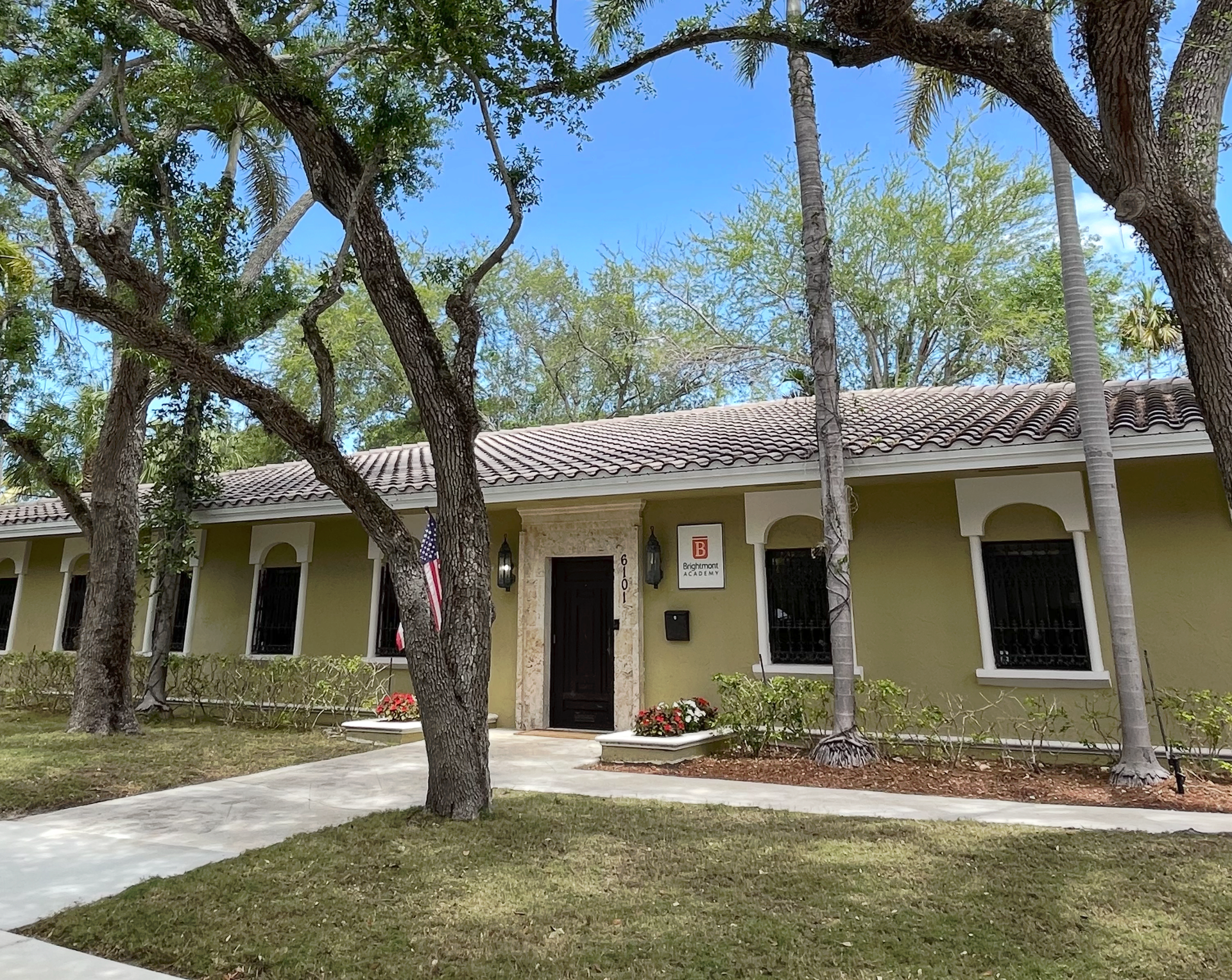
Brightmont Academy is expanding its Miami private school campus, adding classrooms to serve more families seeking personalized, one-to-one instruction.

Explore private schools in Bethesda, MD, and compare their academic approaches, learning environments, and programs to find the right fit for your child.