Karrie Wozniak is a growth-focused marketing executive leading brand, enrollment, and growth initiatives at Brightmont Academy, helping expand a mission-driven, one-to-one learning model across 25 campuses in 10 states. Passionate about personalized education, Karrie knows firsthand the difference it makes. Karrie holds a BS from Purdue University and an MBA from DePaul University, and is committed to building brands and initiatives that create impact.
What Is a Student-Teacher Ratio? How It Impacts Your Child
Karrie Wozniak • June 11, 2026
It’s no secret that children typically thrive on individual attention. One-on-one interactions help kids feel supported and engaged, but in the classroom, students often only receive a few minutes of personal attention per day. More than curriculum or student efforts, the student-teacher ratio is often the culprit behind students’ academic struggles.
Student-teacher ratios are often a central talking point of K–12 schools, but many parents still have questions about what these metrics actually mean and how classroom ratios actually impact student learning and emotional development. In this guide, we’ll break down exactly how this metric shapes your child's educational journey by covering the following topics:
- FAQs About Student-Teacher Ratios
- How to Find the Right Student-Teacher Ratio for Your Child
- Student-Teacher Ratios in Public vs. Private Schools
- How a 1:1 Student-Teacher Ratio Supports Growth
- Explore the 1:1 difference with Brightmont Academy
Is your child lost in the crowd of a standard classroom?
FAQs About Student-Teacher Ratios
What is a student-teacher ratio?
A student-teacher ratio measures the number of students per educational professional in a classroom. For example, in a school of 600 students and 40 teachers, the ratio for the overall school would be 15:1. Student-teacher ratios are also often measured on a classroom basis—for instance, a class with 28 students and two teachers would have a 14:1 ratio.
What student-teacher ratios really measure is the division of a teacher’s attention. If a teacher has 20 students in their classroom, they’ll struggle to engage every learner and accommodate every learning need, no matter how skilled they are. On the other hand, if a teacher has only one student in the classroom (as is the case with one-to-one learning schools), they’ll be able to adapt the curriculum, pedagogical style, and pacing to that student’s exact needs.
While some highly independent students might perform just fine in a high student-teacher ratio setting, most benefit from more individual attention from their teachers. For this reason, these ratios are a core metric that parents use to determine whether a school is the right fit for their child.
How do student-teacher ratios impact student learning?
Ratios directly dictate the amount of individualized attention, emotional support, and curriculum flexibility a student receives on a daily basis.
Standard classroom ratios force teachers to pace their instruction to the middle of the group. This approach inevitably underserves students on either end of the academic spectrum, causing gifted students to disengage and leaving many students with learning differences behind.
In a small classroom, on the other hand, students receive more individual attention from their teachers. When teachers have the time and bandwidth to pay attention to each student, they’ll be able to answer your child’s questions and encourage them to grow academically and socially. Lower ratios also allow teachers to spend less time on classroom management and more time instructing students according to their individual needs.
What is considered a good student-teacher ratio?
While national public averages hover around 15:1, most students perform better and build confidence more effectively in a smaller classroom, particularly in a setting where the ratio is 1:1. What constitutes a “good” ratio will depend on your child’s unique needs, but generally speaking, the smaller the classroom, the better.
How does a one-to-one student-teacher ratio work?
In a one-to-one learning school, each classroom has exactly one student and one teacher. Each teacher in a student’s schedule will tailor the pace, curriculum, and instruction method to that student’s real-time needs. This way, students never have to wait for peers to catch up or feel rushed to complete their work.
How to Find the Right Student-Teacher Ratio for Your Child
Every child has different learning needs. To discover the right student-teacher ratio for your child, take the quiz below:
Student-Teacher Ratios in Public vs. Private Schools
One of the most common reasons parents decide to invest in private school for their children is the smaller student-teacher ratio in private classrooms. However, many don’t realize that the difference isn’t always as pronounced as one might think.
U.S. public schools have an average student-teacher ratio of 15:1 (though this may vary across states, with some having ratios as low as 11:1 or as high as 22:1). Private school student-teacher ratios are lower, but not significantly; the average private school ratio is a little over 12:1. While this lower ratio is certainly an improvement, it shows that choosing a private school at random is not enough to ensure your child receives the personal attention they need to succeed.
Some private schools—particularly alternative schools—place a more deliberate emphasis on low student-teacher ratios. These schools recognize that each student has the ability to succeed when given the proper attention. Student-teacher ratios in small private schools tend to be closer to 10:1 or 8:1.
However, research shows that the best learning environment for many students is actually a 1:1 classroom. In these classrooms, teachers customize the content, pedagogy, and pacing to each student’s exact needs. With a mastery-based curriculum, students deepen their understanding of complex concepts and ultimately increase their academic gains.
How a 1:1 Student-Teacher Ratio Supports Growth
The one-to-one model completely transforms the classroom experience for many students, particularly those with learning differences, children facing physical or mental health challenges, gifted students, and students with high-demand extracurriculars like sports or performing arts.
These classrooms offer a wide variety of benefits for students, including:
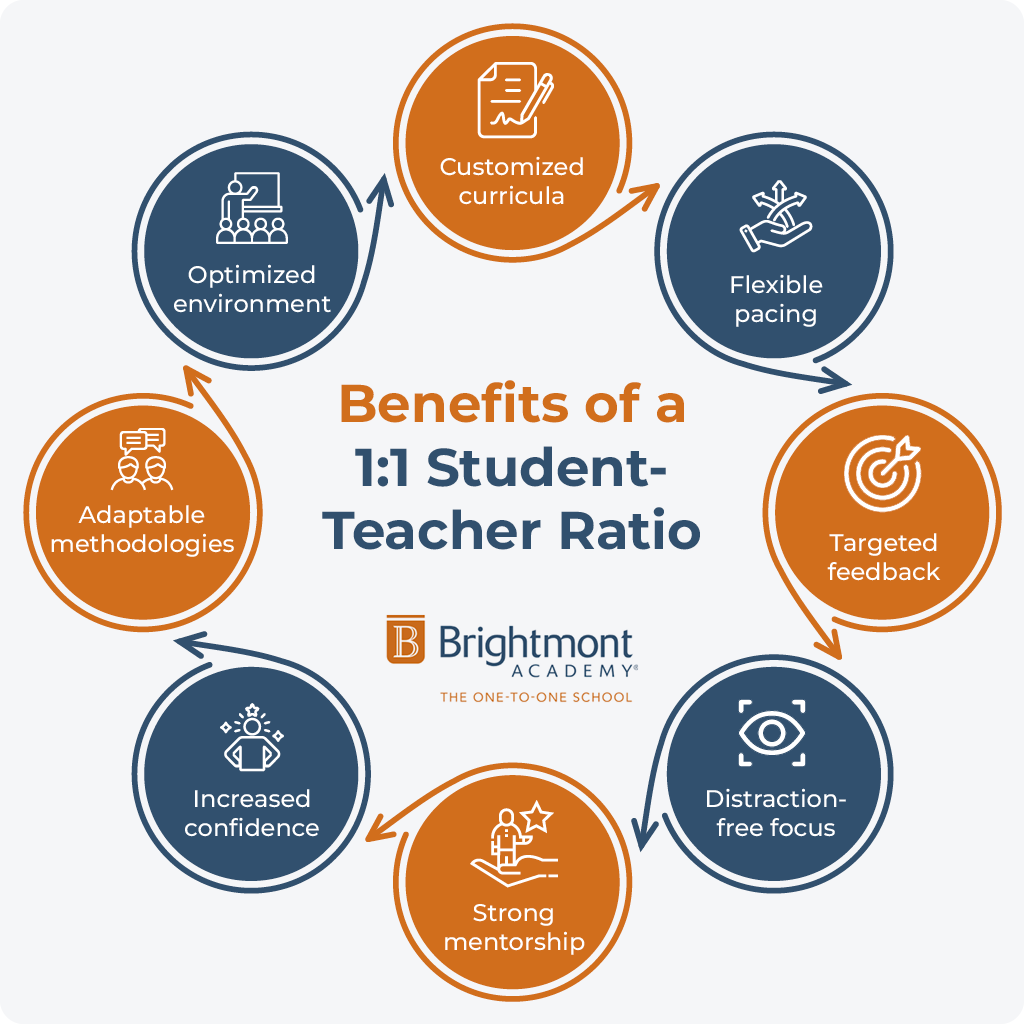
- Customized curricula: Instruction is built around an individual’s distinct strengths, interests, learning styles, and areas for growth rather than a standardized template.
- Flexible pacing: Students can fully grasp a concept before moving forward, avoiding the frustration of being left behind or the boredom of waiting for peers to catch up to them.
- Targeted feedback: Teachers immediately correct misconceptions and reinforce successes in real time to accelerate students’ academic growth.
- Distraction-free focus: The absence of classroom noise and peer dynamics creates an environment where students can concentrate deeply.
- Strong mentorship: Close, daily interaction allows students to build deep relationships with their teachers that positively impact their overall development.
- Increased confidence: Feeling supported in a safe setting encourages students to take academic risks, ask questions, and engage without fear of judgment.
- Adaptable methodologies: Educators can quickly pivot their teaching strategies based on exactly what a student needs on any given day.
- Optimized environment: The physical space in a classroom—from seating to study materials—can be customized for maximum comfort and focus.
Explore the 1:1 difference with Brightmont Academy
Brightmont Academy redefines the standard classroom by matching each individual student to the teachers who will transform their academic, social, and emotional well-being the most. This highly focused approach ensures your child receives customized pacing, tailored curriculum, and dedicated emotional support to thrive academically without the friction of standard classrooms.
To learn more about Brightmont’s unique educational model, check out our video explainer below:
Brightmont's campuses across the country offer full-time and part-time schedules, credit recovery, acceleration, skill-building, tutoring, course previews, and test prep. With personalized programs, flexible schedules, dedicated Homework Studio support, and plenty of extracurricular clubs, Brightmont helps students achieve holistic success.
Our individualized learning classrooms create measurable results—for example:
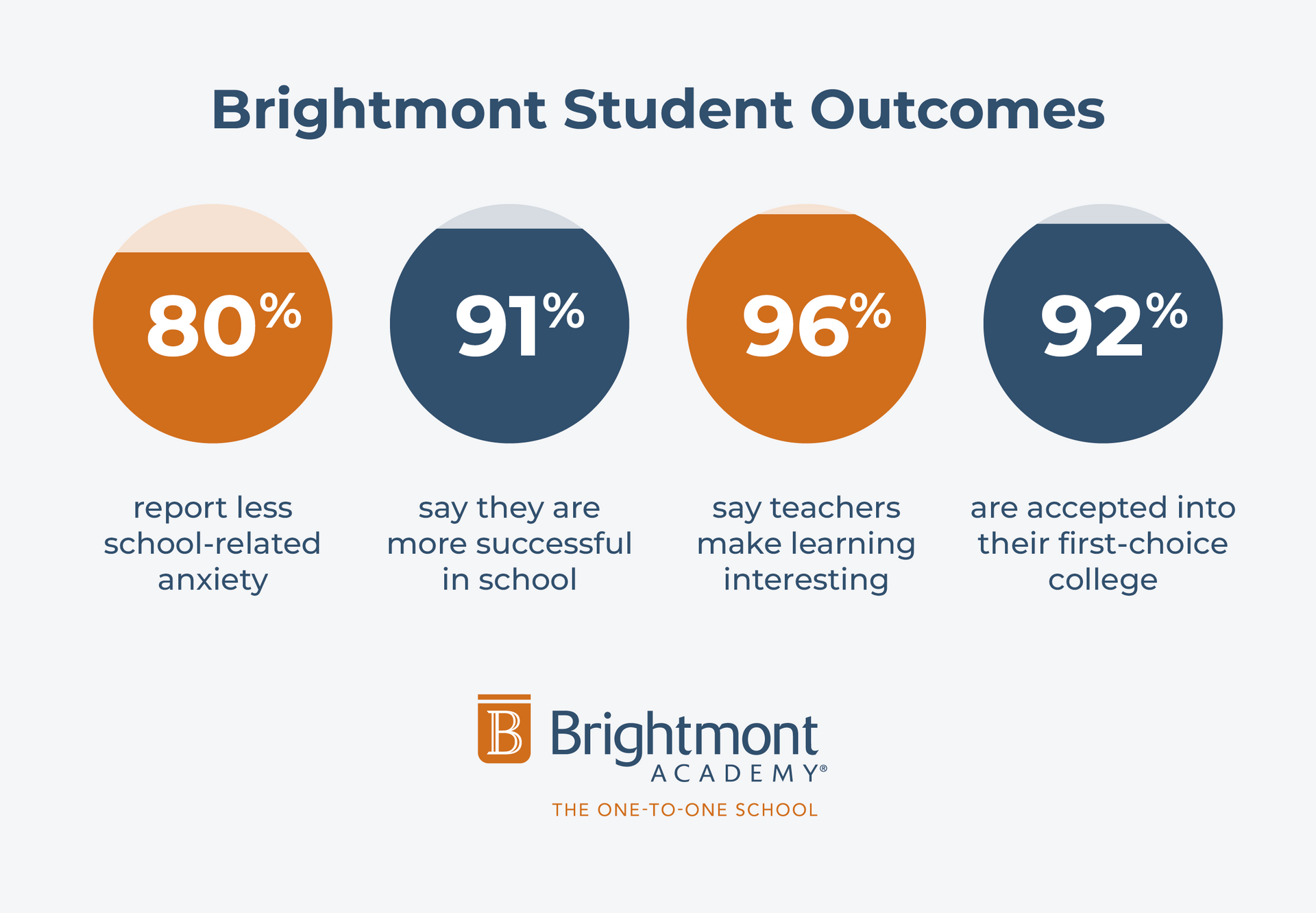
- 80% of Brightmont students report less school-related anxiety
- 91% say they are more successful in school
- 96% say teachers make learning interesting
- 92% are accepted into their first-choice college
Ready to see how a 1:1 learning model can transform your child's academic experience?
Find the right educational path for your child
Choosing the right school environment comes down to the math of the classroom. While traditional ratios work for some, understanding the transformative power of personalized instruction is vital for students who need a different approach. By actively analyzing how teacher attention is distributed, you can select an environment where your child will truly flourish.
For more insights into the benefits of 1:1 student-teacher ratios, check out the rest of our blog:
- The One-to-One Model: Teachers Love It, Too!: Discover the passion of personalized learning school teachers and learn how they customize each class to their students.
- Choosing the Right School for Students with Learning Differences: Explore the needs of students with dyslexia, ADHD, dysgraphia, and more. Find the right school for your child’s needs.
- 11 Types of Alternative Schools Helping Students Thrive: Alternative schools take on a more creative approach to teaching and often have smaller or 1:1 student-teacher ratios. Explore the most popular alternative schools and their benefits.
Ready to transform your child's education?
Brightmont's campuses across the country have helped students like yours increase their confidence and achieve more.

More Blog Posts, News & Webinars

What are reading intervention programs? Discover the right support for your student, from traditional tutoring to personalized one-to-one instruction.
Learn how to support a struggling student with strategies to reduce stress, set healthy boundaries, and partner with your child’s school.

Learn how an elementary reading intervention program helps young students build foundational literacy skills. Discover the top strategies in this guide.

Hear from Sonja Mertz to better understand gambling and gaming trends, and how they can affect youth.

Navigating high school credit recovery and earning extra credits can be challenging. Learn how personalized learning helps students stay on track and succeed.

Looking for effective teaching strategies for dyslexia? Discover how one-to-one instruction, multisensory learning, and Orton-Gillingham methods can help.

Discover the best ADHD teaching strategies educators can use to help students maintain focus, control hyperactive tendencies, and strengthen impulse control.
Learn how flexible accredited high school programs for athletes help students balance their academic goals with their passion for their extracurricular sport.
Get a closer look at one-to-one instruction and how personalized learning can be tailored to different students, schedules, and goals.