Karrie Wozniak is a growth-focused marketing executive leading brand, enrollment, and growth initiatives at Brightmont Academy, helping expand a mission-driven, one-to-one learning model across 25 campuses in 10 states. Passionate about personalized education, Karrie knows firsthand the difference it makes. Karrie holds a BS from Purdue University and an MBA from DePaul University, and is committed to building brands and initiatives that create impact.
7 Best Schools for Gifted Students to Accelerate Growth
Karrie Wozniak • June 11, 2026
Gifted students arrive in the classroom with a natural drive to learn, ask questions, and push past what they’ve already mastered. Yet, research suggests that up to 50% of gifted students may be underachieving relative to their potential. Two of the most frequently cited reasons are learning environments that fail to match the student’s pace and social dynamics that quietly discourage them.
That’s why gifted students need a school that can match their abilities by creating a space where they can grow academically, build genuine friendships, and develop the
emotional and social resilience they’ll need for life beyond the classroom. In this guide, we’ll explore the top types of schools for gifted students so you can find the right fit for your student.
Help your gifted child achieve more with personalized education.
Frequently Asked Questions About Schools for Gifted Students
What is the best school for gifted students?
There’s no single best school for every gifted student, but it’s important to find a school that recognizes their talents and supports their continued growth. One child may excel in mathematics while needing additional support in writing; meanwhile, another student may have strong artistic skills with learning difficulties that require accommodations. The best school for gifted children is one that accommodates their learning needs, whatever they may be.
For many families,
personalized learning schools offer the most reliable path to success. Often, the personal attention of personalized learning schools is the best way to ensure the academic, social, and emotional growth of advanced learners. When every instructional decision is made with a specific student in mind, gifted learners are far more likely to thrive across the board, not just academically.
What are the benefits of advanced learning environments for gifted students?
Studies have shown that gifted students placed in accelerated learning environments tend to improve their participation and reading progress at higher rates than their counterparts in standard programs.
In a traditional classroom, brilliance can lead to unwanted attention from peers. Gifted students realize their talents make them targets, and they gradually stop raising their hands and refrain from asking questions that would further their learning.
Instead of asking students to tone themselves down, an environment designed for advanced learners invites them to lean in fully and
fosters accelerated growth.
How do schools measure giftedness in children?
Schools identify gifted students through a multifaceted approach, combining quantitative data and qualitative data. Standardized cognitive assessments, such as IQ and academic achievement tests, help establish a measurable baseline, and many programs are often looking for students who are at or above the 95th percentile
Schools also rely on teacher feedback, examples of student work, and patterns of deep engagement in learning. Using multiple measures helps schools recognize giftedness across a wide range of learning styles and backgrounds.
Can students with learning differences be in gifted programs?
Absolutely! Students who demonstrate advanced abilities in one or more areas while also having a diagnosed learning difference are known as twice-exceptional (2E) learners. Roughly 2-5% of students fall into this category.
Traditional schools frequently fail to recognize these students’ giftedness or lack the resources to accommodate their learning needs. Neither approach serves the whole student. 2E learners may need specialized support or learning accommodations in certain areas, but they also need room to explore their talents and passions at a high level. The right environment makes it possible for them to grow in both confidence and ability.
92% of Brightmont students are accepted to their first-choice college.
What Gifted Students Need from Their School
The strongest gifted programs combine rigorous academic pacing with dedicated social and emotional support. Students thrive when they are challenged academically and supported personally at the same time. Traditional programs often lack this balance.
A school for gifted and 2E students should
empower them by:
Gifted students need schools that challenge them consistently and prevent burnout while supporting them emotionally and treating their education as something worth getting right.
The Best Schools for Gifted Students
No two gifted students are alike, and the best school for your child depends on their unique strengths, needs, and goals. Still, some school models serve 2E learners particularly well. Here are seven worth looking into.
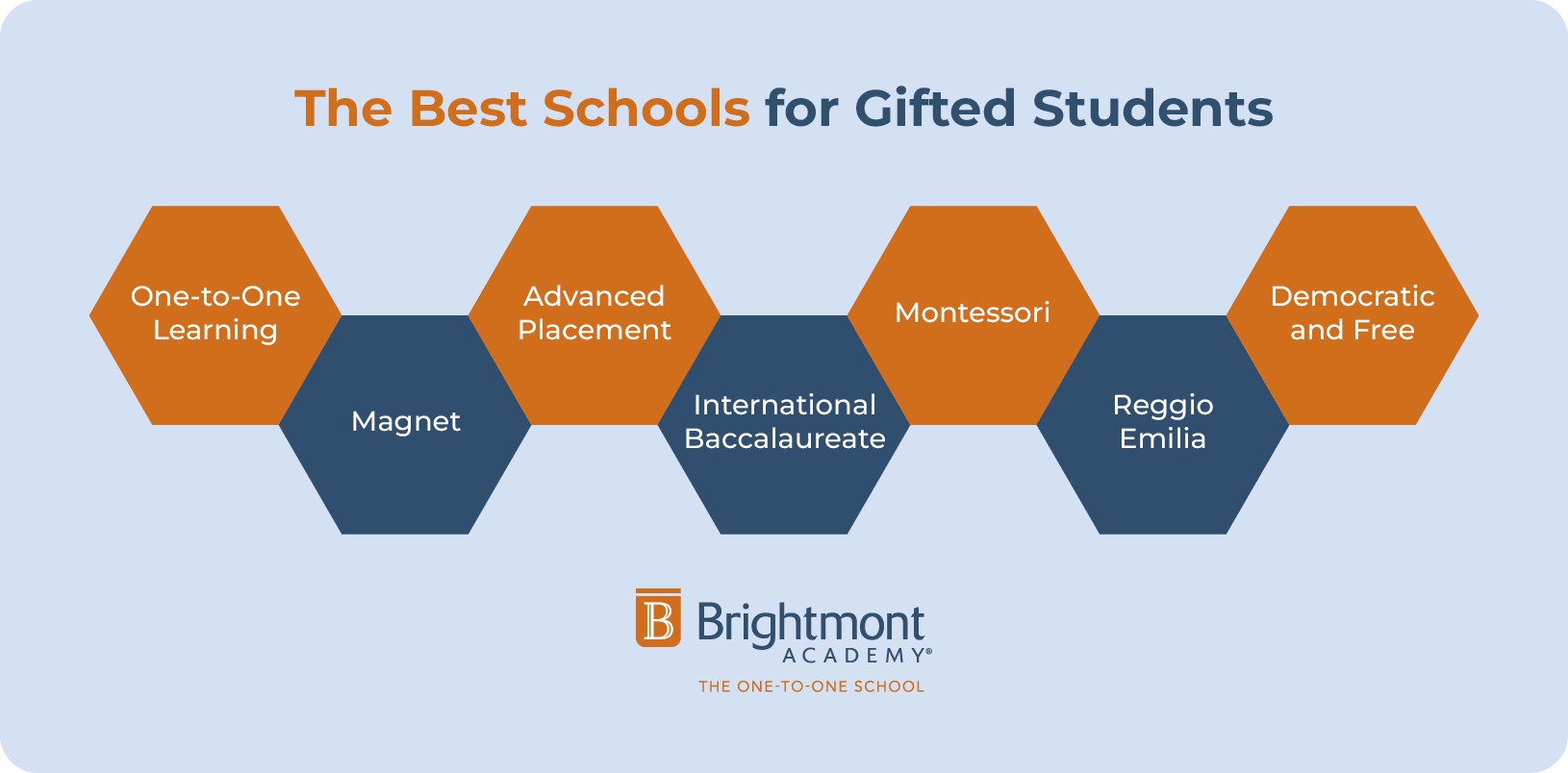
1. One-to-One Learning Schools
Personalized learning schools like Brightmont Academy are one of the popular choices for gifted students because they offer the flexibility, personalization, and rigor that high-achieving students need to succeed.
At a one-to-one learning school, every classroom has exactly one student and one teacher. This offers benefits like:
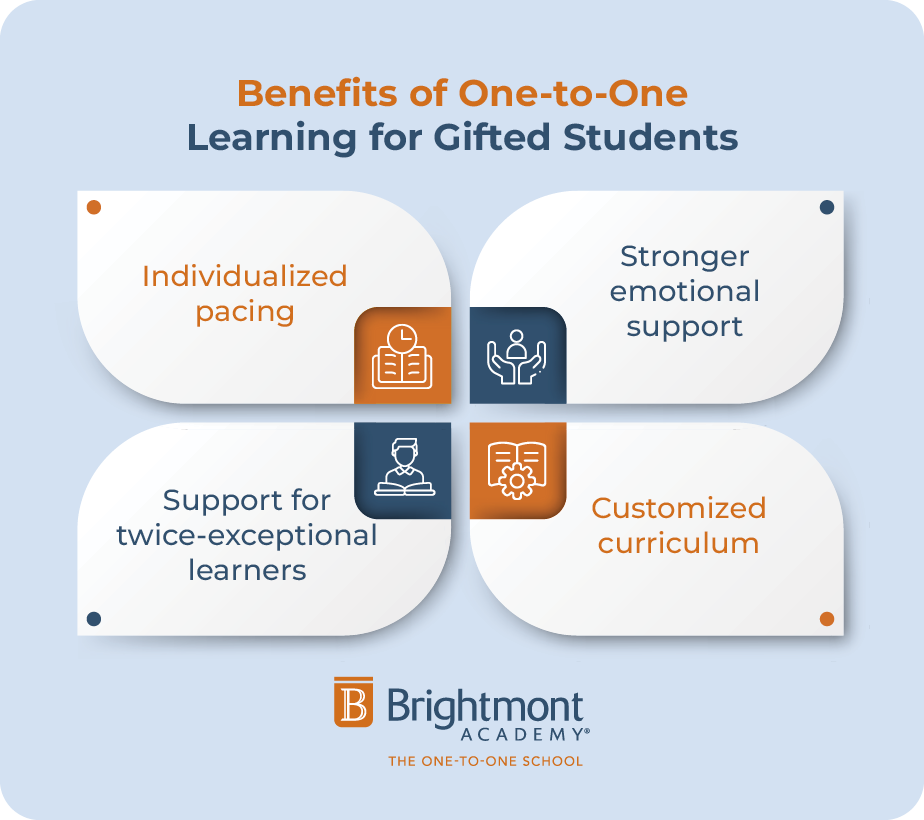
- Individualized pacing: Students can move through material they’ve mastered and spend more time exploring complex concepts in depth.
- Stronger emotional support: Close teacher relationships help gifted students build confidence, reduce anxiety, and feel more comfortable expressing their curiosity.
- Support for twice-exceptional learners: One-to-one instruction makes it easier to provide accommodations and personalized strategies while maintaining high academic expectations.
- Customized curriculum: Lessons can be adapted around a student’s interests and learning style to help them stay engaged and motivated.
How Brightmont Academy Supports Gifted and 2E Students
Brightmont Academy was designed around the idea that students learn best when education is built around who they are as individuals. Every Brightmont student works one-to-one with a dedicated teacher in a private classroom, giving them the space to learn at a pace that feels both challenging and manageable.
Learn more about how our classrooms support students in the video below:
Gifted students at Brightmont regularly accelerate through coursework at a pace that would be impossible in a traditional setting. With a mastery-based approach, Brightmont teachers focus on a student’s genuine understanding and depth of learning rather than simply assigning more busy work.
Beyond the classroom, students participate in a Homework Studio where they work alongside peers, build time management habits, and develop social skills. It’s a unique setting that honors their individual needs while keeping them connected to a wider school community.
Brightmont Academy has campuses across the U.S. Check out
the campus closest to you!
2. Magnet Schools
Public magnet schools draw students from across districts to participate in concentrated, theme-based academic programs ranging from performing arts to advanced sciences. Because enrollment is typically driven by interest, these schools tend to attract students who share a genuine passion for their focus area.
For gifted students with a strong affinity for a particular subject, magnet schools can be a compelling fit. When students are surrounded by peers who share their enthusiasm for learning, collaboration becomes more natural, and students are often inspired to push themselves further.
3. Advanced Placement Schools
Many public schools offer Advanced Placement (AP) courses—college-level classes developed by the College Board that allow students to earn college credit before graduation. AP classes are integrated into the standard school day, making them accessible to a wider range of students.
The structured academic rigor prevents classroom boredom and allows twice-exceptional students to engage with high-level material. While AP classes are available in public schools, one-to-one schools may also offer AP classes for students to receive personalized attention while earning college credit.
4. International Baccalaureate Schools
The International Baccalaureate (IB) program, like AP, offers a college-level curriculum and credit to high school students. This internationally recognized framework emphasizes interdisciplinary learning, independent research, and complex problem-solving.
Gifted students excel in programs requiring analytical skills, extensive writing, and broad conceptual connections across different subjects, which push students to develop as thinkers and communicators, not just test-takers.
5. Montessori Schools
Montessori education created a learning environment built around independence and hands-on exploration. In multi-age classrooms, students work with tactile materials and guided activities that allow them to move forward as soon as they’ve mastered a concept.
Many gifted students, particularly younger children, find this flexibility to be a welcome shift from a traditional classroom experience. Because of the emphasis on independence, students are able to keep moving when they’re ready with no pressure to slow down or hold back.
6. Reggio Emilia Schools
The Reggio Emilia approach is an early childhood philosophy built on a simple but powerful idea: children are capable and full of ideas worth exploring. Instead of following a fixed curriculum, learning grows out of children’s questions and interests.
Through open-ended, creative, and collaborative projects, gifted children benefit from the freedom to explore areas in their own way. Without rigid constraints, highly creative students can pursue the depth of their interests in a way that standard early education doesn’t make room for.
7. Democratic and Free Schools
Approaches grounded in democratic education and free schooling sit at the far end of the student-autonomy spectrum. These progressive environments allow students to completely direct their own education, participating equally in school governance and rule-making alongside staff members.
Highly independent 2E students are likely to find this model especially empowering. With no fixed curriculum limiting their direction, democratic and free schools require a high degree of internal motivation, making them a better fit for students who are ready to take full ownership of their learning.
Finding the Right Fit for Your Gifted Child
Determining a school for a gifted student is a big decision, and it’s worth taking the time to learn and visit your choices. The right fit won’t just support academic growth—it will also shape a student’s confidence and sense of identity.
Whether that means personalized learning in a one-to-one setting or a student-led approach like Montessori, the most important thing is finding a school that is flexible and meets each student where they are to help keep them growing from there.
Want to learn more? Check out our other blog resources:
- 11 Types of Alternative Schools Helping Students Thrive: Explore 11 types of alternative schools. Learn how finding the right nontraditional school can unlock your child’s full potential and bolster their confidence.
- 6 Teaching Strategies for Gifted Students: Discover effective teaching strategies that make a valuable impact on gifted learners.
Ready to transform your child's education?
Brightmont's campuses across the country have helped students like yours increase their confidence and achieve more.

More Blog Posts, News & Webinars

What are reading intervention programs? Discover the right support for your student, from traditional tutoring to personalized one-to-one instruction.
Learn how to support a struggling student with strategies to reduce stress, set healthy boundaries, and partner with your child’s school.

Learn how an elementary reading intervention program helps young students build foundational literacy skills. Discover the top strategies in this guide.
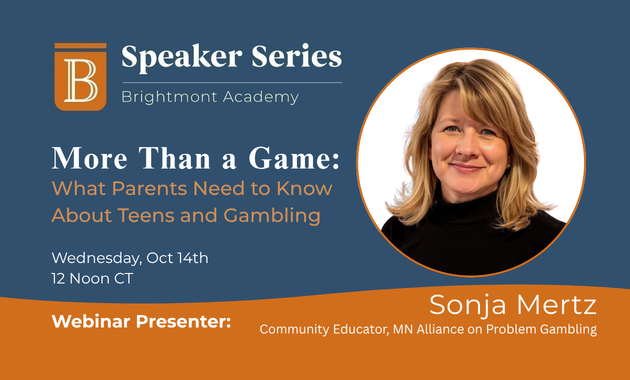
Hear from Sonja Mertz to better understand gambling and gaming trends, and how they can affect youth.

Navigating high school credit recovery and earning extra credits can be challenging. Learn how personalized learning helps students stay on track and succeed.

Looking for effective teaching strategies for dyslexia? Discover how one-to-one instruction, multisensory learning, and Orton-Gillingham methods can help.

Discover the best ADHD teaching strategies educators can use to help students maintain focus, control hyperactive tendencies, and strengthen impulse control.

Learn how flexible accredited high school programs for athletes help students balance their academic goals with their passion for their extracurricular sport.
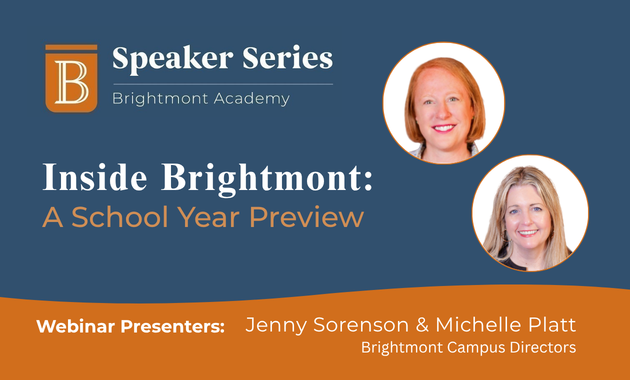
Get a closer look at one-to-one instruction and how personalized learning can be tailored to different students, schedules, and goals.