“Brightmont gave my daughter
confidence and helped her love learning
again.”
– Parent of 8th grader
400 E. Main St. Barrington, IL 60010
1-888-521-0887
inquiry@brightmontacademy.com
At Brightmont Academy, I’ve worked with brilliant students who were labeled as “difficult”, “lazy” or “unsuitable” when really, they just needed different ways to engage.
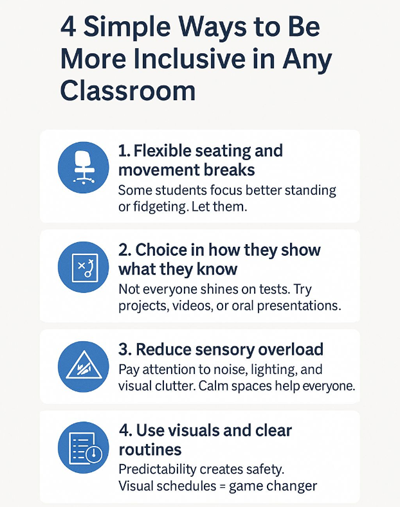
Here are 4 simple ways to make any classroom more inclusive:

I recently read an insightful article from Harvard Business Review that delves into the crucial topic of supporting parents of neurodivergent children in the workplace. Titled "How to Support Parents of Neurodivergent Children at Work"; the piece sheds light on the unique hurdles these parents encounter and proposes considerate strategies for leaders and organizations to foster more inclusive and supportive settings.
In the realm of Diversity, Equity, and Inclusion (DEI), this aspect is often a key yet overlooked component. As discussions on DEI progress, recognizing and addressing the needs of parents with neurodivergent children emerge as vital pieces of the overall puzzle.
To explore further, check out the article here.
I'm curious to learn about how others are observing or promoting this kind of support within their workplaces. Share your insights and experiences on nurturing neurodiversity, fostering inclusion, and enhancing leadership in the realm of workplace well-being. Let's continue the conversation!
In the realm of Diversity, Equity, and Inclusion (DEI), this aspect is often a key yet overlooked component. As discussions on DEI progress, recognizing and addressing the needs of parents with neurodivergent children emerge as vital pieces of the overall puzzle.

To explore further, check out the article here.
I'm curious to learn about how others are observing or promoting this kind of support within their workplaces. Share your insights and experiences on nurturing neurodiversity, fostering inclusion, and enhancing leadership in the realm of workplace well-being. Let's continue the conversation!

Tony Beals is the VP of Admissions and Enrollment Solutions at Brightmont Academy. Tony has extensive experience as both a parent and an educator working with students from an array of backgrounds including those with anxiety, depression, ASD, ADHD, and ODD. He has been in the education industry for over 25 years and has been involved as a teacher, consultant, manager, and leader.










“Brightmont gave my daughter
confidence and helped her love learning
again.”
– Parent of 8th grader

92% of Brightmont graduates are
accepted into their first-choice college

(888) 521-0887

To book a tour, talk to a campus director, or get a free consultation, please fill out the form.

©2026 Brightmont Academy®
