“Brightmont gave my daughter
confidence and helped her love learning
again.”
– Parent of 8th grader
400 E. Main St. Barrington, IL 60010
1-888-521-0887
inquiry@brightmontacademy.com
When your child is working hard but still struggling to read, write, or keep up with assignments, it can be difficult to know how to support them. You may see their effort and know they're capable of more, but their schoolwork doesn't always reflect their understanding.
Between
3 to 7% of the population has dyslexia, yet
students with dyslexia frequently don’t receive the support they need to succeed. When traditional schools provide accommodations, they focus on surface-level changes, like extra time on tests, rather than addressing how the student learns.
In this guide, we'll explore strategies that can make a meaningful difference, including multisensory instruction, the Orton-Gillingham approach, assistive technology, mastery-based learning, and one-to-one instruction.
Dyslexia is the most common learning difference. It affects how the brain processes written language and can make reading fluency, decoding, and spelling more difficult. Students with dyslexia may also experience differences in working memory and processing speed, which can make reading and other language-heavy tasks more mentally demanding.
Symptoms and common signs of dyslexia include:
Dyslexia can look different from one student to another. Some students may have difficulty sounding out new words, while others may read accurately but slowly.
Students with dyslexia may benefit from accommodations such as extra time on tests and accessible tools like speech-to-text, but they also need deeper support that addresses their particular learning needs. Accommodations can reduce barriers that make it difficult for students to demonstrate what they know.
Students may also need explicit, structured instruction that helps them process language more effectively. Multisensory approaches, individualized pacing, and opportunities for repeated practice can help students build those skills while working at a pace that allows them to learn the material.
Yes! Dyslexia can occur alongside advanced intellectual, academic, or creative abilities. Students who have both a learning difference and giftedness are often described as twice-exceptional, or 2E.
Schools must appropriately challenge their advanced intellect while simultaneously supporting their unique learning needs. An effective learning environment needs to recognize both sides rather than allowing a student's learning difference to overshadow their strengths.
Traditional classroom models rely on generalized instruction designed for neurotypical pacing, leaving dyslexic students behind. By focusing solely on basic accommodations rather than fundamentally changing the delivery, conventional schools can cause bright, neurodivergent students to experience severe academic burnout.
The downsides of traditional classrooms for students with dyslexia include:
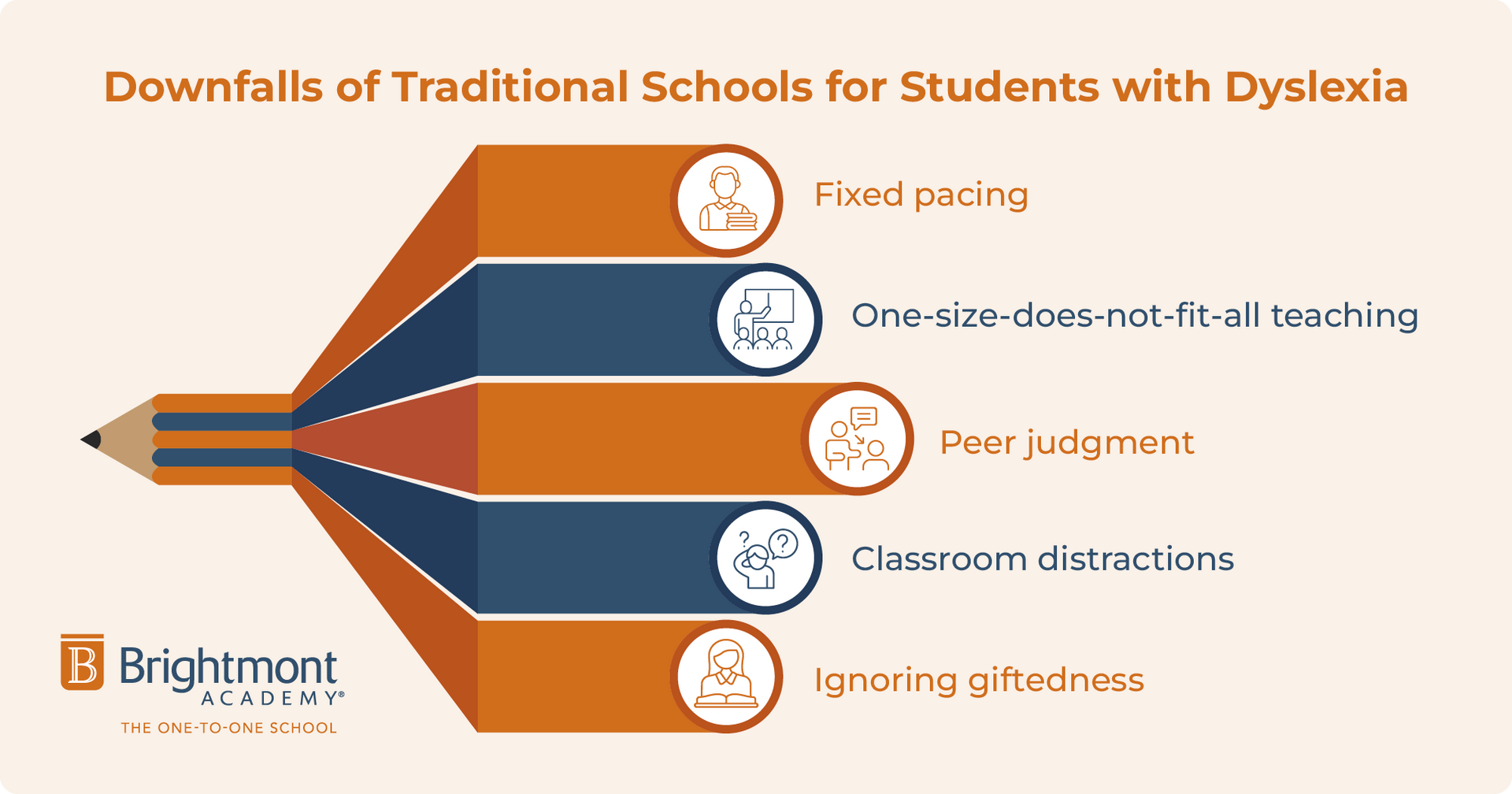
For these reasons, many parents of dyslexic students turn to alternative schools built with their child in mind.

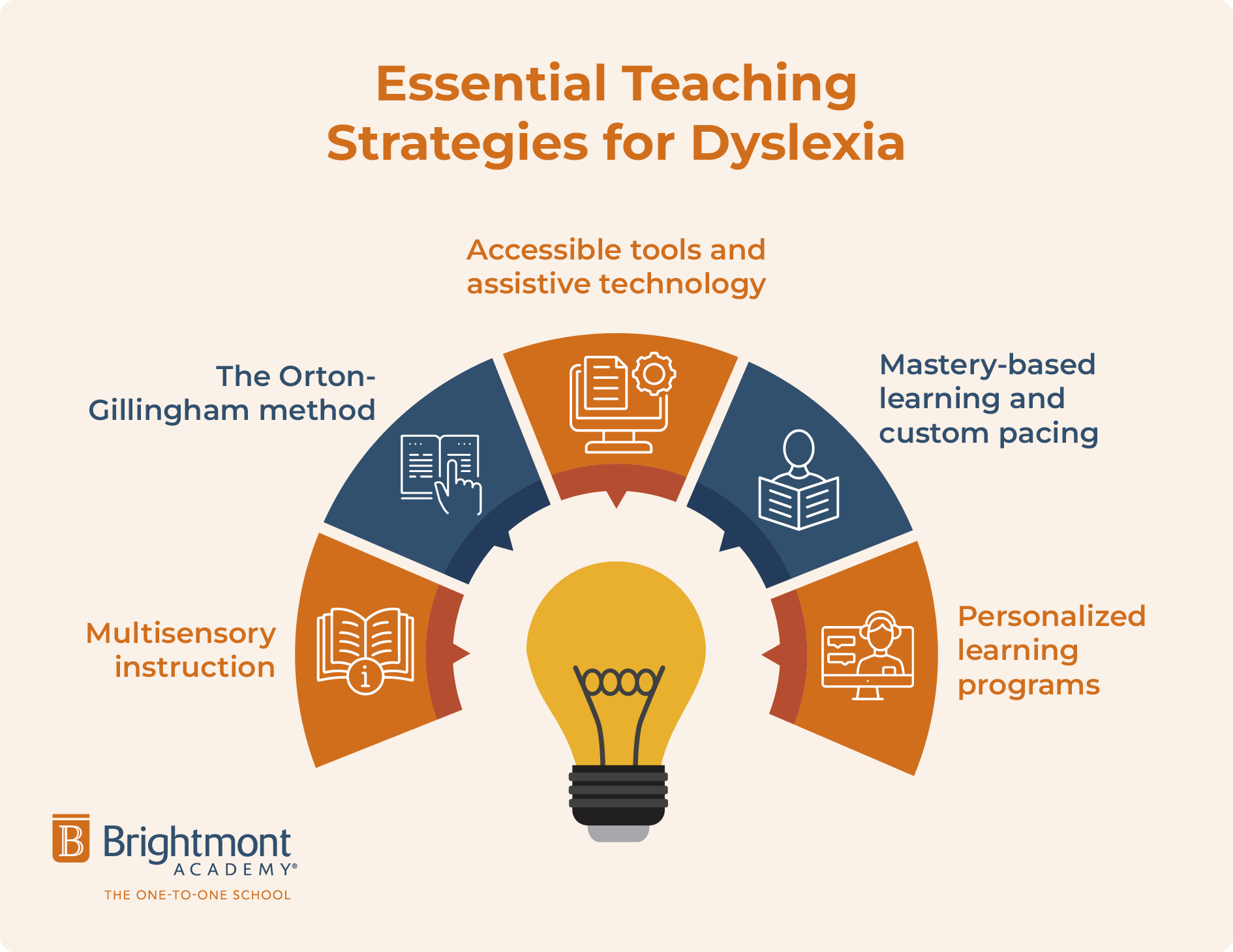
Using sight, hearing, movement, and touch simultaneously connects spoken language to cognitive processing. For students with dyslexia, using multiple pathways to practice language skills can make concepts more concrete and easier to remember.
Examples of multisensory instruction include:
The Orton-Gillingham approach is a “direct, explicit, multisensory, structured, sequential, diagnostic, and prescriptive way to teach literacy to individuals for whom reading, writing, and spelling do not come easily, such as those with dyslexia.”
It focuses on building each of the five pillars of literacy:
The approach is most common in one-to-one classrooms, where teachers can continuously monitor individuals’ progress and adapt the next lesson based on real-time mastery of the concepts.
The goal of assistive technology is to make the material more accessible. For students with dyslexia, tools that reduce the demands of decoding, spelling, or writing can help them spend more energy on demonstrating what they know.
Popular teaching tools for students with dyslexia include:
While traditional classrooms move ahead according to an arbitrary calendar, students with dyslexia often need extra time in certain areas. With mastery-based pacing, students only move forward once they have demonstrated complete understanding of a topic. This allows them to spend additional time on areas that are difficult while moving more quickly through subjects or skills they understand well.
For a student who struggles with language-based subjects, that flexibility can help build a stronger foundation rather than continually adding new material on top of skills that haven't been fully developed.
Many of these teaching strategies are difficult to implement consistently in a classroom with 20 or more students. One student may need additional phonics practice while another needs assistive technology or a different explanation of the same concept.
A one-to-one learning environment gives teachers the ability to adjust instruction around the individual student. They can modify the instructional approach, pacing, practice, and schedule based on what the student needs rather than requiring the student to keep pace with the rest of the class.
For students with dyslexia, that can mean more targeted instruction and fewer barriers between what they know and what they are able to demonstrate.
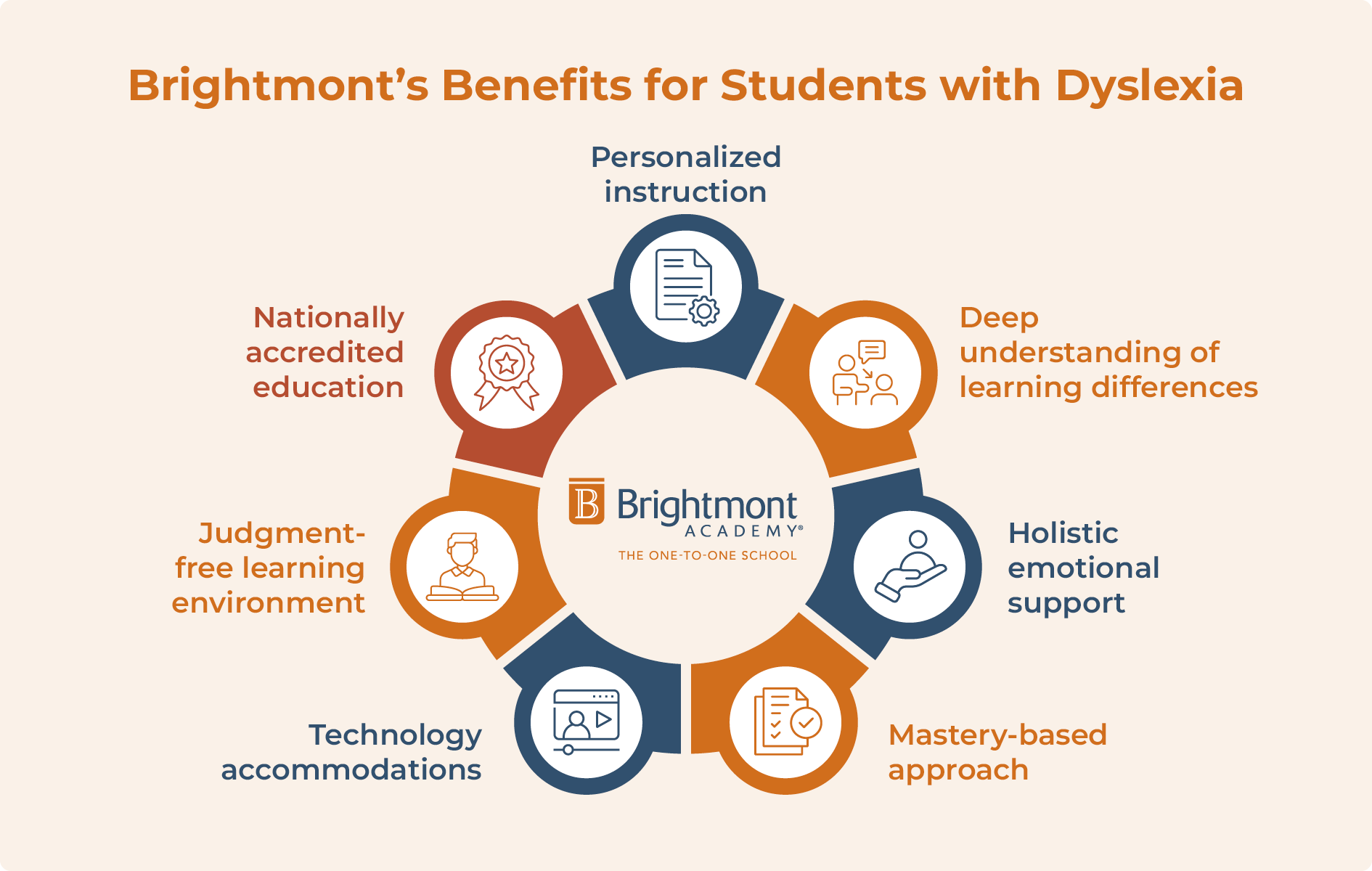
Brightmont Academy transforms the educational journey for students with dyslexia by replacing the traditional classroom with a one-to-one instruction model. Our full-time school and part-time tutoring programs have helped students with learning differences achieve greater academic success while building their confidence.
With just one teacher and one student in every classroom, Brightmont ensures neurodivergent students achieve deep academic mastery while rebuilding their love for learning.
Benefits of a Brightmont education for students with dyslexia include:
Learn more about how Brightmont supports students with learning differences in the video below:
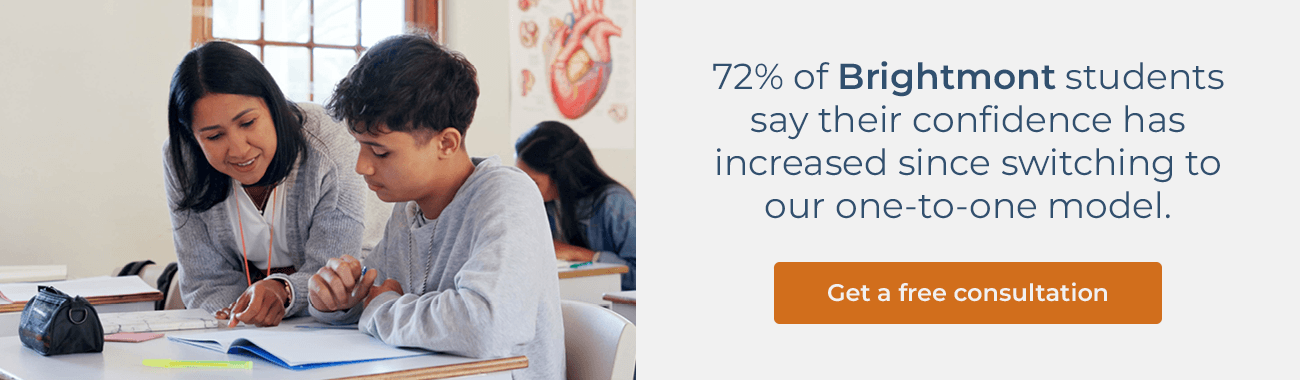
True academic mastery for dyslexic students requires a tailored environment that supports their unique cognitive and emotional needs.
Rebuilding confidence and ensuring lasting educational success starts with understanding that your child can succeed and needs targeted educational support to reach their full potential.
Want to learn more about the difference one-to-one education makes? Check out the resources below:






“Brightmont gave my daughter
confidence and helped her love learning
again.”
– Parent of 8th grader

92% of Brightmont graduates are
accepted into their first-choice college

(888) 521-0887
To book a tour, talk to a campus director, or get a free consultation, please fill out the form.

©2026 Brightmont Academy®
