“Brightmont gave my daughter
confidence and helped her love learning
again.”
– Parent of 8th grader
400 E. Main St. Barrington, IL 60010
1-888-521-0887
inquiry@brightmontacademy.com
If your child is struggling to keep up with the expected reading level for their grade, they aren’t alone. In fact, only 31% of fourth-grade students in the US performed at or above the National Assessment of Educational Progress (NAEP) Proficient level in reading in the latest report. Many parents assume that simply reading more books at home or waiting for traditional classroom instruction to "click" will eventually bridge this gap. However, when foundational literacy gaps exist, more practice without proper mechanics often leads to deeper frustration and academic burnout.
Fortunately,
reading intervention programs can help. These remedial courses provide the
targeted support that students need to strengthen their literacy. Finding the right reading intervention for your child where the curriculum adapts to their exact pacing and learning needs empowers their success.
A reading intervention program is a supplementary educational program that focuses on helping struggling readers achieve grade-level literacy.
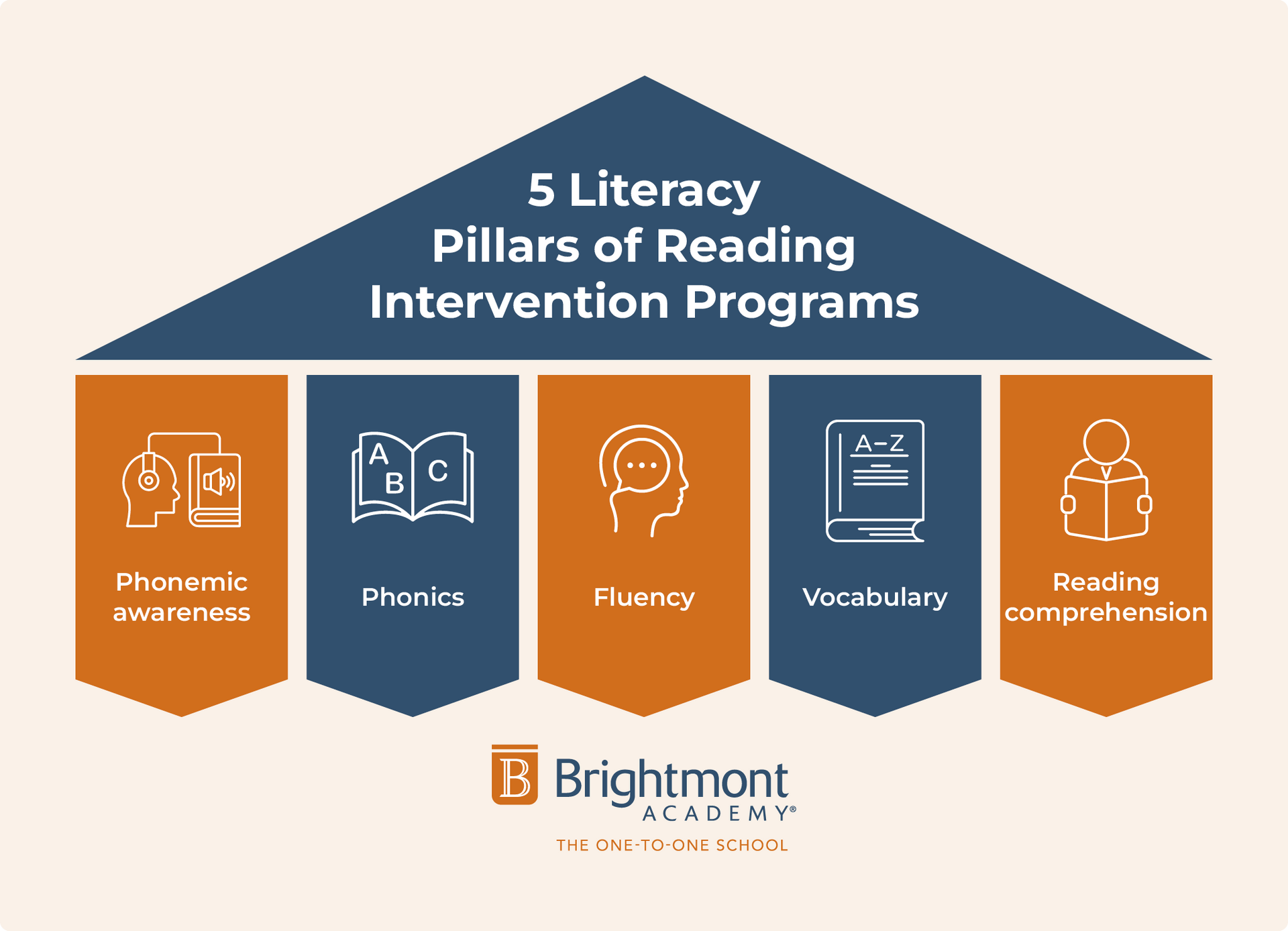
These intensive programs rebuild a student's language proficiency from the ground up and typically focus on the following core areas:
Reading intervention is a more specialized solution than regular tutoring. While standard tutoring focuses on day-to-day homework help or re-teaching classroom curriculum, literacy programs delve deeper into the foundations of reading.
These intervention programs utilize diagnostic tools to pinpoint the underlying issue with a student’s literacy development and apply scientifically backed methodologies to correct foundational language deficits.
Yes! Studies show that reading interventions are vital for students with dyslexia to develop their literacy skills. Dyslexia intervention programs are a type of reading intervention program that specifically caters to the needs of students with learning differences. These courses use specialized teaching strategies for dyslexia to ensure neurodivergent students receive the exact support they require to succeed, such as:
Students with autism often struggle with language and processing delays. Reading intervention programs can address these students’ unique learning needs through visual, auditory, and kinesthetic instruction to build concept imagery. This approach helps students not only read the material accurately but also better process its meaning.
Timeline expectations for reading interventions vary based on the student’s starting level of literacy, their particular learning profile, and their specific program’s frequency of instruction. Intensive
one-to-one programs often yield measurable grade-level improvements within a single semester. Conversely, infrequent pull-out programs integrated into a traditional public school week might require multiple years to achieve similar results.
As a parent, it can be hard to know when to worry about your child’s academic progress and what to do about it when there is a problem. Oftentimes, there are both objective academic and emotional signs that a student would benefit from reading interventions.
The most cut-and-dry sign is
stagnant reading levels. A consistent lack of academic progress over consecutive grading periods—despite standard classroom instruction or parent-led practice—typically signals a deeper mechanical issue requiring specialized attention. Talk to your child’s teachers to see whether they’re on track to meet reading expectations.
The less obvious signs that a child needs literacy interventions include personal struggles like
burnout and
school refusal. If your child dreads reading-based assignments and becomes irritable or withdrawn when they have to practice reading, they’re unlikely to make progress on their own. Burnout can eventually lead to a complete refusal to do homework or even attend school. Reading intervention programs can address the foundational struggle behind these reactions and help them rebuild their confidence.
To gauge whether it’s time to look into reading intervention programs for your child, take the quiz below:
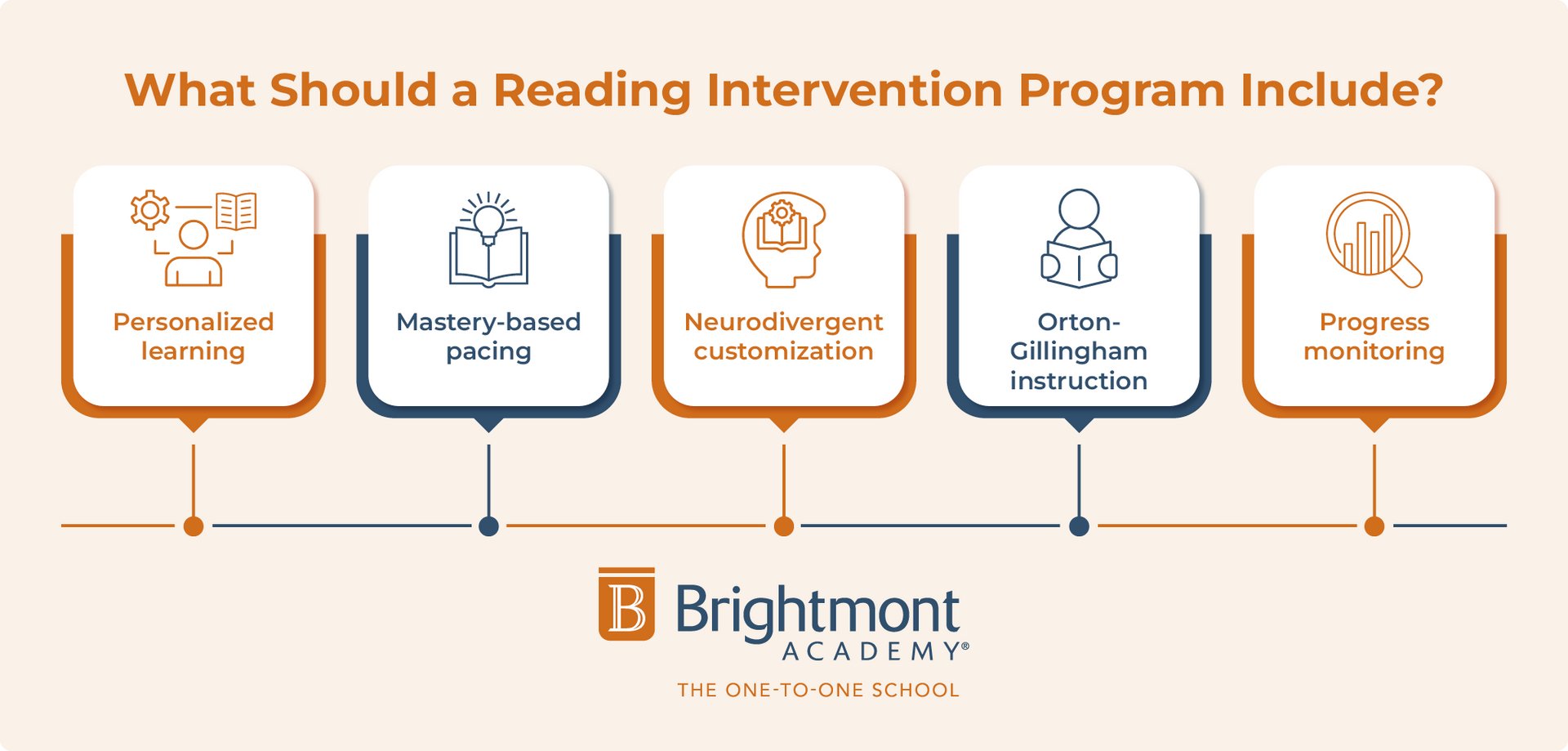
A reading intervention program should adjust instruction to match your child’s exact literacy gaps and learning style. Otherwise, you’re likely to run into the same issues you find in traditional classrooms.
Look for a literacy intervention program with:
Request a preliminary conversation with the specific educator assigned to your child before signing an enrollment contract. Evaluating their individual approach to building rapport and managing student frustration is just as critical as analyzing a program’s academic curriculum.
Brightmont Academy is a private school offering one-to-one reading intervention programs to students from Pre-K to 12th grade. Our 28 campuses across 11 states help students increase their academic achievement while supporting their emotional development.
Brightmont’s 20-session reading intervention program includes:
Enroll your child in a Brightmont reading intervention program as a supplement to their traditional school, or layer reading intervention into your child’s daily schedule by choosing Brightmont for their full-time instruction.
Hear more about how Brightmont helps students who arrive behind grade level make academic gains and rebuild their confidence:

Lindamood-Bell is a learning program that focuses on the process of learning rather than the subject. Their focus is on developing the critical sensory-cognitive foundation necessary for fluent reading and deep comprehension, which includes (but is not limited to):
There are Lindamood-Bell learning centers across the U.S., the United Kingdom, and Australia. Note that Lindamood-Bell says they do not serve students with emotional disorders, which can include those with anxiety or depression.
The Wilson Reading System is a widely recognized remedial curriculum used extensively in public school special education departments and by independent private practitioners nationwide. It uses Orton-Gillingham principles to target students from second grade through adulthood who require intensive, structured language intervention to overcome literacy deficits.
Sylvan Learning represents one of the largest supplemental education franchises in North America, offering accessible after-school support through thousands of local retail centers.
While they use proprietary digital assessments to build a personal learning plan, their tutoring sessions tend to follow a small-group model. In contrast to the one-to-one model, instruction won’t be tailored to fit your student’s precise learning needs.
Huntington Learning Center provides comprehensive supplemental education and exam preparation across hundreds of franchised physical locations. Their reading programs focus on building core academic skills for students aiming to quickly catch up to standard grade-level expectations that local school districts have set.
While Huntington primarily provides standard tutoring rather than reading intervention programs, their reading instructors are certified in Structured Literacy practices.
Lexia Core5 Reading is an enterprise-level literacy software platform most commonly used by large public school districts to support fundamental reading development for students in pre-K through fifth grade. Parents typically access this digital platform through their child's existing school district portal.
Read 180 is a comprehensive, blended learning intervention program engineered by Houghton Mifflin Harcourt to accelerate reading comprehension for older, disengaged students. It targets struggling readers in grades three through twelve who have fallen two or more full academic years behind their peers.
Hiring an independent, Orton-Gillingham-certified tutor is an excellent alternative for families residing outside the geographic footprint of dedicated one-to-one academies. These tutors operate independently, offering private sessions in family homes, local public libraries, or via secure video conferencing.
Verify a prospective private tutor's certification level through the official Orton-Gillingham Academy registry to ensure they’ve completed supervised practicum requirements.
A reading intervention program can make a massive difference not only for your child’s academic progress, but also for their self-confidence. Building literacy skills early sets a strong foundation for their future development inside and outside the classroom.
As you evaluate your options for reading interventions, consider your family’s budget, weekly schedule, and goals. These factors can guide you toward the right option for your needs.
Want to learn more about how Brightmont supports students with unique learning needs? Check out the resources below:








“Brightmont gave my daughter
confidence and helped her love learning
again.”
– Parent of 8th grader

92% of Brightmont graduates are
accepted into their first-choice college

(888) 521-0887
To book a tour, talk to a campus director, or get a free consultation, please fill out the form.

©2026 Brightmont Academy®
