Barbara Farland is an English & Social Studies instructor at Brightmont Academy in Plymouth, Minn. She holds a master’s degree in Business Communication from the University of St. Thomas and, prior to pursuing a second career in education, worked as an award-winning public relations and communications professional in both the corporate and nonprofit sectors. As a “storyteller by nature and teacher at heart,” Barbara continues to contribute to various anthologies, among other writing projects.
Elementary Reading Intervention Programs: Strategies for Struggling Readers
Barbara Farland • October 15, 2026
“To read or not to read?” That should never be the question for children, including those who struggle to learn the skill of reading.
Why is reading so important? Sure, it is critical to a student’s academic performance, but there’s so much more going on when people read. Oxford University Press (OUP) sums it up this way: “Reading is more than words—it’s how we learn to feel, understand, and connect with the world around us. It doesn’t just build literacy; it builds our emotional understanding.”
In other words, though the reading struggle may be real for lots of kids, reading can help them overcome other life struggles, too. Put plainly, it’s well worth some serious intervention.
Brightmont Academy offers an intensive
elementary reading intervention program that marries its signature one-to-one teaching methods with the acclaimed
Orton-Gillingham Approach. It’s a program that has changed the lives of hundreds of families across the country. How? By being grounded in principles that make sense and strategies that work.
Elementary Reading Intervention Principles
Before getting into the details of what reading intervention often looks like for elementary school students, it’s important to note the key principles of Orton-Gillingham that shape effective reading intervention:
Diagnostic and prescriptive
No two readers are alike, and teachers are wise to recognize and respond to that fact. That means being diagnostic or, put another way, constantly monitoring student progress and performance. It also means being prescriptive in developing lesson plans that specifically suit a student’s current needs.
Individualized
Elementary reading intervention should be holistic and individualized, not only taking into account a student’s academic profile, but also all aspects of their personal background, including culture and pastimes.
Language-based and alphabetic/phonetic
The “Sold a Story” series by American Public Media tells a sad tale of reading instruction gone wrong. In short, many schools and teachers were convinced to abandon phonetics and try a whole new way. In the end, they weren’t teaching actual reading at all, and students suffered for it. Orton-Gillingham promotes the mastery of sounds and word structure as critical in knowing how to read.
Simultaneous multisensory
A student is more likely to better understand and internalize the mechanics of reading when they use three primary neural pathways—visual, auditory, and kinesthetic—at once. This means engaging their eyes, ears, and entire body in the learning process.
Direct and explicit
Clarity and simplicity are key in effective elementary reading instruction. A student will have little chance of success if they do not know what is expected from them, not to mention how they can meet those expectations. Expert communication is critical to the entire process of quality reading intervention.
Structured, sequential, and cumulative, but flexible
Reading makes more sense when concepts and methods are taught in logical steps. Of course, flexibility outweighs rigidity when it comes to addressing each student’s nuances, whether academic or otherwise.
Synthetic and analytic
These are just fancy words for being able to distinguish the parts that make up a whole, and vice versa. Synthesis is especially important in reading (e.g., sounding out each syllable to form a whole word), and analysis is especially important in spelling (e.g., taking a word apart to determine each component).
Cognitive
Does a student buy into the importance of reading? Do they see its relevance to their life in and outside the classroom? What a student thinks about reading may be the spark that ignites their desire to read well.
Emotionally sound
A teacher must consider not only what a student thinks about reading, but also how a student feels about themself. Effective elementary reading intervention is known for
boosting self-confidence, promoting risk-taking, and positioning both triumphs and mistakes in a healthy, resilience-minded manner.

Elementary Reading Intervention Strategies
Principles are one thing, but putting them into practice is another. Though there is an ever-growing list of strategies to use within reading intervention, teachers tend to revisit the following ones time and time again.
Tactile activities
“Let’s get our hands dirty” is both the rally cry of hard-working reading interventionists and a literal description of their job. When lessons involve tactile activities, a multisensory magic happens in student engagement and understanding. Popular hands-on strategies include:
Shaving cream or sand writing - Spread a cookie sheet or desktop with shaving cream or sand, then have the student write the letter in the shaving cream or sand while saying the name and sound of that letter.- Air writing - This is much like shaving cream or sand writing, except the student is encouraged to use large muscle groups to form the shape of the letter in the air.
- Manipulatives - Blocks, cards, magnetic letters, and blending boards are popular manipulatives in a reading classroom. They aid in teaching basic phonetics, reading, and writing, as well as practicing trickier words.
Games
Like the tactile activities above, games also help students exercise their multisensory learning muscles. Reading Rockets, a national initiative that supports elementary reading education, offers ideas on how some well-known childhood games can be tweaked to teach reading concepts:
- Bingo - Cover the sound you hear with a token (e.g., the teacher says “buh” and the student searches for the letter B).
- Memory Matching/Concentration - Make cards in pairs that share something in common (e.g., “book” and “look” rhyme, the letter F and a picture of a fish). Place them face down and take turns finding matching pairs.
- Go Fish - Give each player a small hand of cards with single words on them, then ask questions such as “Do you have a word that begins with L?” or “Do you have a word that rhymes with hat?” The requester is told to “go fish” from a pile if their fellow player does not give them a match.
- Old Maid - Create two sets of matching cards, as well as one card that doesn’t have a match. Players try to collect pairs, and the person left with the one card at the end is the “old maid.”
Arm tapping
Most people agree that English is a hard language to learn. Sometimes the basic rules of phonics don’t apply, and there are so many exceptions. Enter arm tapping to help with those irregular words:
Create a stack of cards containing the words your students are learning. Reveal the words one by one by holding the cards with your non-dominant hand in front of you. Have students tap left to right using their dominant hand. Right-handed students start with their right hand on their left shoulder, and left-handed students start with their left hand on their right wrist. State each letter of the word while your students tap down their arms, and once they tap out each letter, state the whole word while creating a sweeping motion down the arm. Think of this sweeping motion as underlining the word.
Elementary Reading Intervention & Your Family
Though elementary reading intervention might sound like just fun and games, there’s good reason why: reading is to be enjoyed! When children are introduced to reading as a pleasure and privilege, it sets them up to be happy, curious readers for years to come.
Interested in seeing what reading intervention could do for your elementary school student? Contact your
local Brightmont Academy campus to learn more about an
elementary reading intervention package that meets your needs—plus you can start any time, all year round! Brightmont is equipped and eager to help.


More Blog Posts, News & Webinars
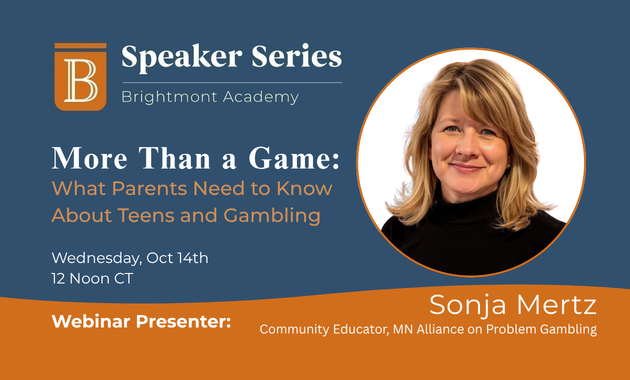
Hear from Sonja Mertz to better understand gambling and gaming trends, and how they can affect youth.

Navigating high school credit recovery and earning extra credits can be challenging. Learn how personalized learning helps students stay on track and succeed.

Looking for effective teaching strategies for dyslexia? Discover how one-to-one instruction, multisensory learning, and Orton-Gillingham methods can help.

Discover the best ADHD teaching strategies educators can use to help students maintain focus, control hyperactive tendencies, and strengthen impulse control.

Learn how flexible accredited high school programs for athletes help students balance their academic goals with their passion for their extracurricular sport.

Get a closer look at one-to-one instruction and how personalized learning can be tailored to different students, schedules, and goals.

Tutoring for ADHD goes beyond basic review to accommodate unique learning needs. Discover how personalized instruction and executive functioning support help.

Brightmont Academy's newest campus, its second in North Carolina, is now open and enrolling students in Cary.

Brightmont Academy Speaker Series