High School Credit Recovery: How to Get Extra Credits

Aisha Walker • October 6, 2026

Did you know that about 13% of U.S. high school students do not graduate on time? Some students start to fall behind after one difficult class, while others struggle with absences, a particular subject, a health issue, or the balance between school and extracurricular pursuits such as athletics or the performing arts.


Traditional schools aren’t designed to meet every student’s needs. A student may understand a concept quickly in one class but need more time and support in another. They may also struggle with the pace of instruction, a rigid schedule, or a teaching style that doesn’t match how they learn best.


Credit recovery can help students get back on track, but the format matters. Too often, credit recovery programs follow the same structure as
traditional schools—students work through the same material, on the same schedule, with limited opportunities for individualized attention.


This guide explores how high school credit recovery works and why customized, one-to-one learning is the best option for rebuilding academic confidence.



Want to explore personalized credit recovery options for your student? Schedule a call with Brightmont Academy to get started.

FAQs About High School Credit Recovery

What does high school credit recovery mean?

High school credit recovery allows students to retake or make up for courses they previously failed or missed, helping them meet graduation requirements. While options vary by school district, accredited private programs offer specialized support so students can earn the exact credits they need.


What is the fastest way to recover high school credits?

The most efficient way is through customized, m where students progress as soon as they demonstrate understanding, rather than waiting for a semester to end.


Will colleges accept recovered or extra credits?

Yes, as long as the credits are earned through a fully accredited institution.


Can my student earn extra credits while still enrolled in their public high school?

Absolutely. Many students take individual courses for credit outside of full-time enrollment to make up for missing classes, retake a subject, or accelerate their learning.


How is credit recovery different from traditional summer school?

Traditional summer school groups students together and moves at a set pace. Modern credit recovery, especially one-to-one models, tailors the instruction precisely to where the individual student struggles.

Reasons for Seeking Outside Credits in High School

Students pursue outside credits to maintain their graduation timeline, alleviate academic stress, or bypass the distractions of a crowded classroom. Whether recovering failed credits or accelerating their education, specialized outside programs provide flexible, targeted learning environments tailored to individual student needs.


High school recovery programs can help many students, including:


  • Students with learning differences: A one-size-fits-all classroom doesn’t always give students the time, instruction, or flexibility they need to succeed. Students with dyslexia, dysgraphia, or another learning difference may do well in most subjects but struggle in a particular course. Targeted credit recovery allows them to focus on the skills they need to strengthen while receiving personalized instruction that matches how they learn best.
  • Students at risk of falling behind: Schools implementing targeted credit recovery for the 2023–2024 academic year saw adjusted at-risk graduation rates reach 88.7%, representing a statistically significant improvement over non-user schools.
  • Gifted and 2E students: Earning additional credits gives academically advanced students opportunities to explore subjects beyond their standard coursework or move ahead in areas where they're ready for a greater challenge. For a gifted or twice-exceptional student experiencing academic burnout, a one-to-one environment can also provide a different pace and approach to learning that keeps them engaged.
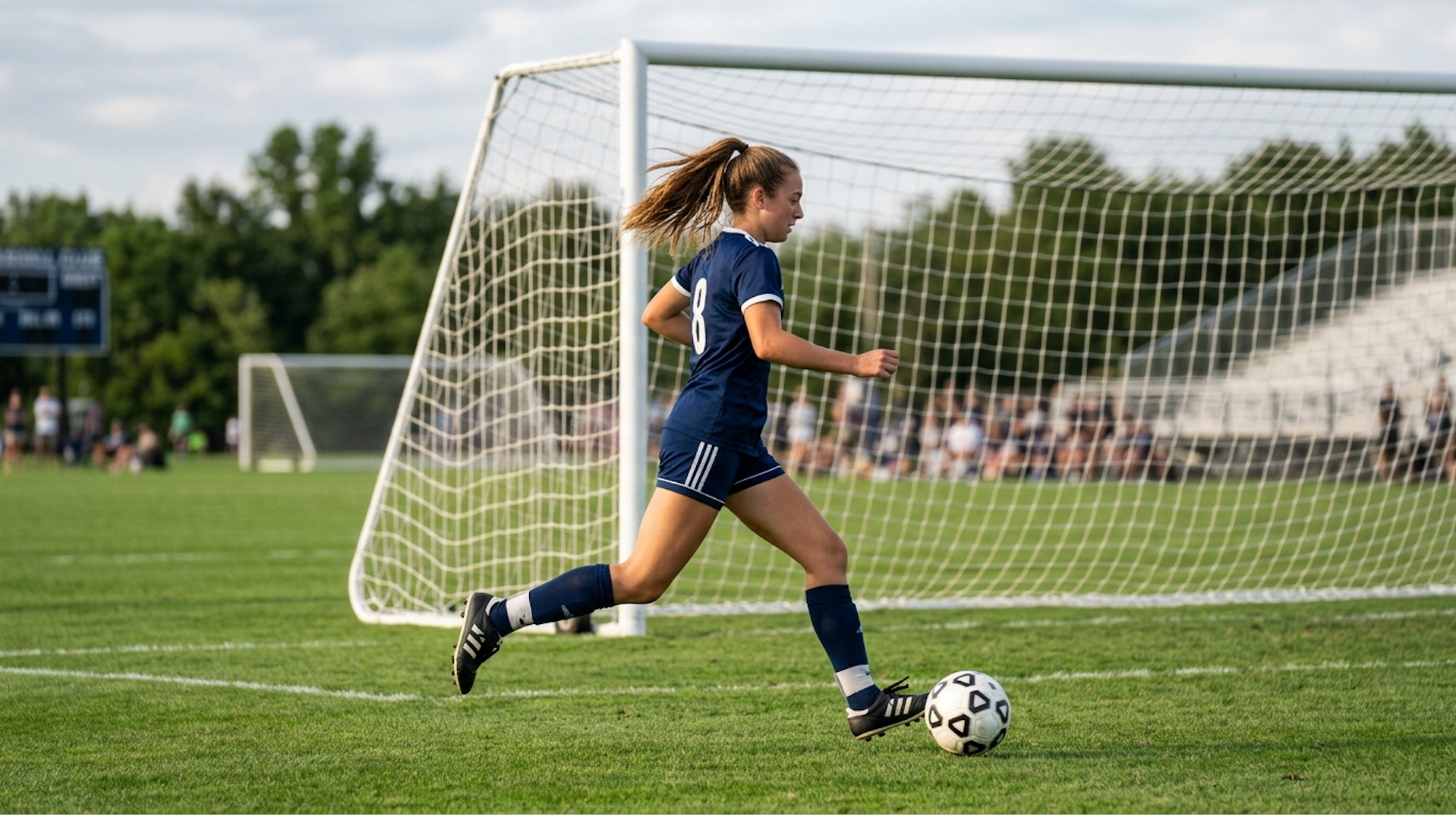
  • Student athletes and performers: Practices, competitions, rehearsals, performances, and travel can make a traditional school schedule difficult to manage. Flexible credit options can help your student make up missed coursework or earn needed credits while continuing to pursue the activities that are important to them.


Brightmont's one-on-one classrooms transform your child's learning. Connect with us.

Accreditation Requirements for High School Credit Recovery

When your student needs to make up a high school credit, there’s already enough stress without worrying whether an extra course your child completes will count toward graduation.


That’s why accreditation is an important piece of the puzzle when you’re researching credit recovery programs.
Fully accredited institutions undergo rigorous evaluations to guarantee their curriculum meets consistently high academic standards.


To find an appropriate credit recovery program:


  • Ensure university acceptance: Colleges and universities only accept recovered or extra credits if they are earned through a fully accredited institution.
  • Validate academic rigor: Accredited private schools ensure the coursework is broadly recognized by universities nationwide and meets specific state graduation requirements.
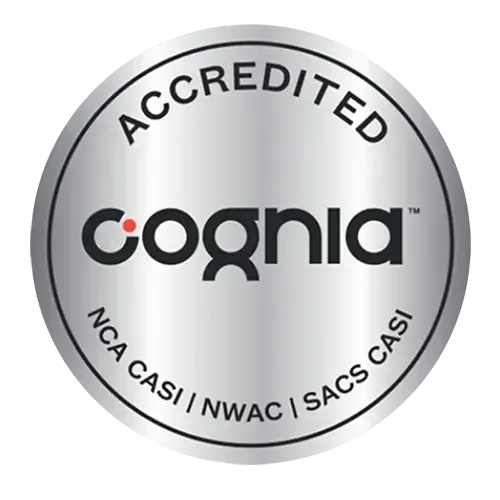
  • Confirm regional standards: Parents must look for regional accreditations, such as Cognia, to guarantee the seamless transferability of course credits back to the student's primary high school.


The bottom line: Don't just ask, “Can my child earn the credit?” Ask, “Will this credit count, and will my child get the support they need to actually learn the material?” Those questions can help you find the right credit recovery option for your family.

How to Earn Additional Credits in High School

Earning extra credits requires you to find the right format to support your student’s unique learning profile. This depends on what your student needs academically and how much structure and support they need along the way. Options include:


  • At-school credit recovery: Many public high schools offer traditional summer school or after-school programs, though these models group students together and force a rigid learning pace.
  • Online programs: Independent online modules provide scheduling flexibility, but isolated students must navigate these self-paced courses alone.
  • External private programs: External options offer dedicated educational support through fully accredited courses, allowing students to comfortably earn credits outside of full-time public enrollment.


The best option isn't just the one that helps your student earn a credit; it's the one that fits how they learn. Consider how much flexibility, teacher support, and individual attention your student needs before choosing a credit recovery program.

Ready to see how one-to-one instruction can transform your child's educational experience? Schedule a call.

How One-to-One Learning Helps Students Earn Credits

Brightmont Academy offers high school credit recovery options both for students wanting to catch up and those looking to get ahead. Our unique one-to-one approach guarantees that every classroom has just one teacher and one student.


Benefits of a
one-to-one education for high school students seeking credit recovery include: 
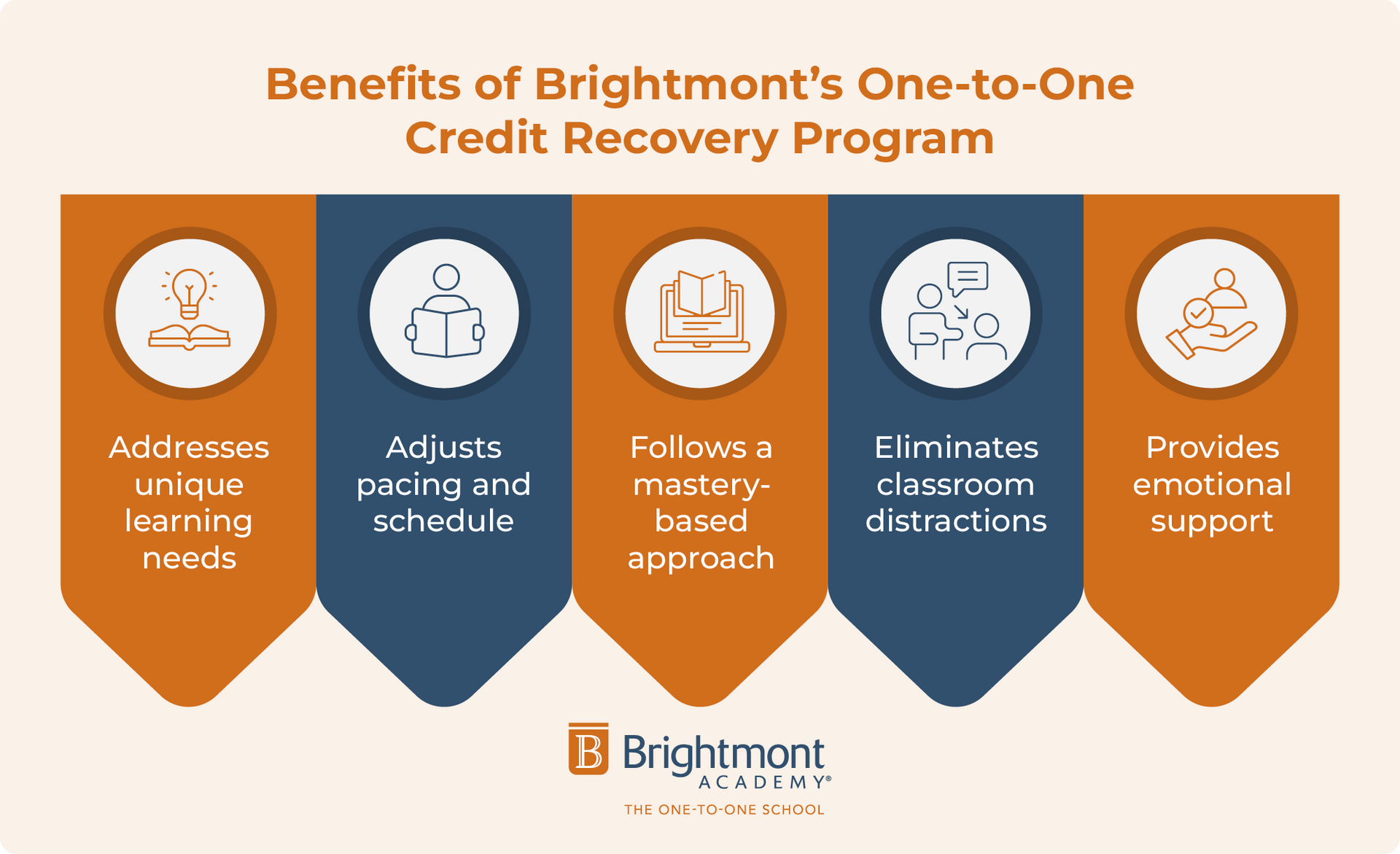
Benefits of Brightmont's one-to-one credit recovery program, listed below
  • Addresses unique learning needs: Every student has different strengths, challenges, and ways of learning. One-to-one instruction gives the teacher time to understand what isn't clicking and adjust the lesson accordingly, rather than expecting your student to adapt to a one-size-fits-all approach.
  • Adjusts pacing and schedule: Maybe your student needs to slow down and spend a little longer on algebra—or maybe they've already mastered several concepts and are ready to move ahead. Personalized learning allows the pace to change with the student. Flexible scheduling can also make it easier to fit a course around school, sports, performances, or other commitments.
  • Follows a mastery-based approach: Getting through a textbook isn't the same as understanding it. With mastery-based learning, students move forward as they demonstrate understanding of the material. This gives them the opportunity to revisit challenging concepts instead of simply moving on because the class has reached the next chapter.
  • Eliminates classroom distractions: For some students, the social and sensory demands of a traditional classroom make it harder to focus. Working one-to-one removes many of those distractions and gives students a dedicated space to concentrate on the lesson and work directly with their teacher.
  • Provides emotional support: Falling behind can take a toll on a student's confidence. Having a consistent teacher who knows their strengths and challenges can make it easier to ask questions, work through mistakes, and recognize progress along the way. For a student who has started to associate school with frustration, that relationship can make a meaningful difference.


Brightmont offers nationally accredited individual courses for credit and credit recovery. Our curriculum for high school students includes:


  • English
  • Math
  • Science
  • Social Studies
  • World Languages
  • Advanced Placement Courses
  • Electives


With Brightmont’s part-time, full-time, and tutoring options available online and in person , you can find the right solution for your student.

Is one-to-one learning right for your child? Get a free consultation

Get Started with High School Credit Recovery Today

One-to-one teaching gives each student an education entirely designed around their unique learning needs, helping them overcome academic hurdles and earn required credits. By choosing an accredited, customized learning environment, you can ensure your high school student stays on track for graduation.


Want to learn more about one-to-one education? Check out the resources below:


Ready to find the right personalized learning program for your child? Brightmont helps students like yours maximize their potential. Find a location near you.

More Blog Posts, News & Webinars


alt=
By Karrie Wozniak • October 5, 2026
Looking for effective teaching strategies for dyslexia? Discover how one-to-one instruction, multisensory learning, and Orton-Gillingham methods can help.
By Barbara Farland • October 5, 2026
Discover the best ADHD teaching strategies educators can use to help students maintain focus, control hyperactive tendencies, and strengthen impulse control.
More Than a Game: What Parents Need to Know About Teens and Gambling
October 1, 2026
Hear from Sonja Mertz to better understand gambling and gaming trends, and how they can affect youth.
By Rachel Pollock • September 16, 2026
Learn how flexible accredited high school programs for athletes help students balance their academic goals with their passion for their extracurricular sport.
September 16, 2026
Get a closer look at one-to-one instruction and how personalized learning can be tailored to different students, schedules, and goals.
alt=
By Aisha Walker • September 16, 2026
Tutoring for ADHD goes beyond basic review to accommodate unique learning needs. Discover how personalized instruction and executive functioning support help.
Grand Opening, Cary NC
September 9, 2026
Brightmont Academy's newest campus, its second in North Carolina, is now open and enrolling students in Cary.
August 19, 2026
Brightmont Academy Speaker Series
alt=
By Sarah Horton • August 14, 2026
Looking for the right educational environment to support your child’s mental and emotional wellbeing? Discover crucial accommodations for students with anxiety.
More Posts