“Brightmont gave my daughter
confidence and helped her love learning
again.”
– Parent of 8th grader
400 E. Main St. Barrington, IL 60010
1-888-521-0887
inquiry@brightmontacademy.com
In an admittedly oversimplified definition, Traditional Educational Systems educate students by providing experts, and texts written by experts, to teach students a variety of general and specific subjects that have been deemed “important” to understand for success in further education, future jobs, and to be future productive members of the larger society. It essentially was born out of the Industrial Revolution. This is why emphasis on obedience to authority, attention to given tasks, and changing subjects based on a schedule of bells are so prevalent in our educational history. Sure, some elements of Traditional Education have been modified in various ways, and arts and sports have been added to the mix but, by and large, we are still educating our students via an industrial model. More recently, some educational systems are looking backward to move forward in this 21st Century.
“The United States federal government and its Department of Education are calling for reform as student debt has increased and the cost of college tuition has risen steadily to unattainable levels. In the next decade, the number of jobs requiring a college degree will increase to 70% of all new jobs. Competency-based education is currently being explored as an alternative to a traditional college degree. Under this umbrella, students will be assessed on what they know rather than how much time they will spend seated in a classroom.”
In an article from The Journal of Competency-Based Education from June, 2016, entitled “The Operational Definition of Competency- Based Education,” Jennifer Gervais traces the history behind the concepts. In the article, Gervais describes Competency-Based Education (CBE) as being “a synthesis between a liberal arts education and the professional education movement. The professional education movement placed emphasis on practical preparation for a profession.”
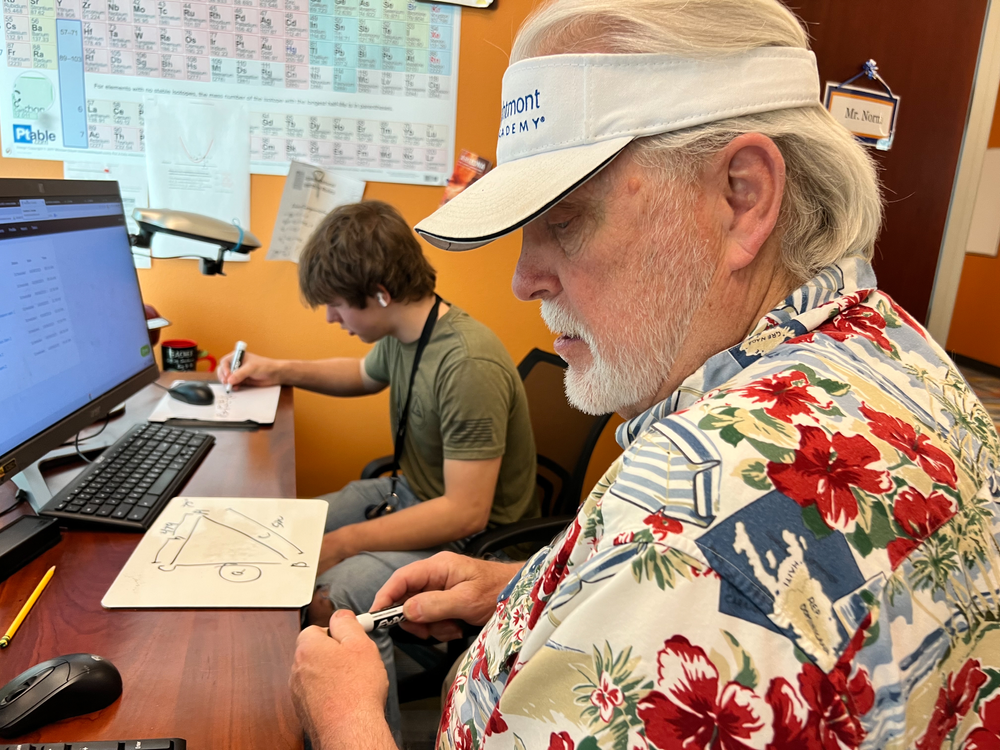
She also explains that the roots of the system arguably began with the Morrill Land-Acts of 1862. “‘The Morrill Land-Acts’ provided the basis for an applied education oriented to the needs of farm and townspeople who could not attend the more exclusive and prestigious universities and colleges of the eastern United States’ (Clark,1976,p.23).”
In the article, Gervais states, “These programs relied less on rote teaching and learning and more on training (Goodchild,2007). Students were examined on how they were able to apply what they learned to practical job situations.”
So, what does Competency-Based Education look like in practice? Students work toward mastery of various agreed-upon competencies that are aligned with standards for the types of careers and colleges toward which the students are already naturally inclined. Usually, a contract or education plan is drawn up based on the student’s choices. It then becomes the educator’s responsibility to connect with those careers and colleges, to collaborate with the students toward their success, and to plan with the students to accommodate for the students’ needs and abilities.
Assessments in CBE are both formative and summative, just as they are in the traditional setting, however they are taken on the student’s readiness, rather than on a timeline of completion. Also, summative assessments become demonstrations of mastery of the subject in a variety of ways, as opposed to recall of pertinent information. Grading is done by evaluating a student’s percentage toward mastery of a given subject.
Pacing in CBE is perhaps the most affected by this system. Instead of a student completing all of the sections of a subject in a specific order before taking the requisite assessments on the concepts, as the traditional system operates, students pace themselves. They are allowed to accelerate or decelerate their learning based on their demonstration of competency of each learning objective, after which they take summative assessments. For the educator, their role in pacing is not lesson planning and follow through, but rather it is in assisting the student when and where needed, and then making sure the student is remaining on a predetermined timeline.
Education is certainly not absolute, and neither are the applications of either Traditional, or Competency-Based Learning. At the school at which I work, Brightmont Academy ( www.brightmontacademy.com ), we employ a sort of hybrid model between the two. Students at Brightmont do all of their coursework on an individualized, all-computerized online platform.
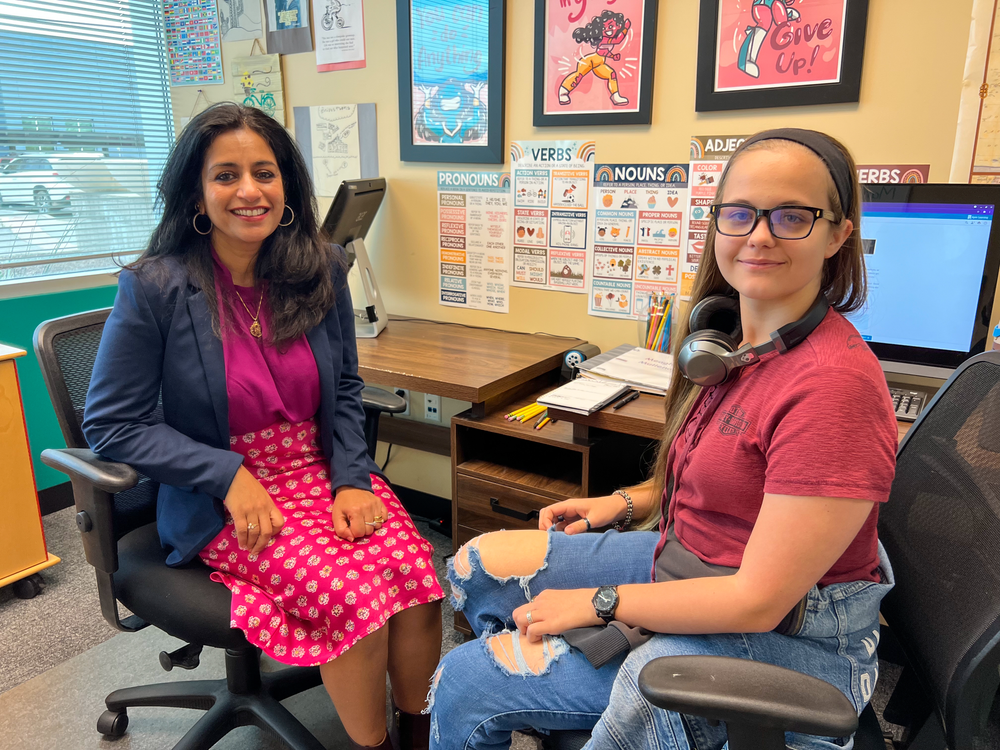
The curricula are selected and prepared individually for each student based on the declared requirements of their more traditional home schools, however, students are allowed to operate at their own pace. They can even choose to go out of the order of the assigned units, as long as they complete all of the requirements in the end. As a teacher, I am tasked with facilitating student understanding of the presented materials, providing study skills supports, and making sure students stay on the predetermined overall timeline.
Educating students for life in the 21st Century is no easy task. Recognizing traditional systems, while keeping an eye on the past may just be our best option for success in the future.

Jamie Bachmann is a former high school special education teacher of over 20 years. He earned his Bachelor’s Degree in Communication Management from The University of Dayton, and his Master of Arts in Teaching from National-Louis University. He is also a lifelong writer, artist and musician. Jamie, his wife, and their numerous rescued felines live in Chicago’s North Shore.






“Brightmont gave my daughter
confidence and helped her love learning
again.”
– Parent of 8th grader

92% of Brightmont graduates are
accepted into their first-choice college

(888) 521-0887
To book a tour, talk to a campus director, or get a free consultation, please fill out the form.

©2026 Brightmont Academy®
