“Brightmont gave my daughter
confidence and helped her love learning
again.”
– Parent of 8th grader
400 E. Main St. Barrington, IL 60010
1-888-521-0887
inquiry@brightmontacademy.com
From chalkboards to whiteboards to smartboards, and from slides to film strips to streaming video, technology in education moves quickly and its usefulness is always up for debate. Today, many schools are pretty well-established in moving more deeply into operating as a paperless environment by using suites of shared technologies and even using virtual online textbooks. Looking toward the future, artificial intelligence will undoubtedly play a big part in education. But what seems to work, what are the perceived drawbacks, and how is new technology potentially going to educate our students?

Educational technology for individual students with disabilities can be a great equalizer. It can enable them to learn and participate, to be included, in not only school, but also in extra-curriculars of all kinds, and in life. According to the World Health Organization in 2017, there are more than one billion people who need one or more assistive products or devices (WHO, 2017 ).
“Educational Technology (EdTech) plays a significant role in enabling learners with disabilities to access learning at school and reduce educational and social exclusion. It also enables them to enjoy the benefits of a full school curriculum and to participate in activities in different educational arrangements”
Though the assumption is that students are motivated by the use of technology in the classroom, they can quickly become bored with it and often manipulate technology to their preferences in opposition to the course purpose and in support of their own entertainment. Students routinely know more about the technology or program than the teachers, and they often quickly suss out the loopholes and time delays to use them to their advantage.
Teachers are required to constantly educate themselves on the tech, as well as on its limitations. Integrating new technology into lesson plans and classwork can be extremely difficult. It frequently eats up teacher planning time, and even hours at home, in an effort to try to guarantee a smooth running next class.
In the day-to-day classroom, however, the use of technology is a challenge for both students and teachers. Batteries die, power cords and chargers are forgotten at home, and school networks go down, which stops access to online resources. So many elements of the educational infrastructure now are so fully online that when a school’s wi-fi or network goes out, all learning comes to a standstill. Attendance cannot be taken, virtual textbooks cannot be accessed, and no other online resources can be scrambled to in the pinch.
“...technology-related topics and professional development efforts are not yet being properly introduced in pre- and in-service teacher education (Blömeke et al., 2010 ; Bozick et al., 2017 ; Mammes et al., 2016 ). To successfully promote technology education, establish curriculum standards, and properly train in- and pre-service teachers, it is important to first identify the extent to which technology education is taught, the current problems and perceived barriers in the integration of technology practices, and how competent and confident teachers feel regarding the integration of technology.”
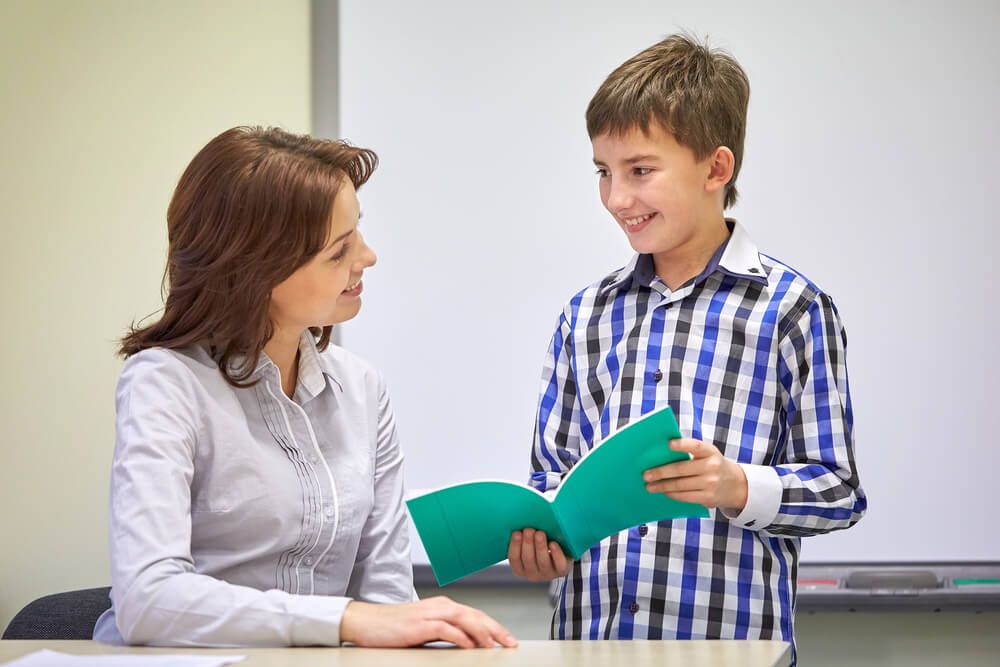
And what about an online, one-to-one school like Brightmont Academy , at which I teach? During each one-hour class, students work on their own, individual desktop PC’s with a teacher by their side, as opposed to the frequently-issued laptops that students individually purchase and can manipulate in inappropriate ways. Teachers facilitate by adding additional explanation, helping students maintain or regain focus, and keep track of the lessons and work completed. The lessons are fully online via multifaceted educational programs with integrated media and shared documents, all of which can be accessed anywhere there is a computer and Wi-Fi.

There is no shifting between various technologies because there is only one. The network in such a personalized environment is not nearly as taxed as it is in a larger school. And teachers have no lesson planning, other than to bring up the student’s personalized “Planning Guide” that directs the order of the curriculum, and to preview the designated lesson for the class.
As technology speeds ever forward, the challenges of its integration and effective utilization in the educational environment increase. In the future, it may not be artificial intelligence that is the greatest cause for concern, but rather the flexibility of human intelligence in the educational system.

Jamie Bachmann is a former high school special education teacher of over 20 years. He earned his Bachelor’s Degree in Communication Management from The University of Dayton, and his Master of Arts in Teaching from National-Louis University. He is also a lifelong writer, artist and musician. Jamie, his wife, and their numerous rescued felines live in Chicago’s North Shore.






“Brightmont gave my daughter
confidence and helped her love learning
again.”
– Parent of 8th grader

92% of Brightmont graduates are
accepted into their first-choice college

(888) 521-0887

To book a tour, talk to a campus director, or get a free consultation, please fill out the form.

©2026 Brightmont Academy®
