“Brightmont gave my daughter
confidence and helped her love learning
again.”
– Parent of 8th grader
400 E. Main St. Barrington, IL 60010
1-888-521-0887
inquiry@brightmontacademy.com
Many public and private schools claim to be “college-preparatory,” but saying it and really being it are not the same thing. If college-prep is a priority, what should families look for in the schools they consider? There seem to be four clear marks of the schools that do it right…

Rigorous Coursework
The foundational coursework of college-prep schools is created to achieve two main objectives.
Exposure to rich, thought-provoking content is an obvious one. Students become familiar with the work of reputable historians and other authors—both modern and classical, fiction and nonfiction—as well as complex scientific and mathematical concepts. Core curriculum revolves around topics that require deep engagement, which leads to the second objective of college-prep coursework: critical thinking.
Critical thinking is not only absorbing and retaining information, but also examining it to discern its validity and to use it in constructing one’s own opinions. Reading the quality content presented by college-prep schools should give way to meaty conversations with teachers, as well as opportunities to analyze and critique the material independently. Thus, effective communication, whether spoken or written, becomes a natural byproduct of well-executed college-prep courses.
Advanced Placement Options
True college-prep schools also offer advanced placement (AP) courses. Such curriculum is typically taught in bachelor degree programs, but when presented in high school, students become accelerated in their learning, possibly even earning college credit.
Another benefit of taking AP classes? Such coursework looks really good on high school transcripts. Recruiters and admission offices notice when applicants have chosen a more challenging academic path versus an easier load. In fact, research shows that 85 percent of selective post-secondary schools make admissions decisions based on AP class involvement.1
Keen Focus on Study Skills The type of coursework is one thing. How students get their work done is another. That’s why college-prep schools also concentrate on teaching study strategies that lead to better understanding and retention. College-prep schools also help students establish healthy routines and organizational systems that they can continue to utilize during their college careers and beyond.
College-prep schools often champion the use of planners or other assignment-tracking tools to help students manage their academic expectations. Students also become familiar with effective note-taking methods. For example, Cornell Notes is a popular note-taking practice that results in a dependable study guide complete with summaries and possible test questions. In other words, students become adept at taking notes and organizing them for the purpose of academic success.
But not all students are the same when it comes to studying those notes. That’s why college-prep schools ensure students know their unique learning styles—if they learn best through hearing, seeing, reading/writing, and/or hands-on activities. Once students know their learning styles, they are better able to adapt their notes and address other assignments in ways that ensure long-term retention and application. Such insight and practice becomes invaluable during the more demanding college years!
Entrance Exam Support
Another important factor for college-bound students? The college entrance exams. In addition to grade-point average and other transcript data, SAT and ACT scores can make or break the possibility of attending certain colleges.
Given its importance, studying for entrance exams requires a solid plan. It generally takes months of daily study to achieve success. It’s most beneficial to have the support of a teacher or tutor to offer suggestions on test strategies. Multiple practice tests tend to reveal progress, as well as lingering learning gaps. In other words, students need a very structured and multifaceted plan!
Most schools cheer on their students’ entrance-exam success from the stands, referring families to other sources for study and practice. But there’s one school that offers not only SAT/ACT support, but also the entire college-prep package…
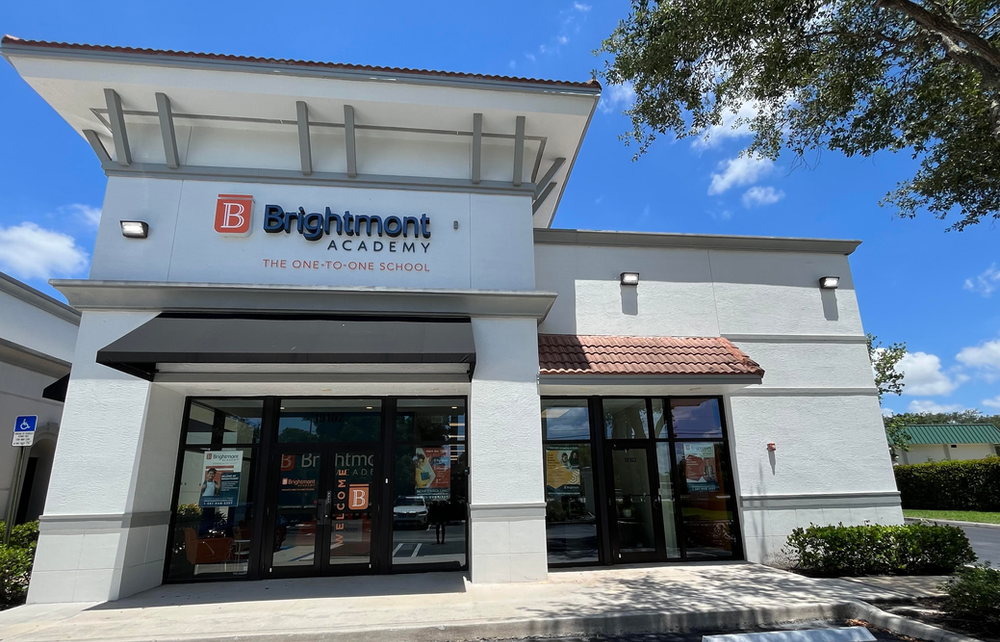
Brightmont Academy: The Whole College-Prep Package
Brightmont Academy is best known as “the one-to-one school,” meaning students receive the undivided attention of their teachers. Reasons abound on why families appreciate this option, but the added bonus? Brightmont is also a private college-prep school.
Brightmont bears all of the marks of a true college-prep school by offering rigorous coursework, including AP classes, and infusing its whole catalog with an emphasis on study skills. Pacing guides and assignment trackers, for example, help students develop long-standing routines and healthy habits around their schoolwork. Plus Brightmont’s entrance-exam support means that students never have to leave the familiar and friendly surroundings of their school home to prepare for college. In short, it’s seamless.
And there’s more! It’s clear that Brightmont teachers get to know students in a way traditional teachers do not. Because of the school’s one-to-one approach, Brightmont can help high schoolers arrive at more nuanced decisions about their college selections and career paths.
“Before anything else, preparation is the key to success,” said inventor Alexander Graham Bell.2 Put another way, preparation is worth both intentionality and investment—and perhaps even more so during students’ formative years. Thus, college prep may be among the most important decisions that families make. Where can they turn? Brightmont strives to provide the very best answer.
Sources:

Barbara Farland is an English & Social Studies instructor at Brightmont Academy in Plymouth, Minn. She holds a master’s degree in Business Communication from the University of St. Thomas and, prior to pursuing a second career in education, worked as an award-winning public relations and communications professional in both the corporate and nonprofit sectors. As a “storyteller by nature and teacher at heart,” Barbara continues to contribute to various anthologies, among other writing projects.








“Brightmont gave my daughter
confidence and helped her love learning
again.”
– Parent of 8th grader

92% of Brightmont graduates are
accepted into their first-choice college

(888) 521-0887
To book a tour, talk to a campus director, or get a free consultation, please fill out the form.

©2026 Brightmont Academy®
