“Brightmont gave my daughter
confidence and helped her love learning
again.”
– Parent of 8th grader
400 E. Main St. Barrington, IL 60010
1-888-521-0887
inquiry@brightmontacademy.com
My Misconceptions and First Impressions
As a public high school special education teacher for over twenty years, I had certain misconceptions about private school education. In Illinois, especially in the suburbs of Chicago where I am from and where I teach, public schools are exceptional. They are routinely ranked among the highest rated public schools in the country, regardless of which newspaper, magazine, or online source is doing the ranking, and they have almost all received Federal commendations and awards. Parents are involved and litigious, students are driven and stressed, and teachers are dedicated and overburdened. But the achievements are undeniable. According to the Illinois State School Report Card, the school at which I taught for more than twenty years demonstrates the following statistical evidence of excellence:
-96% graduation rate.
-Only “Exemplary” and “Commendable” feeder schools
-Only 8% mobility, meaning very few students move into or out of district during the school year
-94% teacher retention
Financially, the State Report Card shows that the district of two schools is 154% above “adequacy” for Evidence-Based Funding, and that they have total annual expenditures of $238, 592, 931.
Northern Illinois Suburban schools, especially the high schools, are commonly referred to as “destination schools,” for families and also for teachers. Not only did I teach in this district, I also attended high school in this district, as we lived in the area and my parents both taught in this district for the majority of their careers.
Right or wrong, to myself and my colleagues, by and large any sort of private school in the environment is subpar. Parochial schools are thought to be ages behind in technology, and straight-up backward in social developments like combating bullying. And, while they may have some excellent teachers and coaches, they are paid so comparatively poorly that the fact that those teachers and coaches stay in parochial schools is… suspect.
Then we have the private, for-profit schools…
To those of us in the “Commendable” and “Excellent” public schools, they are a virtual non-entity. At best, they are seen as a great place for students to receive tutoring. At worst, they are seen as poor excuses for schools that “our” students are sent to when they are expelled or are transitioning back to us from “out-placements” like rehab.
Finally, there are the for-profit online schools. Our students are sometimes enrolled in them during Resource periods or Study Halls to allow them to take “classes” that are graduation requirements when the students have found themselves in a pinch just prior to graduation. This usually happens because the students repeatedly failed a particular course, or because they are credit deficient due to some major life event that took them out of school for a semester. Occasionally, students take them because they transferred late in their high school career from out-of-state schools that aren’t “Commendable” or “Excellent.” Students take these classes independently during their school day without leaving the building, and with no “teaching” other than what is in the computer program. They blast through them as fast as possible and get the grades. The “schools” are, in a word, “Mickey-Mouse.”
Then, I left.
I walked away from my “Commendable” school district after suffering burn-out and frustration with the ever increasing demands, coupled with post-COVID anti-teacher sentiment from a new school board. I just couldn’t “do it” anymore. I had to decide if I even wanted to continue to be in education.
Shortly after my departure, I was chatting with a recently retired mentor and former department head of mine. She told me that she, another former mentor and department head, and a couple of other former, retired colleagues had gone to work for a for-profit, one-to-one, semi-online private school called Brightmont Academy.
I shuddered at the thought of it, but she explained that it was “actually really good” and with good people, and that it paid decent money while encouraging real connections with students. I was intrigued. And hemorrhaging money, and they were hiring.
I was hired and trained in short order. Here are my initial impressions:
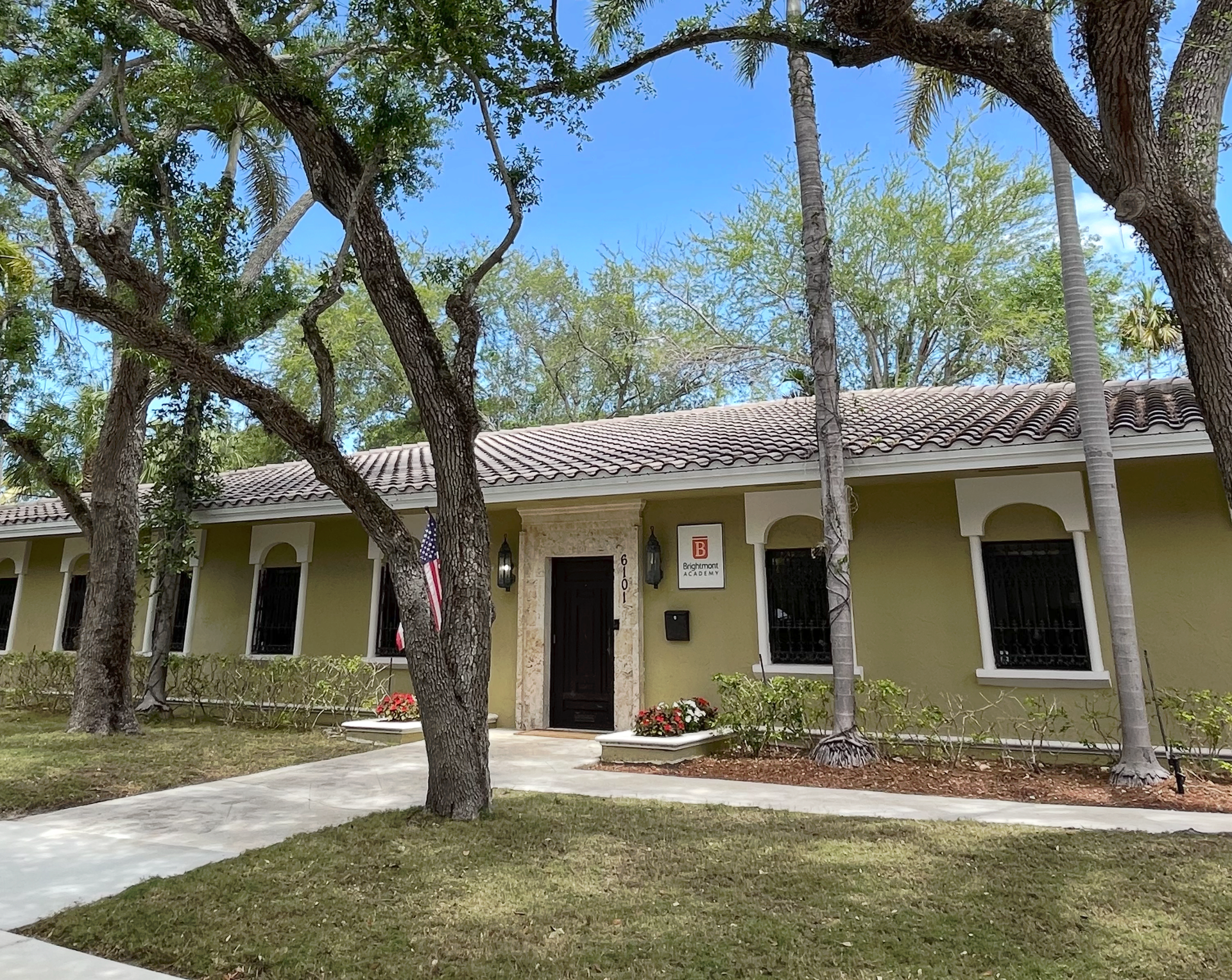
The people are fantastic. To a person, everyone is nice and genuinely interested in student success. It was also made clear to me from the start of my training that the whole school really is all about connection with the students. To increase my hours, I worked at two different locations, one is 30 minutes from my home and the other is an hour door-to-door. Both facilities were unique in feel, but they were bright spaces with happy teachers and happy students.
Now, to the education…
“Teaching undertaken with technology makes it interesting for students and involve them with varying stimuli thereby creating an activity-based learning. (Banerjee & Seshaiyer, 2019)”
I have been truly impressed with the thoughtfulness and accountability embedded in Brightmont’s processes, systems, and pedagogy. The school is fully accredited. The courses meet all State educational standards. The texts, er, programs are direct and dynamic, and they encourage Critical Thinking Skills (CTS) and writing for a variety of purposes, while allowing for and empowering students toward autonomous student motivation.
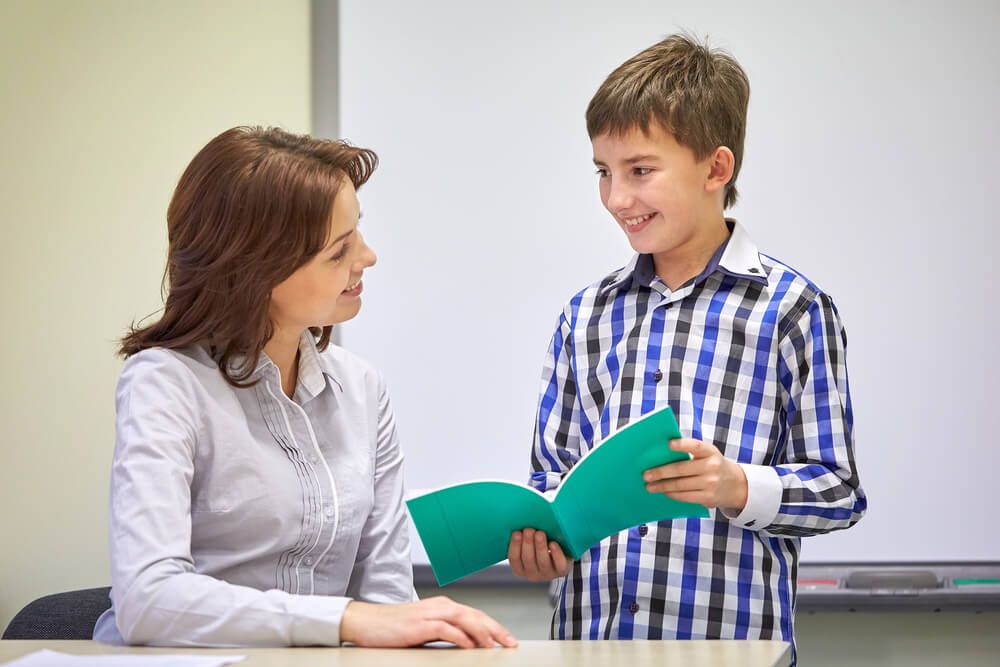
Teaching at Brightmont Academy is on a one-to-one basis. Teachers are encouraged to connect with their students, assist students in progressing forward through the units and lessons, and to provide insights into the material and into developing good study habits. It’s legitimate teaching, but without having to plan for class. Instead, there is more of a co-discovery process in which students and teachers explore the material together with the teacher as the facilitator.
In the coming months, I hope you’ll join me. I intend to write monthly about more of my experiences at Brightmont Academy. I plan to address the school’s day-to-day processes, and student and teacher qualities. I also expect to dive into some of the “bigger picture” concepts around education of the past and how schools like Brightmont are moving education into the future. In the process, I intend to shed light on the benefits of the “new” private school experience.

Jamie Bachmann is a former high school special education teacher of over 20 years. He earned his Bachelor’s Degree in Communication Management from The University of Dayton, and his Master of Arts in Teaching from National-Louis University. He is also a lifelong writer, artist and musician. Jamie, his wife, and their numerous rescued felines live in Chicago’s North Shore.





“Brightmont gave my daughter
confidence and helped her love learning
again.”
– Parent of 8th grader

92% of Brightmont graduates are
accepted into their first-choice college

(888) 521-0887
To book a tour, talk to a campus director, or get a free consultation, please fill out the form.

©2026 Brightmont Academy®
