“Brightmont gave my daughter
confidence and helped her love learning
again.”
– Parent of 8th grader
400 E. Main St. Barrington, IL 60010
1-888-521-0887
inquiry@brightmontacademy.com
Kindergarten Readiness: The Multisensory Solution
While many families are celebrating the end of an era with their high school graduates, there are also those who are preparing for the very beginning of their children’s school careers. Here comes Kindergarten!
The thought of Kindergarten may lead to a whole host of emotions. Excitement about getting older, riding the school bus, etc. Anxiety around being away from home and with new people. Even some sadness around the “little years” being over. Difficult emotions may feel even heavier when Kindergarten readiness is a concern.
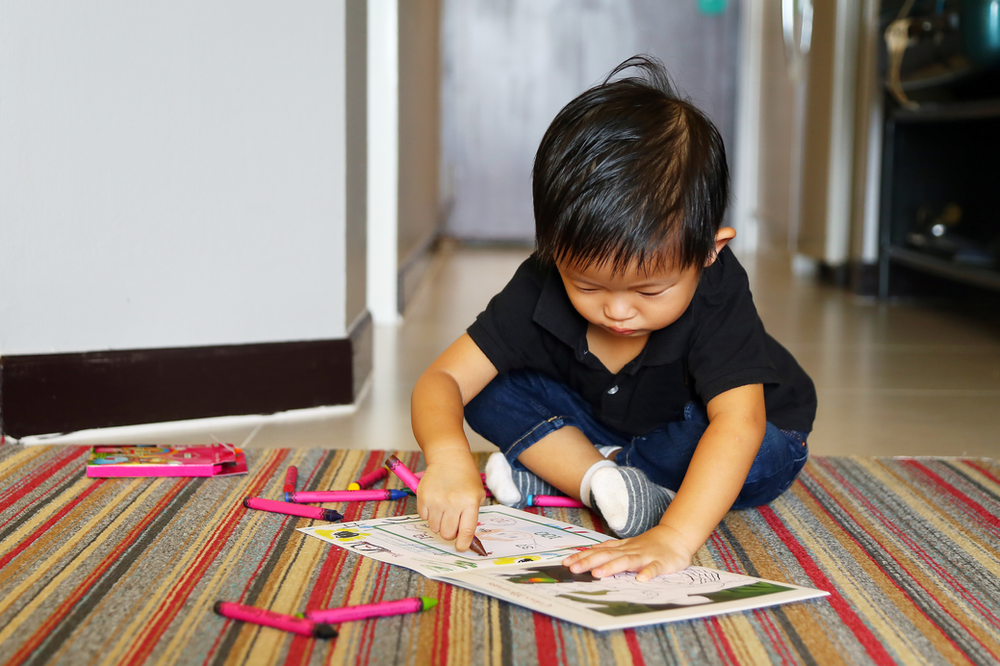
Upon entering Kindergarten, children are expected to demonstrate some basic skills in math, reading, writing, and general behavior. Can they count to 10? Can they recite the alphabet? Can they recognize and write some letters? Can they answer simple who/what/when/why questions about the stories they know? When families can’t answer “yes” with confidence to any or all of these questions, it’s probably time to seek professional intervention.
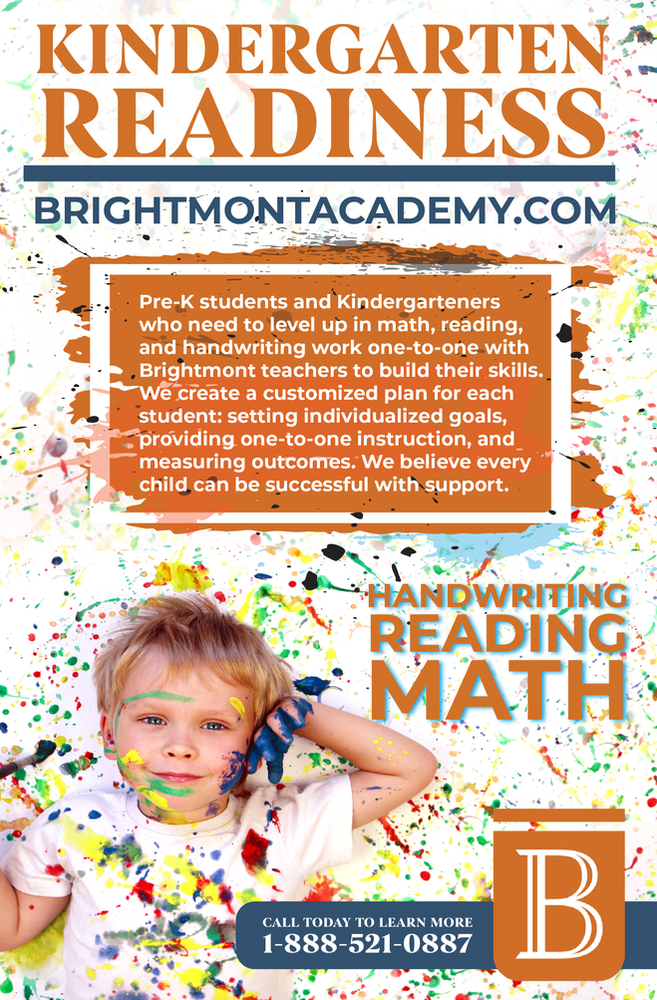
Brightmont Academy , a one-to-one private school serving pre-K, elementary, and upper school students, offers comprehensive—and customized— Kindergarten readiness packages . Families may choose between coursework in math, reading, or handwriting, or opt for a combination of the three to help prepare their children for school success. Though each type of package boasts unique lesson plans, they all emphasize multisensory learning.
About Multisensory Learning
According to educational and psychological experts, there are four primary learning styles: 1) read/write, 2) visual, 3) auditory, and 4) kinesthetic (hands-on). With our culture’s reliance on reading and writing as the primary mode for learning, it’s no wonder that some children struggle and fall behind.
Enter multisensory learning, a method that addresses all of the learning styles. At Brightmont, teachers are able to concentrate on delivering material in ways that resonate with their students’ specific learning styles, thus helping them achieve what they need to achieve before Kindergarten. At the same time, these same students develop habits and strategies that employ all of their senses in the learning process. As a result, they are better able to adjust to different educational environments and expectations—to fully participate with some competence in all aspects of school!
Reading and writing are the traditional routes of learning in American education. But what additional learning strategies does Brightmont find effective in preparing children for Kindergarten? Here are some of the school’s favorites for both pre-elementary and early elementary students…
Visual Learning Strategies Visual learning strategies appeal to children who learn best through their sense of sight. Visually stimulating learning tools include:
Graphic organizers - The purpose of graphic organizers is to show information about a given topic or topics in a visually memorable way. Graphic organizers are useful in pointing out similarities, differences, relationships, etc. Popular examples for younger students include Venn diagrams (two overlapping circles that help with making comparisons) and bubble maps. Symbols and illustrations are common features within graphic organizers for pre-K and elementary students.
Symbols - Decoding is key to reading. Letters represent sounds. Words represent images and experiences. By exploring resources that rely on symbols, students begin exercising their decoding muscles. Symbols may also serve in a support role as students begin reading simple texts; symbols are gradually phased out as fluency improves.
Illustrations and photos - The use of simple pictures in learning can help boost vocabulary development. For example, an illustration or photograph of a house can spark rich conversation about its color, components, inhabitants, and surroundings. In no time, students are able to make distinctions between red, blue, and other common colors, and to assign meaning to a whole new family of terms.
Demonstrations - Showing versus telling is especially effective when it comes to demonstrating letter sounds. Students notice how we pucker our lips for the letter “P,” how our mouths open a certain way for “A,” and how our teeth come together for the letter “T.” Blending these sounds together to make a word becomes another opportunity for demonstrating visual cues.
Auditory Learning Strategies
Auditory learners process information best through their sense of hearing. Auditory learning strategies include:
Rhythm-based exercises - Rhythm resonates with auditory learners. When it comes to learning activities, this might mean chanting, singing, clapping, tapping, etc., to help explain concepts and get key information to stick. There are countless resources available in this vein, and Brightmont teachers are especially gifted in adapting them for the specific needs of their students.
Read-alouds - Storytelling is especially appealing to auditory learners. All kinds of educational topics—math, vocabulary, writing, you name it—can be embedded in and taught through stories. Read-alouds become even more powerful for auditory learners when paired with discussions…
Discussions - In addition to listening, auditory learners like to talk. Skilled teachers will capitalize on this fact by making sure discussions are a routine part of the classroom experience. Discussions may be as simple as asking students to repeat what they heard or to answer basic who/what/when questions. Eventually, students may share their personal insights on motives, morals, etc., which sharpens their skills in text analysis.
Kinesthetic (Hands-on) Learning Strategies
There is also a large group of people who learn best through physical activity. Known as kinesthetic or hands-on learners, these students respond well to the following strategies:
Manipulatives & props - Cubes, coins, sticks, and clay are common tools used within lessons employing kinesthetic teaching strategies. Such manipulatives help students explore math concepts, such as counting and sorting, in addition to growing their competencies in reading comprehension and vocabulary; regarding the latter, imagine students re-enacting what they heard with small toys or props. Simply put, hands-on activities bring curriculum to life.
Simulations - Thanks to the wonders of technology, simulations are also an effective hands-on activity. Matching exercises and other online “games” with dynamic features— dragging, clicking, highlighting, drawing, etc.—are especially enjoyable for young learners.
People young and old are complex, diverse creatures, and that’s why multisensory learning is the very best option for Kindergarten readiness and education in general. It gets to the heart of how each individual learns best. It prepares students for a variety of learning endeavors. It makes for a rich school experience today and, most importantly, sets the stage for a bright academic future. Multisensory learning—it’s the Brightmont way!

Barbara Farland is an English & Social Studies instructor at Brightmont Academy in Plymouth, Minn. She holds a master’s degree in Business Communication from the University of St. Thomas and, prior to pursuing a second career in education, worked as an award-winning public relations and communications professional in both the corporate and nonprofit sectors. As a “storyteller by nature and teacher at heart,” Barbara continues to contribute to various anthologies, among other writing projects.



“Brightmont gave my daughter
confidence and helped her love learning
again.”
– Parent of 8th grader

92% of Brightmont graduates are
accepted into their first-choice college

(888) 521-0887
To book a tour, talk to a campus director, or get a free consultation, please fill out the form.

©2026 Brightmont Academy®
