Barbara Farland is an English & Social Studies instructor at Brightmont Academy in Plymouth, Minn. She holds a master’s degree in Business Communication from the University of St. Thomas and, prior to pursuing a second career in education, worked as an award-winning public relations and communications professional in both the corporate and nonprofit sectors. As a “storyteller by nature and teacher at heart,” Barbara continues to contribute to various anthologies, among other writing projects.
Falling Behind
Barb Farland • December 17, 2025
Falling Behind
What to Do If Your Teen Is Falling Behind in School
Schoology, Google Classroom, and other learning management systems have made it easier for parents to monitor their children’s grades and specific activities. For many families, such portals show academic growth and success, and become a source of encouragement and celebration. But, for other families, the same tools may lead to contention and stress as missing assignments pile up and grades plummet as a result.

The latter scenario inevitably leads to a pivotal question: “What can we do about it?”
It can be an overwhelming question to ask—but also entirely actionable. The majority of people know the three old-fashioned Rs of education: “reading, writing, and arithmetic.” However, there’s another set of Rs to consider when students fall behind: reason, reinforcement, and routines.
Determine the Reason
It’s tempting to play the parent card and lecture kids on the importance of homework, get angry about their falling behind, etc., but the very first step in turning things around is simply maintaining one’s cool and determining the reason why. In other words, adults should create safe situations in which children can more easily share what’s on their hearts.
Supportive conversations can reveal a lot, including the reason or reasons for falling behind in school:
- Bullying and/or other relational difficulties
- Depression and/or anxiety
- Undiagnosed ADHD, ASD, and/or another learning difference
- Current assignments requiring a foundational mastery they haven’t achieved yet
This obviously isn’t an exhaustive list, but it may help identify the kinds of struggles students are experiencing and the kinds of tools families need to address those struggles. This basic awareness leads to the next R: reinforcement.
Call for Reinforcement
Fortunately, in this day and age, families aren’t left to come up with solutions all by themselves. There are various organizations, professionals, etc., who exist to help struggling students and to advise those who love them. This kind of reinforcement may be critical not only in getting unstuck and caught up, but also in finding the very best way forward.
As a first step, many families seek the help of their school guidance counselors. After all, the very premise of their job is to be familiar with the gamut of services available and to connect families to the resources they need, be those resources in or outside of school.

Sometimes schools have the capability to address the issues at hand, sometimes not. In many circumstances, school counselors generally advise families to pursue next steps with healthcare providers. Pediatricians, psychologists, and psychiatrists are equipped to diagnose any learning differences that might be causing academic lags. And, like school guidance counselors, they can point to other professionals who might speak well into students’ specific situations.
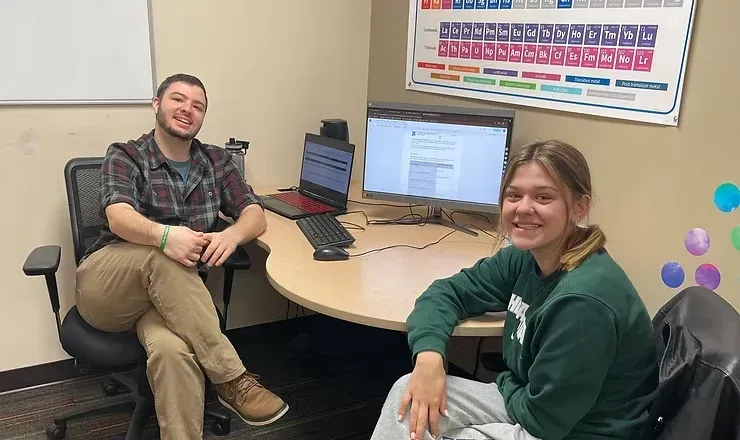
Of course, this doesn’t mean that families can’t do their own research and seek reinforcement in ways they deem right for their children. For example, many parents eventually determine they need to educate their children outside of a traditional school environment. Such families may turn to homeschooling, online learning, or private schooling like that offered by Brightmont Academy. Brightmont offers one-to-one instruction to many different types of students, including those who struggle with anxiety and/or are neurodivergent, and the undivided attention of their teachers has proven itself invaluable for both the long and short term.
Establish and/or Reassess Routines
No matter what kind of external reinforcements are employed, what happens at home makes all the difference, and that difference is found in solid routines.
There’s no way around many of life’s troubles, but routines can offer a healthy sense of stability and confidence both in day-to-day responsibilities and when hard things happen. When students fall behind in their academics, families should take it as a cue to establish or reassess the routines that can help keep any avoidable stressors at bay.
A lot of pieces and parts go into running a household, so it might be helpful to create or change routines using categories, such as morning routines, bedtime routines, homework routines, and free-time routines. Yes, perhaps “free-time routines” sounds like an oxymoron, but not instituting some rules and boundaries around free time could very well undermine a family’s success in other categories. For example, too much screen time may affect a student’s sleep, thus the benefits of morning and bedtime routines are jeopardized.
Though falling behind in school is cause for concern, some research and intentionality can lead to workable and successful solutions. Reasons may vary, different reinforcements may be needed, and routines might take some time—but, as always, the gift of learning is worth the work!

More Blog Posts, News & Webinars

Learn how flexible accredited high school programs for athletes help students balance their academic goals with their passion for their extracurricular sport.
Get a closer look at one-to-one instruction and how personalized learning can be tailored to different students, schedules, and goals.

Tutoring for ADHD goes beyond basic review to accommodate unique learning needs. Discover how personalized instruction and executive functioning support help.

Brightmont Academy's newest campus, its second in North Carolina, is now open and enrolling students in Cary.
Brightmont Academy Speaker Series

Looking for the right educational environment to support your child’s mental and emotional wellbeing? Discover crucial accommodations for students with anxiety.

Anxiety can have a profound impact on student learning. Discover strategies and resources to support your child's mental and emotional wellbeing in this guide.

In this special education rights guide from an attorney, learn what accommodations the law guarantees, how IEPs and 504 plans work, and advocacy tips.

Brightmont Academy is expanding its Miami private school campus, adding classrooms to serve more families seeking personalized, one-to-one instruction.