“Brightmont gave my daughter
confidence and helped her love learning
again.”
– Parent of 8th grader
400 E. Main St. Barrington, IL 60010
1-888-521-0887
inquiry@brightmontacademy.com
As the 21st Century is starting to gain its footing, things that have been taken for granted just a few years ago are now being questioned and reevaluated. Throughout the world, pockets of people are doubting whether the Earth is actually spherical, while other groups are examining the necessity for Civil Rights being taught in schools, just as other groups are challenging the necessity for further education. People everywhere are doubling down on their political and religious values, which is resulting in an increase in home-schooling, but with what quality?

Outside of formal education, anyone anywhere has the capability of teaching themselves about anything via a device in their pockets. Is memorization of anything essential anymore when it can be searched without even the click of a button, but with a voice-activated question to an artificial intelligence? Information and opinion of literally all types are available 24/7/365.
Additionally, the concepts of jobs and careers are also evolving. Online influencers of every imaginable concept are earning 6- and even 7-figure salaries. Writers of every conceivable genre and ability level are self-publishing with varying degrees of success. People are making better-than-living wages by becoming experts in severely niche interests, from “toys of the 1960s and ‘70s” to “the world’s best hamburgers.”
The world isn’t changing; it’s changed. According to a 2017 article, by Morgan K. Williams, from The Journal of Inquiry and Action in Education entitled “John Dewey in the 21st Century,” and posted on U.S. Department of Education (.gov),
Public schools and teachers in the United States are challenged on a daily basis with meeting the diverse needs of all students encompassing differences in gender, ethnicity, socioeconomic background, and various learning styles and needs. Because there is a strong connection between culture and learning, educators should use culturally responsive pedagogy, including high expectations for all students, varied approaches to learning, and fostering community and family engagement (Ford, Stuart, Vakil, 2014).
Given all of the factors, both old and new, how do we as a society direct education for our young people? Until we can just instantly download information into ourselves, there will need to be some idea of education and standards of education. Mathematics, Reading, Writing, History, and Science were always given as essential. Now, we ask Which Math? Is Reading essential in a world of audio books? Is typing perhaps more important than writing? Are either necessary when we have voice transcription? Whose History do we trust, and why? Which science is necessary to learn when science is forever evolving?
In Peter Gibbon’s article from the Spring, 2019 issue of HUMANITIES: The Magazine of The National Endowment for the Humanities , he wrote of John Dewey,
In 1899, Dewey published the pamphlet that made him famous, The School and Society , and promulgated many key precepts of later education reforms. Dewey insisted that the old model of schooling—students sitting in rows, memorizing and reciting—was antiquated. Students should be active, not passive. They required compelling and relevant projects, not lectures. Students should become problem solvers. Interest, not fear, should be used to motivate them. They should cooperate, not compete. ( ,https://www.neh.gov/article/john-dewey-portrait-progressive-thinker)
The solution, in this writer’s opinion, is exemplified by online one-to-one teaching, as exemplified by private schools like the one I work for, Brightmont Academy ( ,, www.brightmontacademy.com ).
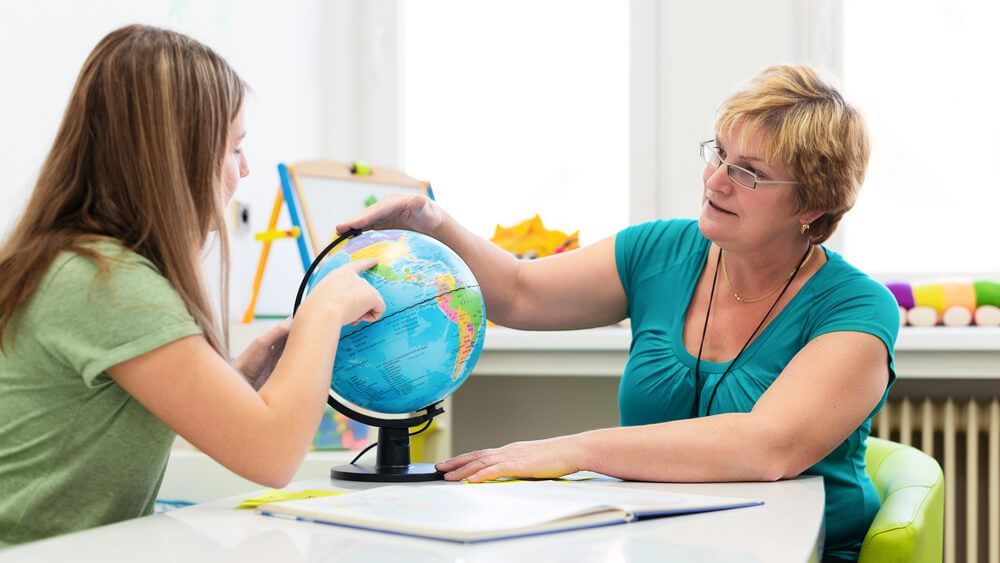
In the Brightmont system, with the assistance of a single teacher, students follow online programmed courses that are selected based on State and Federal requirements for the student’s ages. ,, Classes are one hour each and are compelling, with audio options, video illustrations, active exercises, and real-world situations. As for the content, as I said, it’s determined by State and Federal requirements, but the pedagogy is executed without editorializing and students are allowed to choose how they move through the courses and in what amount of time.

With a system like ,, Brightmont’s , schools could be limited just to necessary education, and school hours could be drastically reduced. If a similar school could be placed in each neighborhood (maybe known as “education centers”), students could walk there, thereby eliminating bussing and all its issues, and freeing up even more time for students to pursue personal interests. Students could wake up later and sleep longer. Communities could have their own, much smaller school boards, and could establish their own educational requirements and topics to add to them. A system like this could not only redefine and potentially reinvigorate the practice of education, but it could also be a galvanizing and empowering force for communities.
Education has always been challenging. It was back in 1899, when John Dewey wrote The School and Society. However, as technologically advanced and as educationally and politically polarized as we have become, it seems we still have not met the expectations he outlined, and they seem as “progressive” as they did the day Dewey wrote them. The future is now, but the educational system is still catching up.
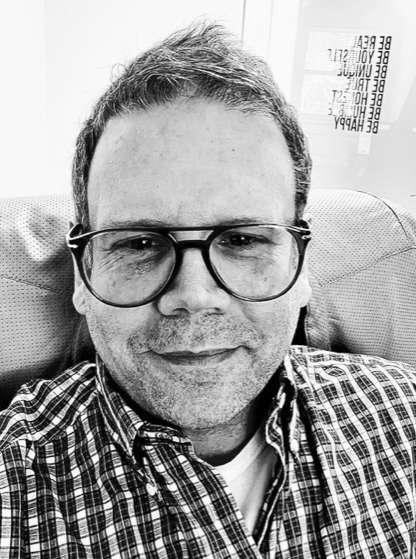
Jamie Bachmann is a former high school special education teacher of over 20 years. He earned his Bachelor’s Degree in Communication Management from The University of Dayton, and his Master of Arts in Teaching from National-Louis University. He is also a lifelong writer, artist and musician. Jamie, his wife, and their numerous rescued felines live in Chicago’s North Shore.





“Brightmont gave my daughter
confidence and helped her love learning
again.”
– Parent of 8th grader

92% of Brightmont graduates are
accepted into their first-choice college

(888) 521-0887
To book a tour, talk to a campus director, or get a free consultation, please fill out the form.

©2026 Brightmont Academy®
