“Brightmont gave my daughter
confidence and helped her love learning
again.”
– Parent of 8th grader
400 E. Main St. Barrington, IL 60010
1-888-521-0887
inquiry@brightmontacademy.com
Since the COVID-19 societal lockdowns from early 2020 to late 2021, awareness of student mental health challenges has risen to prominence in all aspects of education.

An Education Week article from October 16, 2023 by Matthew Stone entitled, “Why America Has a Youth Mental Health Crisis, and How Schools Can Help,” cites their own survey from that previous September. The survey, titled “Factors that had a negative impact on teens' mental health,” found 23 major influencing factors. The top 10 were (in ascending order):
Friends
Concerns related to getting into/paying for college
Anxiety over seeing other students at school
Family
Concerns about my future career
Concerns about how I am perceived by others
Concerns over societal issues/news
Concerns about my physical appearance
Grades/Test results
Stress related to finishing schoolwork/homework
( https://www.edweek.org/leadership/why-america-has-a-youth-mental-health-crisis-and-how-schools-can-help/2023/10 )
Given that this was an Education Week survey, it’s no surprise that the data focused so heavily on educational issues. However, for the purposes of this discussion, these may be just the issues for us to focus on. Unlike so many deeper and less changeable issues that create mental health issues for children and adolescents, many of the aforementioned are controllable to one degree or another in an educational setting.
On May 9, 2024, the US Department of Education released a statement entitled, “During Mental Health Awareness Month, U. S. Department of Education Announces New Actions to Increase Access to School-Based Mental Health Services.” It contains the following statement,
“ Our nation’s schools serve as a critical access point to mental health services
that could otherwise be out of reach for students. Students are six times more likely to receive mental health services when they are delivered at school. That is because schools are often best positioned to provide access and reach large numbers of students through education, prevention, services, and early intervention efforts, and can help to reduce stigmatization that might be associated with seeking services. Improving youth mental health is a key component of the Biden-Harris Administration’s commitment to improving student wellbeing and outcomes: when young people have access to the mental health care that they need and deserve, they’re more likely to learn, develop, and achieve, and to build important connections with peers and caring adults.”
While that sounds like a great statement of concern, and it may be, like all governmental mandates it all boils down to funding, direction, implementation, and time.
For students in public schools who are suffering with mental health issues, either temporary or long-term, their potential success or failure in addressing them depends on the care and funding of their home school systems. Are there concerned adults who know their students well enough to “see” their students’ mental health challenges? Are there clear systems in place to support both the adults and the students in reporting and serving the needs of those mental health challenges? Even in well-intended, large, well-funded public schools across the nation, there may not exist the personnel or the time and space during the school day to adequately serve all those who need the supports.
The solutions for our students tend toward either long or short-term removal from the school environment to one that is more therapeutic in one way or another. These “more restrictive environments” can be costly, especially in this day and age in which even families with the best health insurance are being crushed by overwhelming medical costs, and laws regarding school district funding of student alternative placements can vary from state to state.
Frequently, those more restrictive environments are so focused on addressing student mental health concerns that they provide minimal or totally inadequate educational programs. Consequently, students can return to their home schools with excellent academic accommodations and newly acquired mental health skills, but having lost a semester or more in educational upkeep.
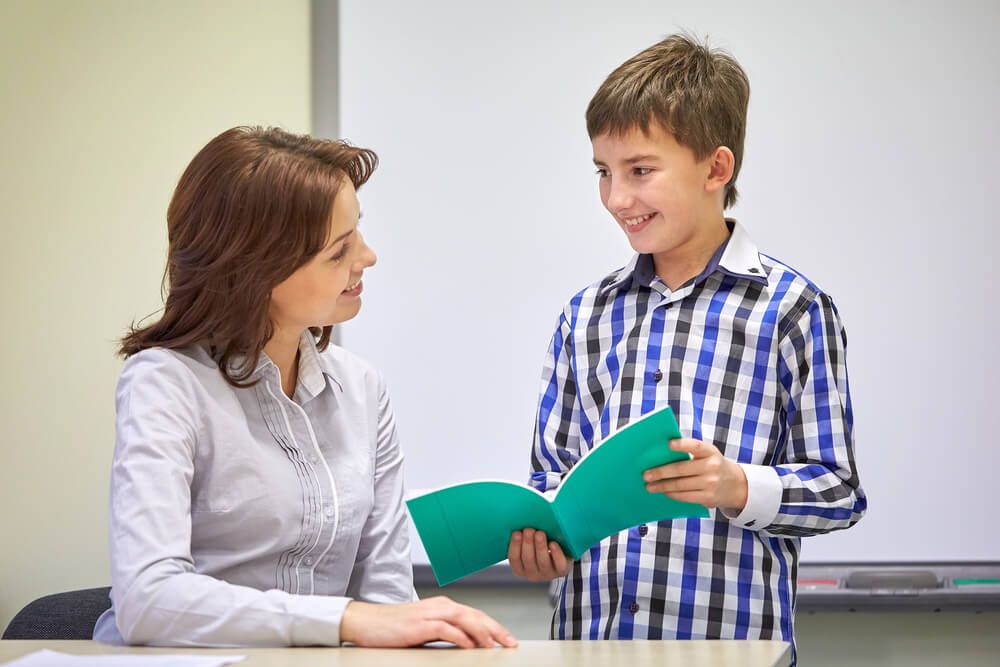
A newer option for students who are still capable of progressing in their education as they work to overcome a variety of mental health challenges is the one-to-one therapeutic day school option like that offered by the school at which I work, Brightmont Academy ( http://www.brightmontacademy.com ). In the Brightmont paradigm, students work on computerized class curricula, and alongside helpful adult teachers who facilitate the students’ progress at the students’ own pace. The classes are 55 minutes each, with 5 minute breaks between classes.
This structure can allow students to schedule time to meet with their home schools’ related service providers like social workers and psychologists via video chats. Also, because the school day is compressed and only essential classes are scheduled, students and their families have much more time available to seek out-patient counseling of all kinds than they would have, were they continuing in their home school. Furthermore, peer-related issues, such as bullying, negative influences, and perceived issues with teachers can all be eliminated by a student’s move to this one-to-one model, without compromising a student’s academic success or improvement.

For students with mental health challenges, the struggle is omnipresent no matter how much they may try to compartmentalize. Finding relief as well as academic support can be a tall order, especially in the midst of that struggle. Fortunately, there are newer options available in the educational toolbox that can provide some much needed help without increasing the stress of trying to keep up educationally.

Jamie Bachmann is a former high school special education teacher of over 20 years. He earned his Bachelor’s Degree in Communication Management from The University of Dayton, and his Master of Arts in Teaching from National-Louis University. He is also a lifelong writer, artist and musician. Jamie, his wife, and their numerous rescued felines live in Chicago’s North Shore.






“Brightmont gave my daughter
confidence and helped her love learning
again.”
– Parent of 8th grader

92% of Brightmont graduates are
accepted into their first-choice college

(888) 521-0887

To book a tour, talk to a campus director, or get a free consultation, please fill out the form.

©2026 Brightmont Academy®
