“Brightmont gave my daughter
confidence and helped her love learning
again.”
– Parent of 8th grader
400 E. Main St. Barrington, IL 60010
1-888-521-0887
inquiry@brightmontacademy.com
Parents tend to think of the idea of summer school classes, especially if they are free of charge, as a godsend. It’s a continuation of the safety and predictability of the school year. Students, on the other hand, typically think of summer school as a punishment. It’s a continuation of a school year that was completed, and an interruption in the reward they have earned from surviving 10 months of what Alice Cooper referred to as pencils, books and teachers’ dirty looks.
“Student participation nationwide was about 15 percent for academically oriented summer programs in 2023, the data show. On average across all schools, it is anticipated that about 13 percent of public school students would participate in academically oriented after-school programs in the 2023-24 school year.”
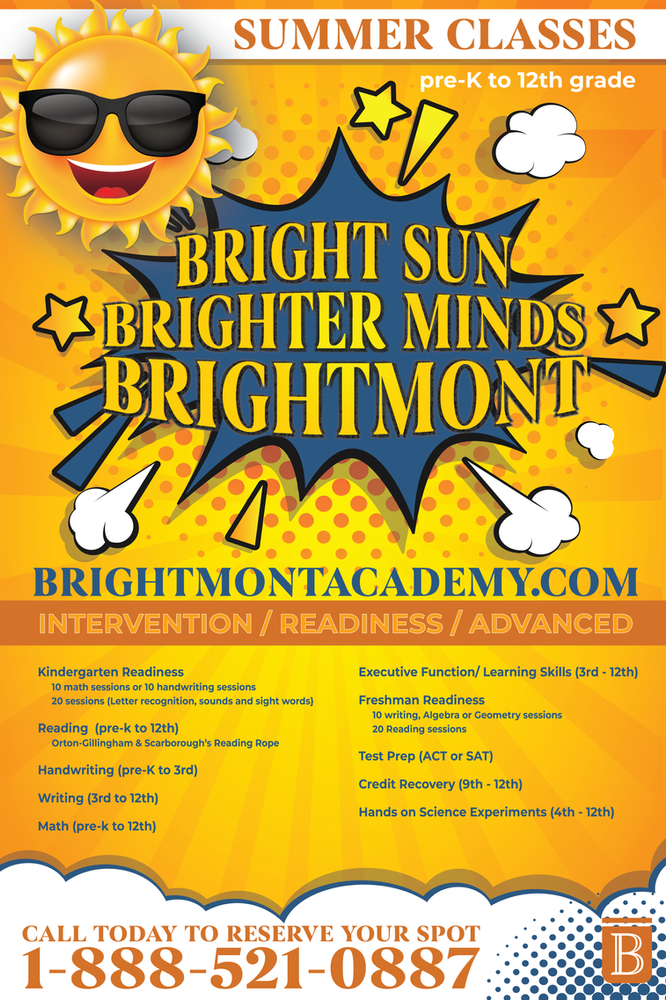
The typically mandated reasons for students having to take summer school are course failure of one kind or another, for one reason or another- everything from intentional inattendance to late moves into district, deaths in the family, and physical injuries. In the cases of students with diagnosed learning and recall issues, their summer school courses in key academic subjects can be paid for by the school district, assuming it appears in the student’s IEP and it is part of the student’s diagnosis.
Families can elect to have their students take summer school for reasons as varied as the number of students themselves. Frequently, students or their guardians want them to “get classes out of the way.” They also want to get ahead in their academics, or take enrichment courses. Sometimes, admittedly, parents are needing an accountable system to warehouse, and at times feed their students during the summer while they go to work. All are equally worthy reasons.
According to the website Verywell Family ( verywellfamily.com ), touting itself as “an award-winning resource for reliable, compassionate, and up-to-date information on the pregnancy and parenting topics that matter most to you,” with articles written by various experts in pediatric health and youth education, some of the reasons to not consider summer school for your student are:
Not all programs are high quality
Some kids just need a break
Summer school might not target social skills enough
Additional summer school challenges are the fact that summer school courses frequently contain the same curricula as they do during the school year, but move 3 times as fast. The flipside to that tends to be that summer school courses can move at a more reasonable pace, but they can omit chunks of the curricula in favor of student comfort. Homework can also be extra hard for students during the summer time, and parents can be more inclined to shy away from its enforcement and the power struggles that frequently ensue.
Another speed bump to success in summer school comes from the students themselves, by way of their attendance. In a June 26, 2023 EducationWeek article entitled “Summer Schools Can Boost Learning, But Only If Students Attend,” authors Caitlyn Meisner and Elizabeth Heubeck cite a 2016 report on the Wallace Foundation’s National Summer Learning Project. The project, aimed at low-income and low-achieving elementary school students in five urban school districts, “found that students who attended at least 20 days of a five- to six-week summer program saw gains in reading and math scores that lasted until the end of the following school year.” ( https://www.edweek.org/leadership/summer-schools-can-boost-learning-but-only-if-students-attend/2023/06 )
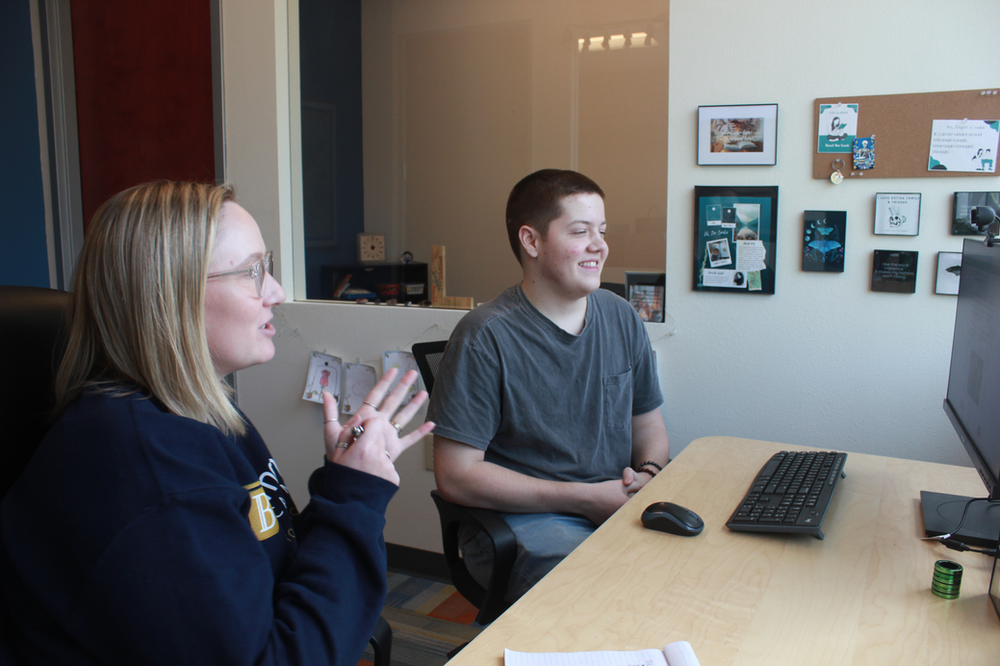
At the one-to-one private school at which I teach, Brightmont Academy , students continuing through summer, or those who may be only coming in for the first time for summer school, experience courses in exactly the same way they do throughout the school year. They are neither sped up, nor slowed down. The pace remains up to the students themselves. Homework is also no more a consideration than it is during the school year. Further, if students choose to take their summer school classes online from home, it changes very little in the delivery of instruction, as our courses are all computerized with adult facilitation. For current students, or for summer school students looking to make gains of one kind or another during the summer months, our school provides an effective and trouble-free summer school experience, though students do still need to attend, one way or another.
The push and pull between students and parents regarding summer school will continue to rage on as long as there are schools. And the benefits and drawbacks to it are likely to remain as long as traditional schools struggle to meet the varying needs of their summer school students. However, as technology and fresh ideas continue to push education forward as a whole, summer school and the students who attend will benefit from their developments.

Jamie Bachmann is a former high school special education teacher of over 20 years. He earned his Bachelor’s Degree in Communication Management from The University of Dayton, and his Master of Arts in Teaching from National-Louis University. He is also a lifelong writer, artist and musician. Jamie, his wife, and their numerous rescued felines live in Chicago’s North Shore.








“Brightmont gave my daughter
confidence and helped her love learning
again.”
– Parent of 8th grader

92% of Brightmont graduates are
accepted into their first-choice college

(888) 521-0887
To book a tour, talk to a campus director, or get a free consultation, please fill out the form.

©2026 Brightmont Academy®
