“Brightmont gave my daughter
confidence and helped her love learning
again.”
– Parent of 8th grader
400 E. Main St. Barrington, IL 60010
1-888-521-0887
inquiry@brightmontacademy.com
In the blue cornahhh, the one-hour class. And in the red cornahhh, the block schedule!
School scheduling is a challenge that is met by school administrators in a variety of ways, for a variety of reasons. Although the hours of a school day are fairly similar across the board as an 8-hour day, between say 7:30am and 3:30pm, how those hours can be broken up seems almost limitless.
Some of the most frequently utilized choices available to schools for setting their class schedules are the following:
Oftentimes, instead of “A” or “B” being used, schools call each day by one of their school colors. Classes in this schedule are usually 90-or-so minutes on alternating days

Other things that must be taken into account in scheduling are lunch, recess, PE, passing periods, and unscheduled periods (depending on the age of the students). And these must all be considered with schools’ physical sizes and distances between classes, students’ ages and levels of independence, and school population sizes.
It can be a tremendous challenge for schools that have, say, 4,000 students to be able to seat all 4,000 for lunch time, let alone to move them through the lunch lines in the allotted time. As a result, schools of larger size normally have to allow for some schedule irregularities in order to provide 3 or 4 lunch periods into which students must be scheduled.
With regard to passing periods and unscheduled periods, there are a couple of schools of thought. In addition to allowing students time to get from one place in the building to another, or to provide students with the ability to learn to make appropriate decisions with regard to their free time, the fact is that most disciplinary events and physical confrontations between students occur during these times. The longer the passing periods, and the more opportunities for freedom and independent decision making, the more likely the increase in these negative occurrences, and the more need for adult supervision outside of the classroom.
Regardless of the challenges, schools must be scheduled down to the minute. But which type of schedule is the “best” for students? That depends on your perspective. In a March of 1993 publication from the Association for Supervision and Curriculum Development (ASCD) entitled “Are Longer Classes Better?”, Scott Willis wrote,
“ Many teachers would like to extend their classes so they could try new techniques and delve more deeply into their subjects before a bell rings and students head for the door.”
However, with longer classes come particular concerns. The logistics of scheduling and of students with class choice being able to get into preferred classes is far more difficult. Also, with longer classes, students’ ability to pay and to retain attention for longer periods of time can become more of a challenge than it would be in a shorter period. Additionally, students who are out of a given class for any reason, from a doctor’s appointment to a long-term illness, often have a more difficult time returning to the vast amounts of information missed in a longer class.
More recently, a post from Independent School Management (ISM), a company that touts itself as “the only comprehensive management-support firm for private-independent schools in the United States and abroad,” takes a different approach.
In the post, “The Three Rules About Class Time You Must Know,” they make the statement,
“From our experience, elementary school classes typically range between 20 minutes and three hours. Middle schools often transition to a more departmental class structure, with sessions ranging from 40 to 80 minutes. High school classes can be as short as 40 minutes or as long as a few hours—we’ve even seen one high school that offered one class with one teacher focusing on one subject for 15 days!”
What are the 3 rules they recommend?
Rule #1: Class length must allow successful delivery of information.
Rule #2: Time must be the variable, achievement must be the constant.
Rule #3: The class function should match the length.
So, after more than 20 years in the classroom,and having taught for years under the 55-minute per class schedule, the A/B Block schedule, and in the private online environment, what are my perceptions?
First, I must state that my impressions are that of a teacher who works with students who are challenged with behavior, emotional, developmental, and specific learning disabilities. I found that I prefer the 1-hour per class schedule.
My students have traditionally required more developed relationships with each other and with myself to get them to attend classes, as well as to succeed in them. The shorter class times seem to add fuel to developing those relationships because I would see my students each day, instead of every other day.
In addition, my students require more focus on, and support in organization and executive functioning. Having that daily, short contact far outweighed the longer, but less frequent contact within the A/B Block schedule as it pertained to tracking and completing daily homework, and maintaining an organization system for my students’ texts and materials.
Also, my students struggle mightily with attention and focus, as well as with maintaining appropriate behavior. The shorter periods made it observably better for my students in both of these regards, and they had fewer conflicts with teachers and peers as a result.
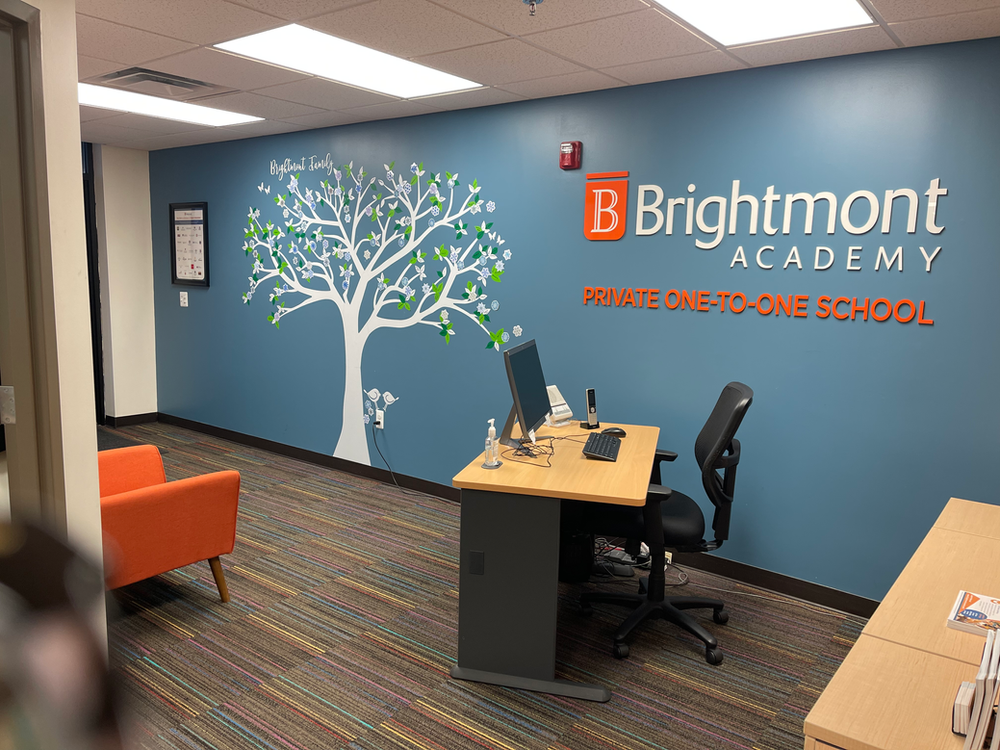
In my current role as a teacher in a one-to-one online setting of one-hour classes ( ,https://www.brightmontacademy.com), I have found that the reasons that almost all of my students attend our school are because they could not focus in the larger mainstream school environment. The one-hour online courses make it easiest to maintain their attention and to progress through the curriculum, with the data to support their success.
What’s more is that my current students are able to work with their parents and the school to schedule their courses to work best for them to allow for more sleep and fewer daily classes than they would have to endure in the typical school environment.
Shorter or longer classes or school days are available from many sources, both public and private. It is up to the people advocating for their students to both decide which is most appropriate and to seek those solutions.

Jamie Bachmann is a former high school special education teacher of over 20 years. He earned his Bachelor’s Degree in Communication Management from The University of Dayton, and his Master of Arts in Teaching from National-Louis University. He is also a lifelong writer, artist and musician. Jamie, his wife, and their numerous rescued felines live in Chicago’s North Shore.






“Brightmont gave my daughter
confidence and helped her love learning
again.”
– Parent of 8th grader

92% of Brightmont graduates are
accepted into their first-choice college

(888) 521-0887

To book a tour, talk to a campus director, or get a free consultation, please fill out the form.

©2026 Brightmont Academy®
