Is Homework The Answer?

Jamie Bachmann • February 8, 2024

Ahhh, homework.  The bane of every student’s existence.  It encroaches on a student’s free time, frustrates and sometimes terrifies parents, and is a highly debated topic in educational circles.  Is it worthwhile? Is it essential  for learning progress?  Should students with chaotic home environments be held to a different standard of completion?  In recent years a number of studies have been done to try and answer some of these questions.

A 2006 analysis by Cooper, Civey Robinson, and Patall in the Review of Educational Research , examined a variety of published research around the value of assigning homework to students going back as far as 1987.  Through their analysis, Cooper et al found that, “all studies, regardless of type, had design flaws,” and therefore necessitated further research.  Adding credence to their recommendation was the fact that while some studies determined that homework assignment was more effective in grades 7-12 than in grades K-6, they found no compelling evidence that there is an association between homework and achievement.   

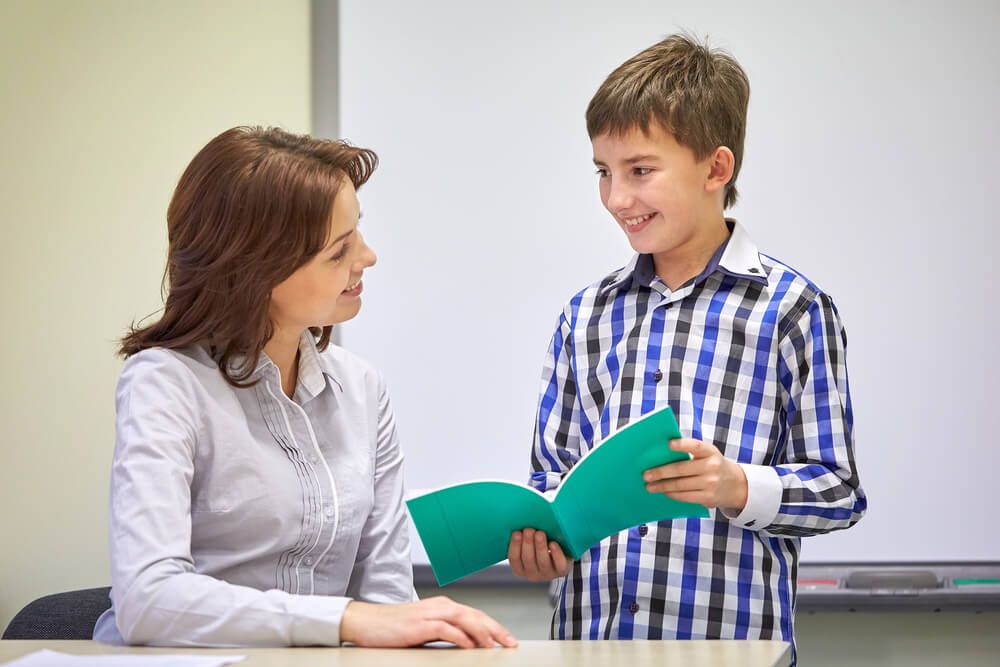
A young girl is sitting at a table with a laptop and writing on a piece of paper.

In an Education Week  article from December 5, 2022 entitled “This One Change From Teachers Can Make Homework More Equitable, ” Sarah D. Sparks references a study  found in the journal Educational Researcher  from the same year.  The study was led by an associate professor of Sociology at Indiana University, and involved 4,000 elementary and middle school students and their teachers, with observations of 80 students and their teachers, as well as in-depth interviews with the teachers, the students, and the students’ families.  The study found that when teachers approached the idea of assigning homework through the lens of reflecting motivation, competence, and effort without taking into consideration students’ families and potential home circumstances, it can lead those teachers to pass judgment on their students regarding their race and/or socioeconomic status, and to punish them.  

Joyce Epstein, a homework researcher and the Director of the Center on School, Family, and Community Partnerships, at Johns Hopkins University, and who was not involved in the Indiana University study, is quoted as saying, 

“Homework is important, proven to be useful for children’s learning, but we can all do better in designing good homework as opposed to just more of it.”

In the Education Week  article, Epstein offers the following recommendations for more useful homework:

  • Do not design homework that requires parents to teach or check content knowledge.
  • Ensure students can complete assignments at home without help.
  • Design separate, ungraded assignments to engage families (e.g. a family oral history project). “If we design homework so the youngster is showing, sharing, demonstrating what they’ve learned in class, the parent becomes an appreciator of how the youngster is growing their skills and abilities,” Epstein said.
  • Incorporate supplemental exercises or model lessons in separate communications with parents, such as school newsletters or literacy nights.

So, what about online learning and homework?  At Brightmont Academy ( ,https://www.brightmontacademy.com/ ), the one-to-one private school at which I teach, our homework is done through our proprietary online software, and it follows the aforementioned recommendations.  It is a germane extension of the daily coursework, requires no support or training from a student’s guardian, and offers the student an opportunity to advance in their studies more quickly.  Further, it can be accessed from any computer or mobile device with online capabilities via the student’s login.  

“Research suggests that ,homework  should not exceed 1.5 to 2.5 hours per night for high school students and no more than 1 hour per night for middle school students. Homework for elementary school students should be minimal and assigned with the aim of building self-regulation and independent work skills.” (Goodwin; Psychology Today , October 3, 2023.)

Unfortunately for students, the bane of their existence isn’t likely to disappear anytime soon.  However, with some conscientious planning and an eye toward fairness, schools and teachers can maximize the effects of homework while minimizing its potential damage.


A man is sitting at a table using a laptop computer.
A man wearing glasses and a plaid shirt is smiling in a black and white photo.

Jamie Bachmann is a former high school special education teacher of over 20 years.  He earned his Bachelor’s Degree in Communication Management from The University of Dayton, and his Master of Arts in Teaching from National-Louis University.  He is also a lifelong writer, artist and musician.  Jamie, his wife, and their numerous rescued felines live in Chicago’s North Shore.

More Blog Posts + News


student and teacher
March 16, 2026
Explore how to avoid the summer slide with Brightmont’s summer programs, designed to help students strengthen foundational skills, recover credits, or get ahead for the upcoming school year.
Student with teacher
March 11, 2026
Learn how sleep affects student success and how Brightmont Academy can help with flexible schedules.
Teacher and student
March 5, 2026
Summer learning loss threatens many students’ academic progress. Learn how one-to-one summer learning programs help students sustain momentum year-round.
By Rachel Pollock March 4, 2026
The Top Questions Families in Birmingham ask about Brightmont Academy
March 2, 2026
Brightmont Academy is part of a growing national conversation about how personalized education can better support student success.
Brightmont Academy Expands Chandler Campus to Meet Growing Student Demand
February 27, 2026
Brightmont Academy announces expansion for Chandler campus to continue supporting students in the area.
Brightmont  Academy opens new location in Tempe, AZ
February 26, 2026
Brightmont Academy, specializing in one-to-one instruction for 1st-12th grade students, announces its grand opening in Tempe, AZ.
#NoLimits
February 17, 2026
Illinois Private School Highlights One-to-One Instruction for Grades 1-12 St. Charles & Naperville, IL — Brightmont Academy, an accredited private school offering fully individualized, one-to-one instruction for students in grades 1–12, announces that Meredith Hale, Campus Director of the St. Charles campus, and Lindsay Morales, Campus Director of the Naperville campus, were recently featured guests on the #NoLimits podcast. The podcast is hosted by educator, advocate, and author Shelley Kenow and is rooted in the belief that no one can fully predict a person’s potential or future—and that opportunities should never be limited by labels or assumptions. Hale and Morales connected with Kenow at the Dynamics of Dyslexia conference in Illinois, where they discovered a shared passion for supporting neurodiverse learners and the families who advocate for them. “Meredith and I met Shelley at the conference and quickly connected around our mutual commitment to helping students access education that truly meets their needs,” said Morales. Kenow’s mission to spotlight individuals and organizations that help others reach their fullest potential closely aligns with Brightmont Academy’s educational philosophy. Brightmont partners with families to create individualized learning environments that remove barriers and empower students to thrive academically, socially, and emotionally. “We were honored to be guests on Shelley’s podcast,” Morales said. “Her work centers on helping students and families navigate—and ultimately break through—the limits society often places on them.” For both campus leaders, participating in the podcast reflects their shared commitment to advocacy, connection, and reimagining what education can look like for students who need a more personalized approach. “Being part of Shelley’s community allows us to share how Brightmont supports students in meaningful, individualized ways, and to contribute to a broader conversation about reimagining education for learners who need something different,” Morales added. The #NoLimits podcast is on Apple Podcasts, Spotify, Facebook, and YouTube. Brightmont Academy is located at 620 E Main St. in St. Charles and at 1528 Aurora Ave. in Naperville and is currently accepting enrollments. Families and professionals are invited to attend an Open House event on Thursday, February 19, 2026, between 9:00 AM to 3:00 PM. Brightmont Academy is an accredited private school that provides one-to-one instruction. One experienced teacher works with one student throughout every learning session. Customized full-time programs and individual courses are offered for grades 1-12. Students can also receive individualized tutoring for all 1-12 subjects, study skills, and test prep. Brightmont Academy has served thousands of students since 1999 and has 24 campuses in Arizona, Colorado, Florida, Georgia, Illinois, Michigan, Minnesota, North Carolina, and Washington. For more information call 1-888-521-0887 or visit: www.brightmontacademy.com . Watch our video: Brightmont Academy - The One-to-One Flexible school - 1st through 12th
By Tony Beals February 11, 2026
When we talk about learning differences, vision is often treated as one of the simplest variables to address. The solutions we reach for are familiar in recommending glasses, larger print, or a seat closer to the board. These supports can be helpful, but they are often built on an assumption that vision is primarily about clarity. In my work with neurodivergent and vision-challenged students at Brightmont Academy , I’ve learned that vision is rarely that simple. I’ve worked with learners who have Cortical Visual Impairment (CVI), neurological vision challenges, and progressive vision loss. One student I worked with began losing her sight in 10th grade and is now legally blind. What stood out most was not only how her vision changed, but how quickly expectations around her learning shifted alongside it. The challenge was never her ability. It was her access.  For many learners, vision is not just about what the eyes detect, but how the brain processes, organizes, and sustains visual information. When that distinction is misunderstood, even well-intentioned accommodations can easily miss the mark.
More Posts