“Brightmont gave my daughter
confidence and helped her love learning
again.”
– Parent of 8th grader
400 E. Main St. Barrington, IL 60010
1-888-521-0887
inquiry@brightmontacademy.com
In 2018, Harvard Graduate School of Education proposed that a healthy school culture comes down to just one word: “connection.” ,, 1 At Brightmont Academy, we couldn’t agree more and strive every day to make meaningful connections throughout our whole teaching practice. Here’s how…
As one of ,, Brightmont’s core values , culture means we believe every student can succeed. That’s why we invest in a best-in-class curriculum that not only meets and exceeds state standards, but also applies to individual academic needs, learning differences, and styles. A student may require such application due anxiety, dyslexia, or other learning challenges. Or perhaps a family is seeking advancement or twice-exceptional options for their child. Whatever the case, Brightmont is ready to respond with customized curriculum.
We’re not the only ones who believe every student can succeed under our unique private-school model. Over time, our students do, too! Ninety-two percent of our parents say their child is more confident as a student since coming to Brightmont. Additionally, 93 percent of our students say that “Brightmont helped me achieve my academic goals.”
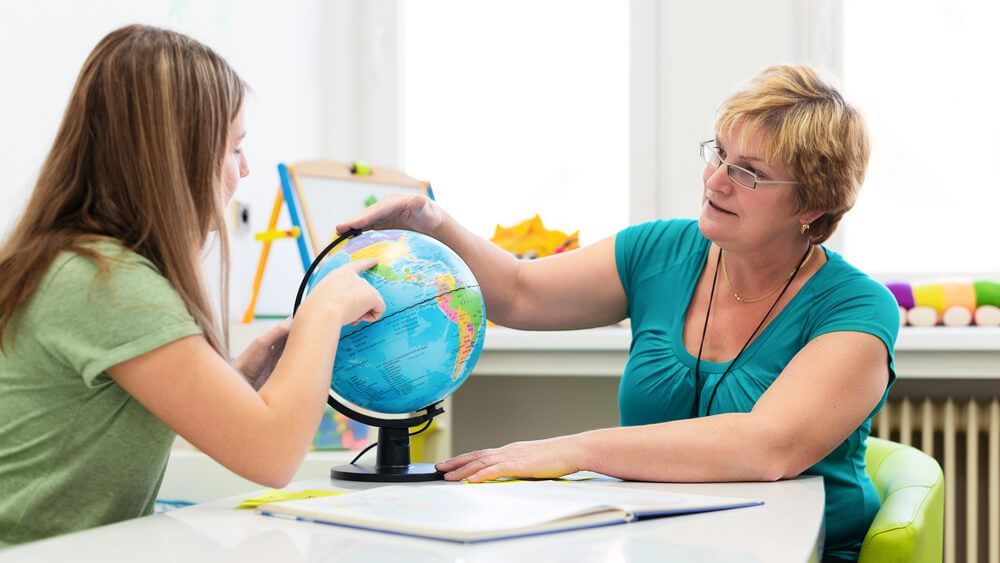
At Brightmont, culture also means maintaining a focus on learning. At the heart of this part of our culture is a teaching staff who prioritizes connecting with their students. Many students feel lost in traditional classroom environments. In contrast, one-to-one teacher/student connections lead to rapport, trust, and security for our students. Academic momentum naturally follows.
This is exactly why 90 percent of Brightmont parents say their child has built positive relationships with their Brightmont teachers, enabling each student to grow academically, as well as emotionally and socially. Students are impressed by Brightmont’s teachers, too; 100 percent of them see their teachers as subject matter experts!
3. Connecting to the Whole Child
Brightmont’s culture also values the whole child, which means every student feels welcome, nurtured, and respected. We realize that there’s a special story behind each student who enters our doors, perhaps a story characterized by frustration, anxiety, conflict, bullying, and other negative circumstances. We are committed to help turn those stories around—after all, this is precisely one of the reasons why Brightmont exists!
How does Brightmont connect to the whole child? As mentioned above, we love learning about our students’ interests and talents so we can help nurture their natural curiosities and personal ambitions. In addition, our welcome is always warm but also tuned into what makes each student feel comfortable and at ease. All together, this culminates in a culture of respect. In short, our students feel seen, heard, and known deeply.
4. Connecting to the Whole Community
Finally, Brightmont prioritizes a sense of community as part of our culture. This entails connecting well with fellow staff, parents, other educational institutions, etc. We also enjoy facilitating student connections, managing the whole network of relationships with great intentionality and care. Why? Our students come first, and we’ve seen how concerted community support benefits them and their school experience.
Peter Senge, a teaching scientist at MIT, offers this: “Learning is all about connections, and through our connections with unique people we are able to gain a true understanding of the world around us.” ,, 2 We couldn’t agree more and celebrate all of the unique people who make up the Brightmont community—especially the students. Yes, we are committed to addressing their learning differences in the classroom, but we are just as interested in and concerned about their lives in general. We have seen how this holistic approach benefits not only their learning, but ours, too. It’s through such connections that Brightmont continues to evolve and lead in education year after year!

Barbara Farland is an English & Social Studies instructor at Brightmont Academy in Plymouth, Minn. She holds a master’s degree in Business Communication from the University of St. Thomas and, prior to pursuing a second career in education, worked as an award-winning public relations and communications professional in both the corporate and nonprofit sectors. As a “storyteller by nature and teacher at heart,” Barbara continues to contribute to various anthologies, among other writing projects.






“Brightmont gave my daughter
confidence and helped her love learning
again.”
– Parent of 8th grader

92% of Brightmont graduates are
accepted into their first-choice college

(888) 521-0887
To book a tour, talk to a campus director, or get a free consultation, please fill out the form.

©2026 Brightmont Academy®
