AI Literacy & The Responsibility of Educators

Barb Farland • June 11, 2025

Mention artificial intelligence (AI) to today’s teachers, and many respond with grimaces and groans. It leads to cheating, they say. Students don’t really think when they use AI, others add. A recent Pew Research Center survey revealed that 25 percent of teachers believe AI “does more harm than good.” According to the same survey, nearly half (47 percent) of all teachers are in a quandary: they don’t know if AI is good for education or not.

In other words, confidence is not the prevailing feeling among teachers when it comes to AI. But, like it or not, AI is here and on the move in all areas of life—and educators bear a responsibility to acknowledge that reality and train students for it.


This is not entirely foreign territory for our society. There was a time when basic reading and writing were not commonplace; educational institutions spurred our value of literacy. Then came the digital age, and schools responded with curriculum and equipment to help improve students’ digital literacy. Today, we are faced with another challenge: to coach students in their AI literacy.


There are some educators and other thought leaders from around the world who have recognized AI’s evolving prominence and benefits. What are the primary takeaways from those who are addressing AI head-on? More than that, what mindset around AI do they suggest makes the best sense in the classroom? It all comes down to three key words: obligation, exploration, and application. 

An Obligation to Focus on AI Literacy

As mentioned above, we have entered a new age in which AI is playing a powerful part. Though AI-generated material may frustrate us, look weird, contain a bunch of errors, etc., more and more individuals and businesses are relying on it daily. That means that students are not only exposed to AI regularly, but also need instruction on how to use it productively and professionally. 

Lower Merion High School in Ardmore, Pa., for example, is among many schools across the nation that have recognized their obligation to address AI’s influence and availability. In fact, Lower Merion H.S. shares its positive stance on AI on its website:


...we believe in preparing students for the future. Our students will most certainly be engaging with artificial intelligence in years to come. As such, we view it as partly our responsibility to teach them how to use new technology and tools in ways that are appropriate, responsible and efficient… Rather than ban this technology, which students would still be able to access off campus or on their personal networks and devices, we are choosing to view this as an opportunity to learn and grow.


In other words, Lower Merion feels a natural obligation to educate students on a tool that will undoubtedly shape their personal and professional lives for years to come. Lower Merion and other schools know that if they don’t show students how to use AI properly, ethically, effectively, etc., young people will devise their own methods with little thought to appropriateness, safety, etc. 


A Matter of Exploration, Not the Means to an End

This is what Dr. Jules White, a computer science professor at Vanderbilt University, emphasizes in his AI-geared class through Coursera.org: to be useful in education, AI must be considered a tool of “exploration.” While many students trust AI-generated findings and content as the means to an end—an answer to a question, the completion of an essay, etc.—AI is best used as a tool to grow evaluation skills and inspire further investigation and experimentation.


An explorative mindset begins with teaching students to be discerning and not to take AI’s word as golden. How does an AI-generated response make sense? What does it get wrong? What information doesn’t fit with the prompt? What is missing in the response? In other words, a lot of thought should be invested in picking apart what AI returns, then investing even more thought into where to take one’s exploration from there.


Yann LeCun, the Chief Scientist at Meta AI, is known for saying, “Our intelligence is what makes us human, and AI is an extension of that quality.” LeCun’s words embody the overall spirit of good education around AI. We need to remember where real intelligence lies: with the student. And we need to remember the most noble purpose of AI: to serve as an accessory to human intelligence, not as a replacement.
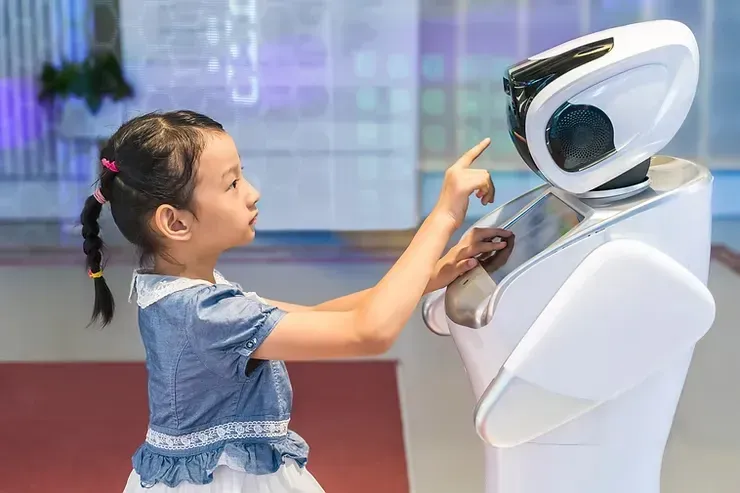
AI & Workplace Application

Finally, as mentioned above, organizations are expecting their employees to use AI in their day-to-day jobs. This means that today’s students need to be prepared for the future and how AI will likely intersect with their chosen careers. 

In the educational realm, teaching students how to use AI is one thing, but real-world application is another. As a first step, many teachers are steering students from the flimsy claim that AI will replace the need for humans in the workplace. Instead, Ginni Rometty, former CEO of IBM, puts the importance of AI aptitude in this light: “AI will not replace humans, but those who use AI will replace those who don't." 

Microsoft has published a 10-point list on why workplaces are relying on AI for business. The following are some of the key benefits on that list:


  • Increased productivity in routine tasks (e.g., answering e-mails), which frees up more time for more fulfilling projects that require people’s creativity and innovation.
  • Streamlined processes in which AI provides helpful forecasts and predictions, and suggests workarounds for broken equipment.
  • Enhanced customer communication, including 24/7 assistance and personalized solutions.
  • Better informed decisions that consider AI’s input but honor the importance of human evaluation and experimentation.


All together, this means that AI-competent employees affect the bottom line, and résumés that mention some AI experience are rising to the top. The need for savvy AI users is real and growing, and educators are encouraged to prepare the next generation for the world that awaits.


The Private School, One-to-One Difference
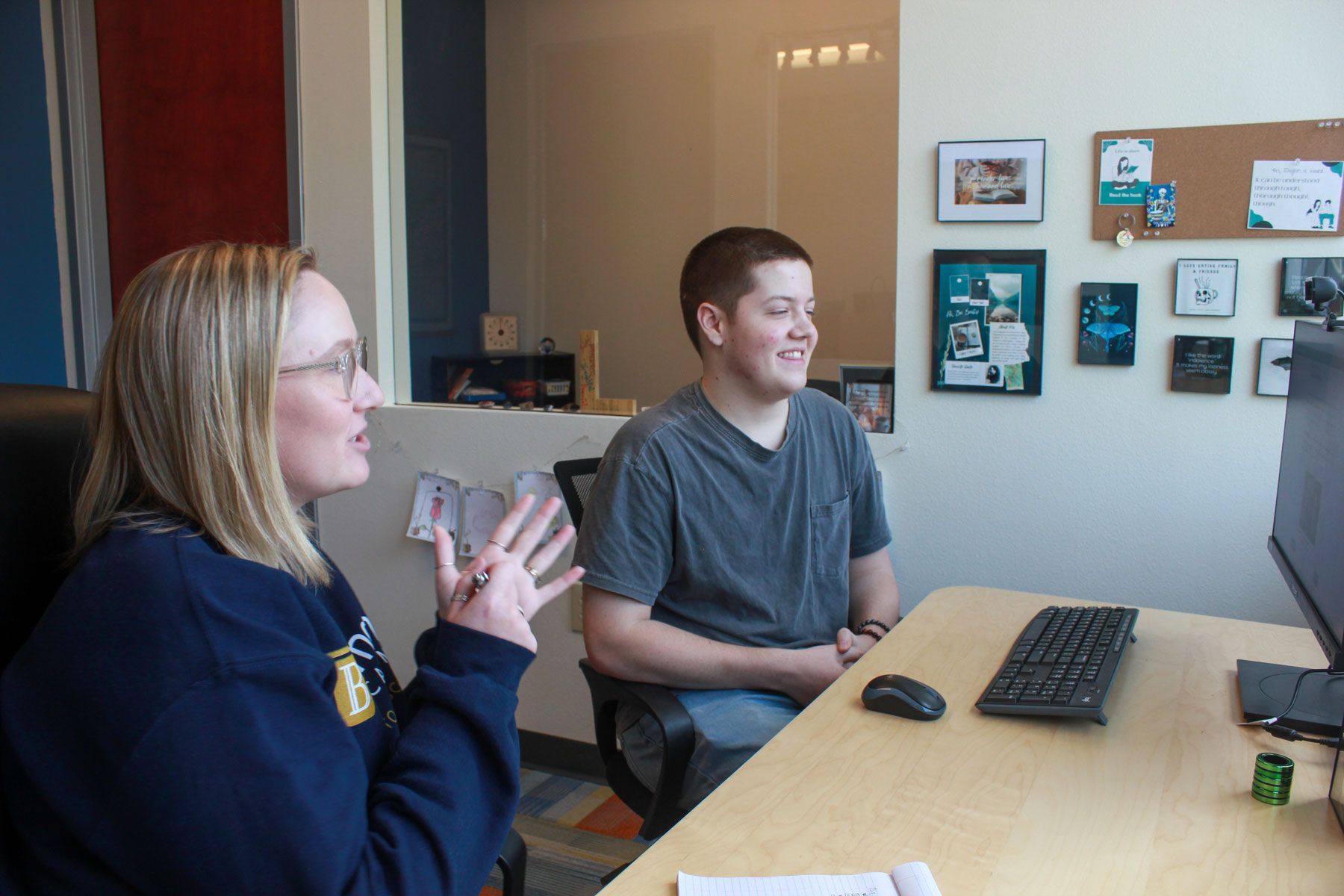
When it comes to teaching appropriate and responsible use of AI, hands down, private one-to-one schools like Brightmont Academy are the best equipped. It’s where students have constant supervision and guidance to learn when AI is a good option, what questions to ask, and how to discern the accuracy and credibility of AI’s output. Furthermore, since growing student confidence is already one of Brightmont’s main objectives and specialties, it’s where confidence naturally becomes part of AI conversations and practices; students better understand their value as human beings and how their unique voices, decisions, and innovations have more merit than anything AI produces.


In short, it’s at Brightmont where true AI competence can materialize. Teachers at Brightmont take seriously their obligation to shepherd students in this area, to model a wise and confident mindset around AI, and to help students set their sights on the future. And the positive difference, time and time again, is clear.


Source: 

https://www.pewresearch.org/short-reads/2024/05/15/a-quarter-of-u-s-teachers-say-ai-tools-do-more-harm-than-good-in-k-12-education/

https://www.psychologytoday.com/gb/blog/the-future-brain/201805/20-great-quotes-artificial-intelligence

https://www.coursera.org/learn/future-of-education-with-ai/home/info

https://www.teachai.org/toolkit

https://www.lmsd.org/lower-merion/about/newsroom/article/~board/district-information/post/lmsds-approach-to-chatgpt

Barbara Farland is an English & Social Studies instructor at Brightmont Academy in Plymouth, Minn. She holds a master’s degree in Business Communication from the University of St. Thomas and, prior to pursuing a second career in education, worked as an award-winning public relations and communications professional in both the corporate and nonprofit sectors. As a “storyteller by nature and teacher at heart,” Barbara continues to contribute to various anthologies, among other writing projects.
More Blog Posts + News


By Rachel Pollock December 10, 2025
The School Embraces Neurodiversity When choosing the right school the curriculum offered at the school must support students' needs. Some parents consider the use of adaptive digital platforms that support the needs of students who struggle with material management. Parents hope for Instruction from experts trained in adaptive curriculum and subjects so that they are prepared to adjust on the fly. Parents need to feel confident their child’s unique learning style will be supported and nurtured. Sensory Friendly Distraction-Reduced Spaces and Quiet Areas Small classrooms with a small teacher-to-student ratio allows for distraction-reduced spaces and quiet areas. Reducing distractions and disruptions from others allows the student in the smaller classroom to focus. In the 2020 research published in Science Direct students shared their experience about why they tended to gravitate towards the library in a traditional school. “The separate, more contained and manageable nature of the space is highlighted, as well as the more relaxed furnishings and homelike decor. The ‘quietness’ of the space is related to libraries typically being quiet places, but also…due to the presence of soft furnishings, carpets and books acting to dampen the sound. [Students} discuss the library as a social space, where they can ‘chat with friends’, in a more conducive environment than an invasive corridor or clattering classroom.” Focus and engagement are two important components to student success. When students feel at ease and successful they feel motivated to come back to school day after day and quench their curiosity in their academic subjects. Muting, filtering and transforming space: Autistic children's sensory ‘tactics’ for navigating mainstream school space following transition to secondary school - ScienceDirect Individual Attention
By Tony Beals December 3, 2025
Perfectly Imperfect
Lady refusing to get out of bed
By Barb Farland November 26, 2025
It’s a Monday morning and, as usual, Nora awakens to the chime of her phone alarm. It’s time to get ready for school, but Nora’s parents have a hard time remembering a drama-free morning when she didn’t dawdle, complain of a stomach ache, become really emotional, etc. In fact, Nora hasn’t ridden the bus in two months and has been marked tardy a whopping 21 times. Pair these incidents with six full-day absences this semester, and Nora’s parents feel more than frustrated. They’re legitimately concerned about Nora’s mental health and overall well-being. And they should be. Nora is among the 2-5 percent of students nationwide who struggle with school refusal—and it’s not to be taken lightly.  What is school refusal? What does it look like? And how can families address the issue of school refusal and overcome its characteristic behaviors and consequences? This is what we know…
By Barb Farland November 19, 2025
Flexible Schooling Options for Competitive Athletes and Performers
teacher and student smiling
November 17, 2025
Private School Specializing in One-to-One Instruction for 1st-12th Grade Students National — As Thanksgiving approaches, Brightmont Academy, a private accredited school offering one-to-one instruction, is taking a moment to reflect on a year filled with growth, gratitude, and student success. With multiple new campus openings in 2025 and plans to open several more soon, Brightmont continues to expand its mission of transforming education through individualized instruction that empowers each student to reach their full potential. Keith Jackson, Marketing Director at Brightmont Academy, shared his appreciation for the families who have made this mission possible. “This Thanksgiving, we’re especially grateful for the families who trust Brightmont Academy to provide a one-to-one education that helps their children thrive,” Jackson said. “Every student’s success story is a reminder of why we do what we do.” Brightmont’s unique model of personalized learning has helped countless students rediscover confidence and joy in the classroom. This season of gratitude serves as a reminder of the small victories that make a big difference in each student’s educational journey. “At Brightmont Academy, gratitude comes from seeing students who once struggled now finding confidence and joy in learning,” Jackson explained. “Thanksgiving reminds us how important it is to celebrate progress, big and small.” The spirit of Thanksgiving also reflects Brightmont’s core values of connection and collaboration. Just as families gather around the table to share gratitude, Brightmont brings together teachers, students, and parents as partners in each child’s education. “Just as Thanksgiving brings families together, Brightmont Academy brings teachers, students, and parents together as a team to create an individualized education plan that truly fits each child,” Jackson said. As families give thanks and look ahead to the new year, Brightmont Academy invites prospective parents to visit a campus and experience firsthand how personalized education can transform a child’s life. With four new locations opening this year, Brightmont continues to offer more families the opportunity to discover a learning environment where students flourish both academically and emotionally. Families interested in learning more are encouraged to schedule a campus tour and see how Brightmont’s one-to-one instruction is changing lives across the country. Brightmont Academy is located in nine states and is currently accepting enrollments. Brightmont Academy is an accredited private school that provides one-to-one instruction. One experienced teacher works with one student throughout every learning session. Customized full-time programs and individual courses are offered for grades 1-12. Students can also receive individualized tutoring for all 1-12 subjects, study skills, and test prep. Brightmont Academy has served thousands of students since 1999 and has 21 campuses in Arizona, Colorado, Florida, Georgia, Illinois, Michigan, Minnesota, North Carolina, and Washington. For more information call 1-888-521-0887 or visit: www.brightmontacademy.com . Watch our video: Brightmont Academy - The One-to-One Flexible school - 1st through 12th
By Rachel Pollock November 12, 2025
Is there support for your student if they are struggling? What are the class sizes? Do the teachers personalize learning and know their students? Does the school schedule work for your family? Is the school accredited? Does the school offer academic rigor for your child? Does the school have a good reputation and location? Are students college and career ready after graduation? 
Reluctant Teen
November 10, 2025
Private School in Mendota Heights Specializing in One-to-One Instruction for 1st-12th Grade Students Mendota Heights, MN — Brightmont Academy, a private accredited school offering one-to-one instruction, is helping families stay informed and connected through its Speaker Series, a free monthly webinar designed to support parents and students. Hosted by Minnesota Campus Directors Michelle Platt of Mendota Heights and Jenny Sorenson of Plymouth, the virtual sessions feature expert speakers discussing topics that matter most to families—ranging from ADHD and adolescent anxiety to sleep issues and school transitions. The Speaker Series began as a way to make professional insight more accessible to Brightmont families. “A big part of my job is networking, and I’m constantly meeting trusted professionals through events, referrals, and outreach,” explained Platt. “The Speaker Series gives families direct access to these experts and helps parents feel connected while learning more about Brightmont Academy and the many resources available to them.” Each hour-long session allows parents to engage in real time with speakers and ask questions through a live chat. Topics have included ADHD, adolescent anxiety, evaluations, sleep, and school avoidance—issues that often impact students’ academic and emotional well-being. “Each speaker shares actionable tips for parents while also giving families a chance to learn more about Brightmont’s unique strengths, such as open enrollment, flexible scheduling, part-time and full-time options, skill building, and executive function programs,” said Platt. The response to the Speaker Series has been overwhelmingly positive. Families can RSVP for upcoming sessions on Brightmont’s website, and recordings are available afterward on Brightmont’s YouTube channel and social media platforms. “For me, the series has strengthened relationships with families and professionals, given me new insights as a director and parent, and expanded the network of resources I can confidently recommend,” Platt said. “Most importantly, it ensures Brightmont families feel supported not just by our school, but by a wider community of experts.” See our webinar recordings and RSVP to upcoming webinars. Brightmont Academy is located at 720 Main Street, Suite 101, in Mendota Heights and is currently accepting enrollments. Families and professionals are invited to attend an Open House event on Thursday, November 20th, 2025, between 10:00 AM and 4:00 PM. Brightmont Academy is an accredited private school that provides one-to-one instruction. One experienced teacher works with one student throughout every learning session. Customized full-time programs and individual courses are offered for grades 1-12. Students can also receive individualized tutoring for all 1-12 subjects, study skills, and test prep. Brightmont Academy has served thousands of students since 1999 and has 21 campuses in Arizona, Colorado, Florida, Georgia, Illinois, Michigan, Minnesota, North Carolina, and Washington. For more information call 1-888-521-0887 or visit: www.brightmontacademy.com . Watch our video: Brightmont Academy - The One-to-One Flexible school - 1st through 12th
By Tony Beals November 5, 2025
The Boy, The Horse, and The Lesson We Forget in Teaching
Alesia Stevenson
November 3, 2025
Private School in Raleigh Specializing in One-to-One Instruction for 1st-12th Grade Students Raleigh, NC — Brightmont Academy, a private accredited school offering one-to-one instruction, is pleased to announce the appointment of Alesia Stevenson as the new Campus Director of its Raleigh campus. Stevenson brings a rich background in education, business, leadership, and community engagement, along with a passion for helping students discover their strengths and succeed through personalized learning. Stevenson has spent her career fostering environments where both students and teams can thrive. She has worked extensively in education and organizational leadership, focusing on expanding access to resources and tailoring support to meet individual needs. As both an educator and a parent, Stevenson has experienced first-hand the life-changing impact of individualized instruction. “My background spans education and program development, often in environments where meeting students and families ‘where they are’ is essential,” said Stevenson. “That experience translates directly into Brightmont’s model, which focuses on tailoring instruction to each student’s unique strengths, challenges, and goals.” Stevenson first learned about Brightmont while researching alternative education models centered on the student learning experience. Brightmont’s one-to-one instruction stood out as both innovative and aligned with her vision of student success. “I was drawn to Brightmont because the role allows me to bring together my experience in education, leadership, and community engagement to create meaningful impact,” Stevenson said. “The opportunity to lead a campus where every student receives personalized support felt like a natural extension of my passion for helping young people succeed.” At Brightmont, Stevenson is eager to establish the Raleigh campus as a trusted resource for families seeking alternatives to the traditional classroom. She envisions a school community where students build confidence and resilience alongside academic progress. “My vision is to see our Raleigh campus grow into a trusted educational home for students and families seeking a more personalized path,” Stevenson said. “I believe Brightmont’s individualized approach will resonate in Raleigh, a dynamic city where families value strong, innovative educational options.” Brightmont Academy is located at 6070 Six Forks Rd in Raleigh and is currently accepting enrollments. Brightmont Academy is an accredited private school that provides one-to-one instruction. One experienced teacher works with one student throughout every learning session. Customized full-time programs and individual courses are offered for grades 1-12. Students can also receive individualized tutoring for all 1-12 subjects, study skills, and test prep. Brightmont Academy has served thousands of students since 1999 and has 21 campuses in Arizona, Colorado, Florida, Georgia, Illinois, Michigan, Minnesota, North Carolina, and Washington. For more information call 1-888-521-0887 or visit: www.brightmontacademy.com . Watch our video: Brightmont Academy - The One-to-One Flexible school - 1st through 12th
More Posts